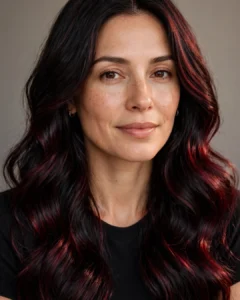
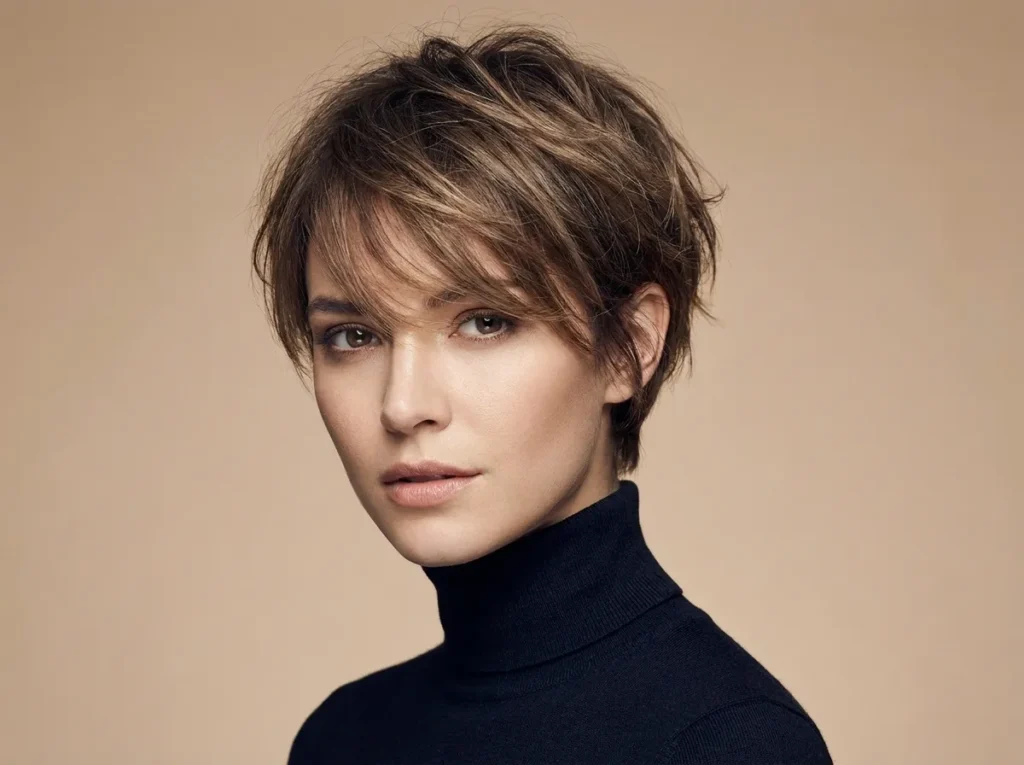
Pixie hairstyles with bangs offer a stylish way to wear short hair while keeping softness around the face. The fringe can frame the eyes, balance the forehead, highlight the cheekbones, or add movement to a closely cropped shape. Small changes in length and texture can make the same basic cut feel polished, playful, relaxed, or bold.
This guide covers 22 pixie variations for straight, wavy, curly, fine, and thick hair. You will find wispy fringes, long side bangs, micro bangs, curtain pieces, choppy layers, and sleek finishes.
Each idea also includes practical guidance for shaping, styling, and maintaining the cut. Use the examples to compare fringe lengths and decide how much daily styling fits your routine. Save one or two options that complement your hair texture and show them to your stylist before your next appointment.
1. Classic Pixie With Side-Swept Bangs
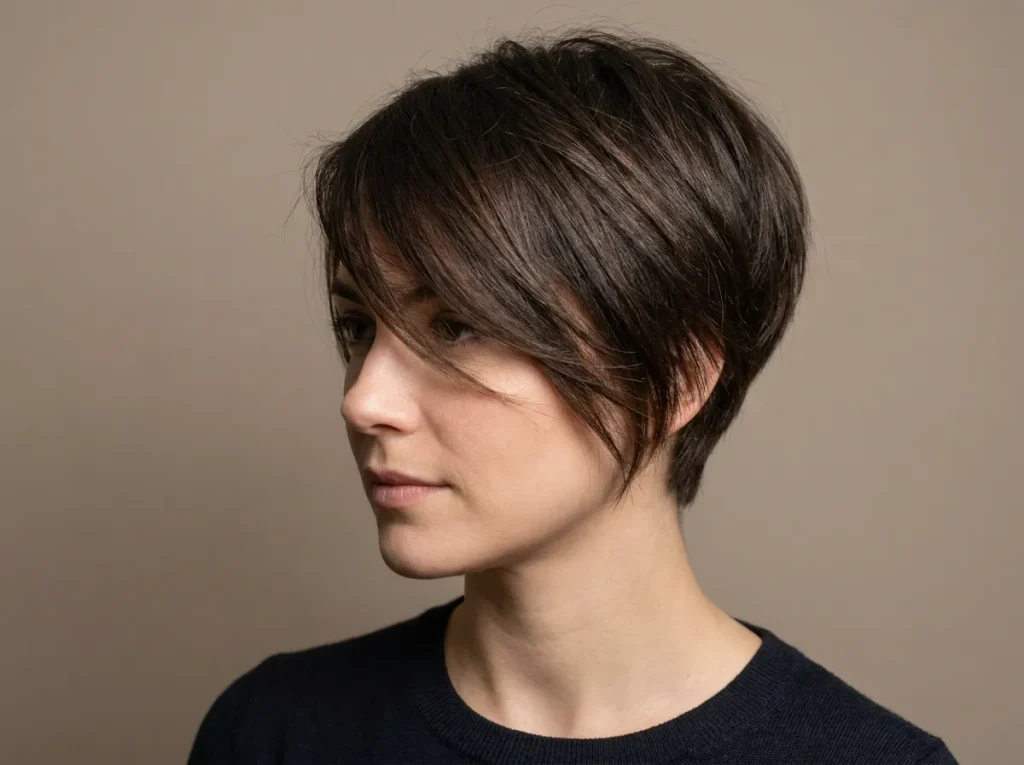
A classic pixie becomes softer when a longer fringe sweeps diagonally across the forehead. The angled shape brings attention toward the eyes and cheekbones while keeping the sides neat. It is a balanced option for someone trying short hair for the first time.
Ask for tapered sides and a slightly longer crown. The front should have enough length to move across the forehead without falling heavily into the eyes. A fringe between three and five inches often provides enough flexibility for a smooth sweep or a lightly tousled finish.
Style the bangs while they are damp. Direct them to one side with your fingers or a small round brush, then use low heat to set the movement. A pea-sized amount of lightweight cream can separate the ends without making the hair appear stiff.
This cut works well on straight and gently wavy textures. Fine hair may benefit from subtle crown layers, while thick hair can have hidden weight removed beneath the longer top. Schedule a trim every four to six weeks if you prefer a clean outline. Between appointments, change the part or tuck the fringe slightly back for a different appearance without changing the haircut.
2. Soft Pixie With Wispy Bangs
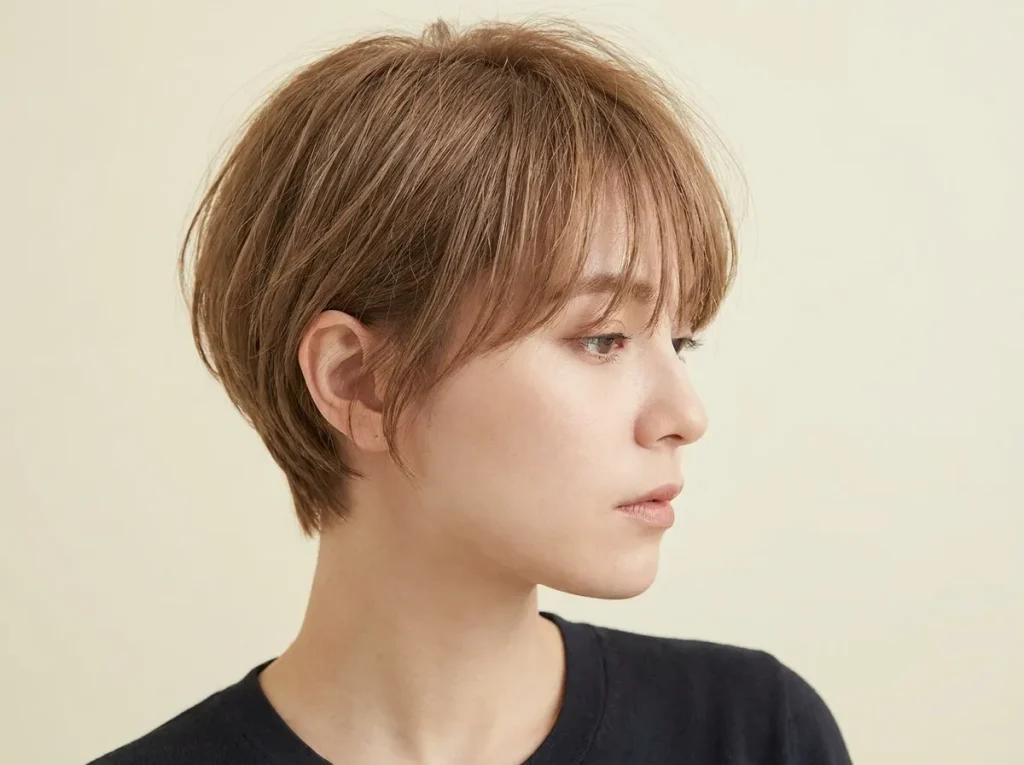
Wispy bangs give a short haircut a delicate frame without creating a heavy line across the forehead. Small separated strands allow some skin to remain visible, which keeps the fringe light. This approach is especially appealing if blunt bangs feel too strong for your features.
The front pieces can graze the eyebrows or sit slightly above them. Ask your stylist to point-cut the ends so they appear soft rather than perfectly even. The rest of the pixie can stay close at the sides with feathered layers across the crown.
Fine and medium hair usually holds this airy shape with minimal effort. If your hair is thick, controlled thinning beneath the fringe can reduce bulk. Avoid removing too much hair from the ends, since an overly thin fringe may look sparse after several weeks.
Blow-dry the bangs forward using low heat, then separate them with clean fingertips. Use only a trace of styling cream on the tips. Heavy wax, oil, or rich conditioner near the roots can make wispy pieces group together.
The fringe may require a quick trim before the rest of the haircut. Ask whether your salon offers small bang trims between regular visits. This keeps the pieces away from your eyes while preserving their light, irregular finish.
3. Sleek Pixie With Micro Bangs
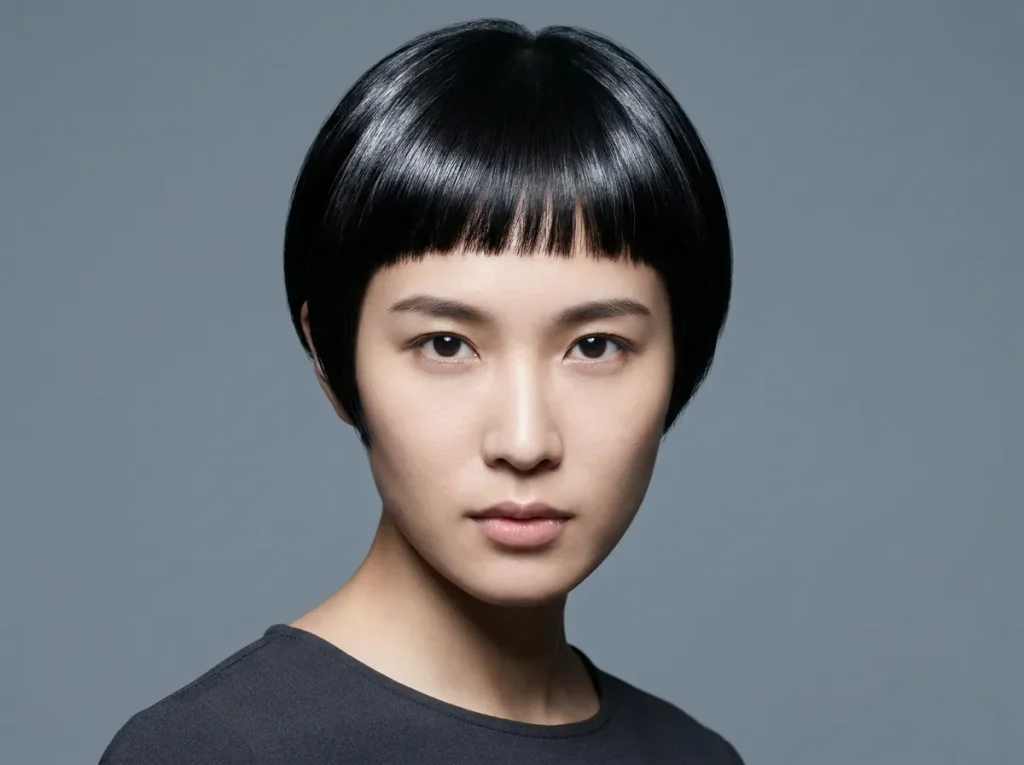
Micro bangs create a bold horizontal detail above the eyebrows. Paired with a smooth pixie, they make the haircut appear sharp and intentional. The short fringe also leaves the eyebrows and upper face fully visible.
This design works particularly well with straight hair that naturally lies close to the head. Ask for a clean fringe that suits your hairline and growth pattern. Very strong cowlicks can make tiny bangs harder to control, so your stylist may recommend leaving them slightly longer.
The sides can be closely tapered while the top remains smooth and compact. A rounded crown prevents the cut from appearing flat from the side. Dark, glossy colors emphasize the precise outline, though the shape also looks striking in platinum, copper, or soft brown.
Dry the fringe immediately after washing. Use a small flat brush to guide it downward, moving the dryer from above so the cuticle lies smoothly. Keep the styling temperature moderate, since short pieces sit close to the forehead.
Micro bangs show growth quickly. Plan small trims every two to four weeks if you want the original length to remain consistent. Avoid trimming them yourself unless your stylist has shown you the exact guide and cutting angle.
4. Choppy Pixie With Textured Bangs

Choppy layers add movement and separation to a short cut. An uneven fringe continues that texture across the forehead, creating a relaxed shape that does not rely on perfect styling. It is useful for hair that naturally develops bends, flips, or slight irregularities.
Ask for point-cut layers through the top and front. The pieces should vary subtly in length rather than forming large disconnected sections. Keeping some weight around the perimeter helps the haircut remain controlled instead of becoming overly spiky.
This style can make fine hair appear fuller because the separated pieces cast small shadows. Thick hair may require internal weight removal so the crown does not expand too far outward. A tapered nape provides contrast against the active upper layers.
Rub a small amount of matte paste between your fingertips, then pinch selected ends. Concentrate on three or four sections instead of applying product across every strand. This creates definition while preserving natural movement.
The haircut also works well when air-dried. Gently reshape the fringe before it dries, then leave it alone to reduce unwanted fluff. When the layers begin merging into one rounded shape, schedule a trim. Regular reshaping keeps the choppy character visible and the bangs away from the eyes.
5. Long Pixie With Dramatic Sweeping Bangs

A longer pixie provides the ease of short hair while retaining enough length for noticeable movement. Sweeping bangs can cross the forehead and curve toward one cheek, giving the cut a dramatic focal point. The longer top also offers several styling directions.
Ask for short, controlled sides with graduated layers leading into the fringe. The front may reach the cheekbone when pulled straight, though it will appear shorter after being curved. A deep side part creates the fullest sweep and helps the bangs stay in position.
Straight and wavy hair work particularly well with this shape. Fine hair can gain lift from a little mousse at the roots. Thick hair may require weight removal underneath the long section so it moves freely without becoming bulky.
Blow-dry the fringe across the forehead with a medium round brush. Let it cool in the desired direction before touching it. Use flexible hold rather than hard spray, allowing the bangs to retain movement.
On casual days, push the fringe back with your fingers or create a loose off-center part. This makes the haircut adaptable without extra cutting. Trim the sides regularly while allowing the front to remain longer, and ask your stylist to preserve the intended length difference.
6. Pixie With Short Curtain Bangs
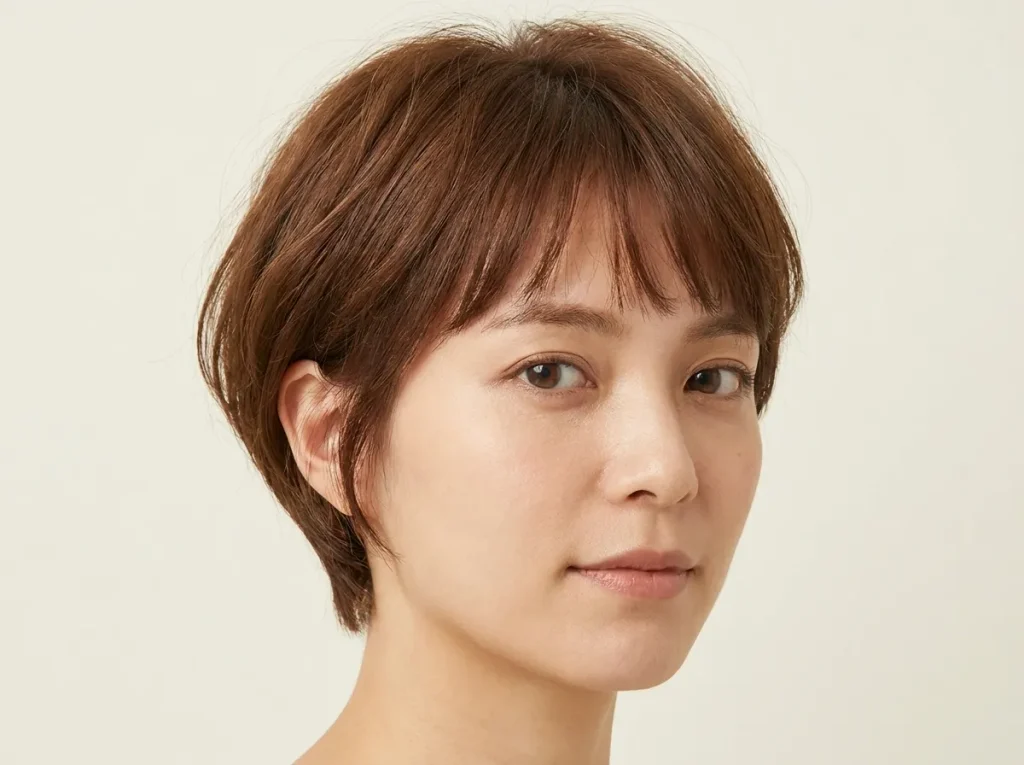
Short curtain bangs open at the center and curve gently toward both sides of the face. They create a softer alternative to a solid fringe and allow more of the forehead to show. On a pixie, the parted pieces connect naturally with the temples and side layers.
The bangs should be long enough to separate without sticking straight upward. Ask for the shortest point near the center and slightly longer ends toward the outer brows. This gradual shape creates a natural frame and makes the fringe easier to tuck aside.
Use a small round brush to dry each half away from the center. If you do not want to use a brush, direct the damp pieces outward with your fingers and low dryer heat. Set the center part while the hair is wet, since changing it after drying can create unwanted height.
Curtain bangs work across straight and softly wavy hair. They can also help manage a growing fringe because the longer outer sections join the rest of the haircut. A little lightweight cream controls flyaways without removing movement.
This is one of the more forgiving pixie hairstyles with bangs as it grows. The center pieces can gradually become side bangs, while the outer sections move into face-framing layers. Small trims will maintain the curved outline.
7. Curly Pixie With Coiled Bangs

Defined curls bring natural shape and dimension to a pixie. Allowing a few coils to fall across the forehead creates a fringe without forcing the hair into a straight line. The result feels soft, lively, and connected to the natural curl pattern.
Ask your stylist to cut the hair while accounting for shrinkage. Wet curls may appear much longer than they will after drying. The fringe should be shaped curl by curl, with enough length left for each coil to form fully.
Shorter sides can control the overall width while the top retains volume. If you prefer a rounder shape, keep more fullness near the temples. A tapered nape can make the curls across the crown appear even more defined.
Apply curl cream or light gel to wet hair, then gently scrunch. Arrange the front coils before drying and avoid separating them until they are completely set. Diffuse on low airflow or allow the cut to air-dry.
Refresh the bangs between washes with water and a tiny amount of leave-in conditioner. Twirl individual pieces around a finger if they lose their shape overnight. Avoid brushing dry curls, since this can break apart their definition and make the short fringe harder to control.
8. Wavy Pixie With Tousled Fringe
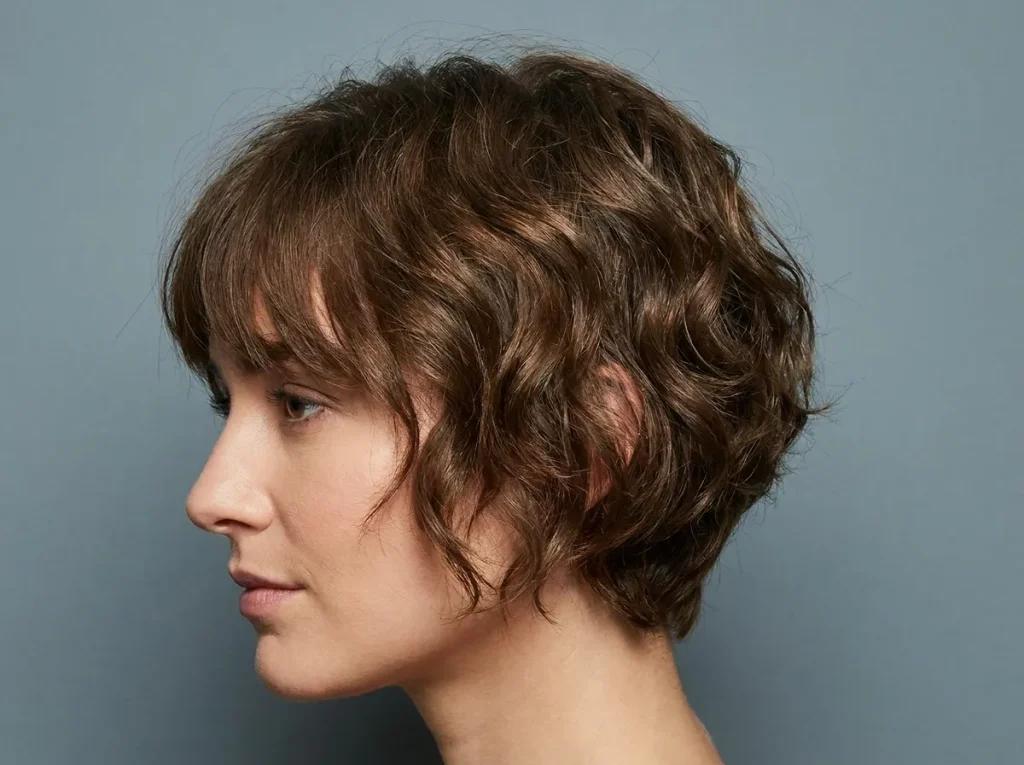
Natural waves give a pixie soft movement without requiring tightly defined curls. A tousled fringe allows the bends to fall in slightly different directions, making the cut feel relaxed. This can be especially useful when your hair refuses to lie completely straight.
Ask for longer layers across the top and enough length in front for the wave pattern to appear. Cutting the fringe too short may remove its bend or cause it to spring upward. The sides can remain tapered to keep the overall silhouette balanced.
After washing, work a little mousse through damp hair. Twist several top sections around your fingers, then scrunch the fringe gently. Air-drying creates a soft result, while a diffuser can add more volume at the crown.
Do not try to make every wave identical. Define only the front and upper pieces that frame the face, then leave the remaining texture relaxed. A light styling cream can calm fuzzy ends after the hair dries.
On the second day, mist the fringe with water and reshape it with your fingers. If one section falls awkwardly, change the part rather than adding heavy product. Regular trims remove excess bulk and help the waves retain clear movement.
9. Blonde Pixie With Dark Roots and Bangs
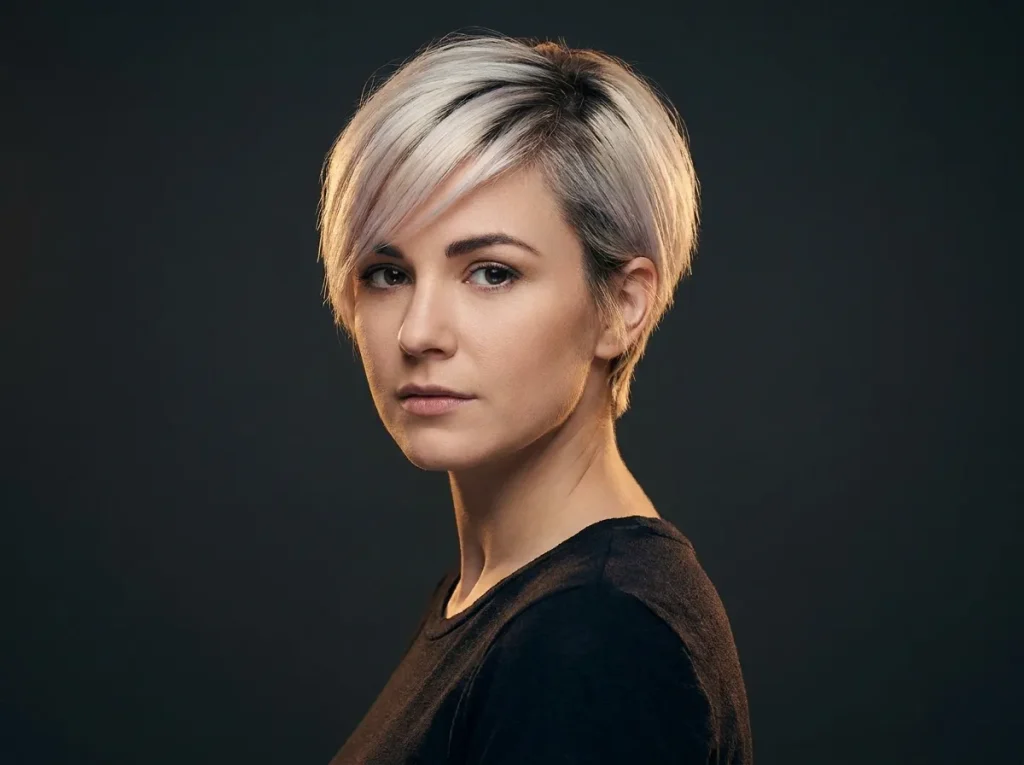
Dark roots give a blonde pixie more depth and make its short layers easier to see. When the bangs contain both dark and pale sections, every separated piece becomes more defined. The contrast can be soft with beige blonde or stronger with platinum.
Ask your colorist to retain a root shadow close to your natural base. The darker area can remain short around the sides and extend slightly farther through the crown. Fine blonde pieces across the fringe connect the root depth with the lighter top.
This color arrangement can allow a more forgiving grow-out than solid blonde applied at the scalp. Even so, lightened short hair may feel dry if it is processed frequently. Discuss whether toner appointments can maintain the shade between larger lightening services.
Use purple shampoo only when unwanted yellow becomes visible. Overuse may make pale bangs look dull or violet. Apply conditioner mainly to the longer top, keeping rich formulas away from the short roots.
Style the fringe with lightweight paste or cream. The dark sections will naturally create separation, so very little product is required. Coordinate color appointments with haircut visits when possible, allowing your stylist to remove dry ends and maintain the intended root-to-blonde pattern.
10. Copper Pixie With Curved Bangs
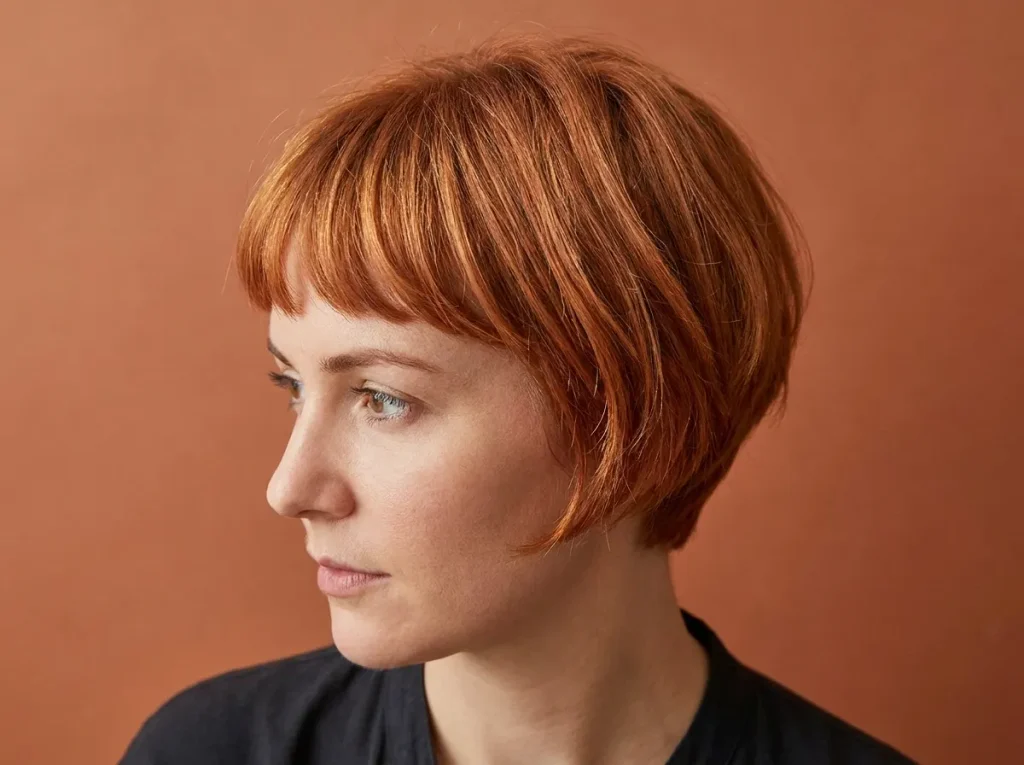
Copper color brings warmth and clarity to a short haircut. A softly curved fringe keeps the result approachable by following the natural line of the forehead. Light catches the copper pieces easily, making even subtle layers visible.
Choose the copper depth according to your starting color and preferred contrast. Soft ginger works with lighter bases, while deep auburn-copper may suit naturally brunette hair. Ask for slight tonal variation so the cut does not appear like one flat block of color.
The fringe can sit near the eyebrows or curve toward one side. A rounded edge feels polished, while point-cut ends create a softer finish. Keeping a little height at the crown balances the forward direction of the bangs.
Red pigments can fade quickly with frequent washing. Use cool or lukewarm water and space out shampoo days when practical. A copper-tinted conditioner may help maintain the color, but test it on a hidden section because porous ends can absorb more pigment.
Dry the bangs from above and guide them into place with a small brush. Avoid heavy oil near the forehead. A light shine serum applied only to the tips can make the copper appear reflective without flattening the haircut.
11. Silver Pixie With Feathered Bangs
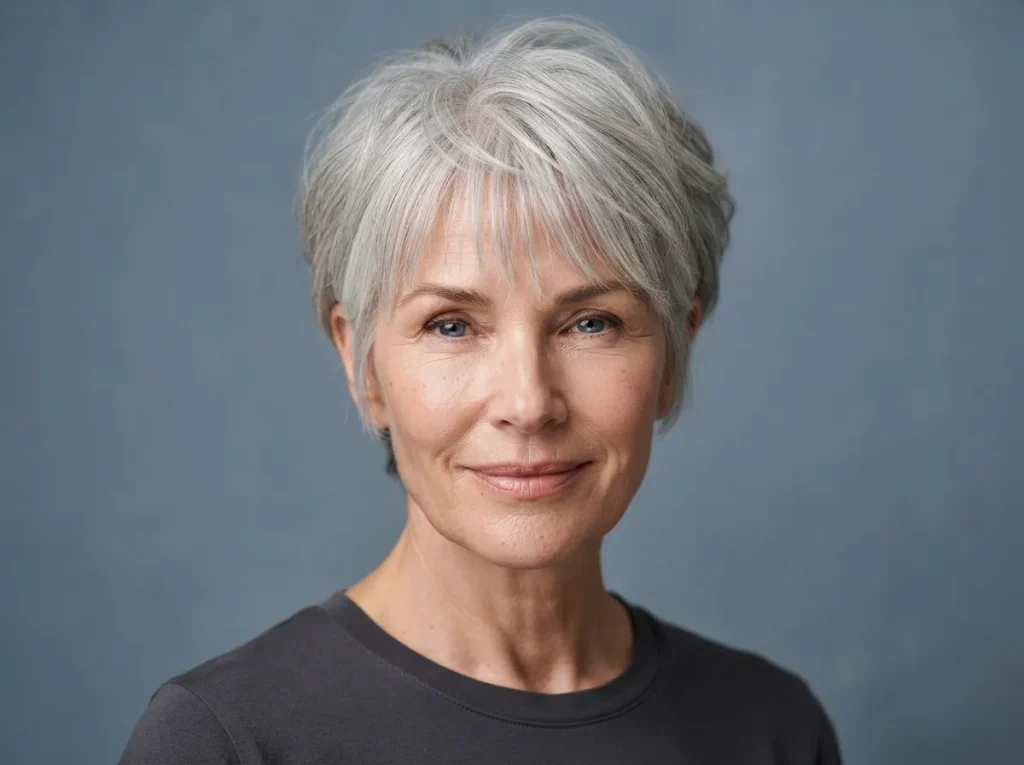
Silver hair looks polished in a short, feathered shape. Light layers prevent the color from appearing dense, while a soft fringe adds movement near the face. The style works with natural gray hair as well as professionally colored silver.
Ask for tapered sides and fine layers directed forward from the crown. The bangs can remain light and separated rather than forming a solid band. This allows different silver, white, and charcoal strands to show through the haircut.
Natural gray hair may have mixed textures, including straighter sections and wiry pieces. A smoothing cream can control rough ends without removing volume. If the hair is colored silver, regular conditioning helps support sections that were lightened beforehand.
Minerals and styling residue may give pale hair a yellow cast. Use a gentle clarifying wash occasionally if your stylist recommends it. Purple shampoo can help, but use it only when warmth appears so the silver does not become overly violet.
Blow-dry the fringe with your fingers for a relaxed finish. For more polish, use a small brush and direct the airflow downward. Trim the cut every four to six weeks to maintain the feathered outline and prevent the sides from becoming heavy.
12. Undercut Pixie With Piecey Bangs
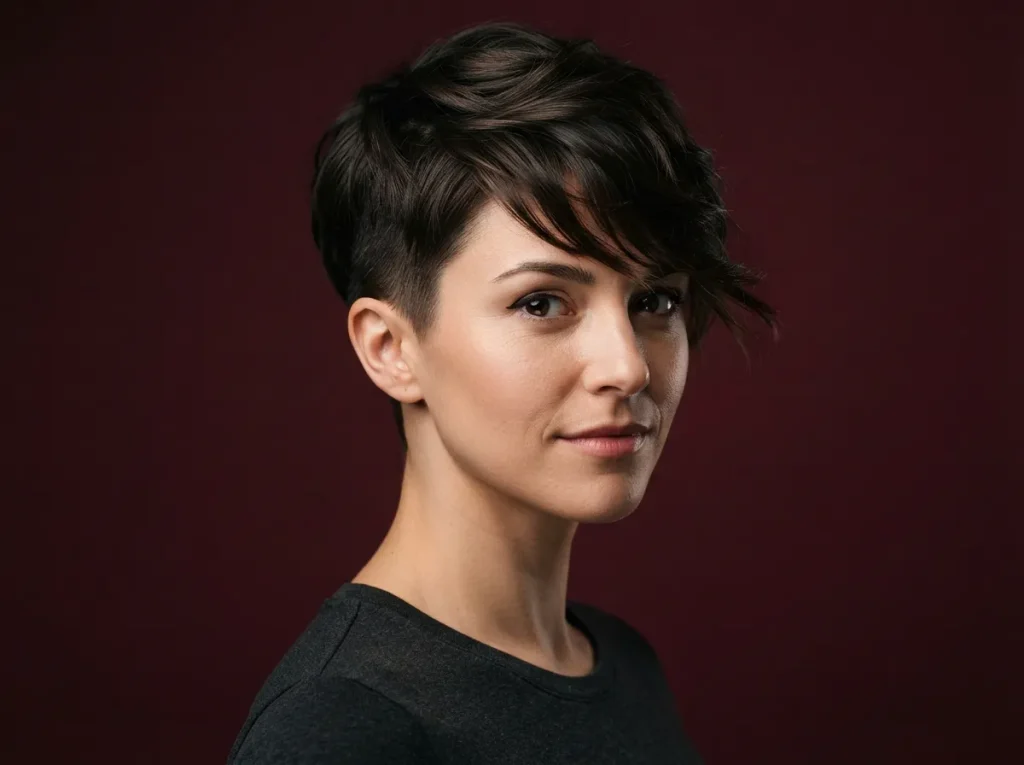
An undercut removes length beneath the top section, creating a clear contrast between closely cropped sides and longer bangs. The front can be styled forward, swept sideways, or lifted away from the face. This makes the cut expressive without requiring long hair.
Discuss how much of the side and nape you want clipped. A small hidden undercut offers easier styling while remaining subtle. A higher undercut creates a stronger shape but may take more patience to grow out later.
Keep the top long enough for separation. Point-cut ends and irregular layers will help the bangs form defined pieces. Straight and wavy hair usually show the contrast clearly, though curly textures can also carry the shape with careful cutting.
Warm a small amount of matte paste between your fingers and apply it to dry ends. Avoid coating the roots, since that can remove lift and make the upper section look greasy. Direct a few fringe pieces diagonally for a flattering face frame.
The clipped area may require attention every three to five weeks. If you decide to grow it out, allow the top to cover the shorter section while the sides gain length. Small reshaping appointments can make that process more manageable.
13. Rounded Pixie With Full Bangs

A rounded pixie combines the compact length of a short cut with a fuller fringe. The curved outline follows the head, while eyebrow-grazing bangs create a defined frame. This option feels polished and graphic without relying on severe angles.
Ask for a softly rounded crown and controlled weight around the sides. The fringe should connect smoothly with the temple sections. Point-cutting can soften the ends if you want less of a bowl-cut effect.
Straight hair displays the shape most clearly. Slight waves can also work, though the cut may require extra length to account for movement. Thick hair often benefits from internal weight removal, while fine hair should retain a fuller perimeter.
Dry the hair in the direction it naturally falls. Use a paddle brush or your fingers, moving airflow from the crown toward the forehead. Apply smoothing cream to the ends only so the roots remain light.
Full bangs may become oily sooner than the rest of the cut. You can rinse and restyle only the fringe between wash days. Plan small bang trims when it reaches the eyes, and maintain the rounded sides during regular appointments. A precise outline makes this simple haircut appear carefully shaped.
14. Asymmetrical Pixie With Diagonal Bangs

An asymmetrical pixie uses different lengths on each side to create direction and movement. Long diagonal bangs strengthen that effect by drawing the eye across the face. The style can be subtle or dramatic depending on the difference between both sides.
Ask your stylist to keep one temple closely tapered while leaving more length across the opposite side. The fringe should connect with the longer section rather than sitting separately. A deep part makes the asymmetry clear and helps control where the bangs fall.
This shape can balance round or square facial outlines by adding a strong diagonal line. However, the exact length should be selected around your hairline, texture, and preferred coverage. Soft layers create movement, while a blunt front edge appears more graphic.
Dry the long section from the deep part toward the opposite cheek. Use a flat brush for a sleek finish or finger-style it for separation. Choose lightweight flexible hold so the fringe remains movable.
The shorter side will show growth before the longer side loses its form. Ask for small perimeter cleanups between full cuts if you want to preserve the contrast. When you prefer a softer appearance, move the part closer to the center and loosen the fringe.
15. Soft Layered Pixie With Face-Framing Bangs
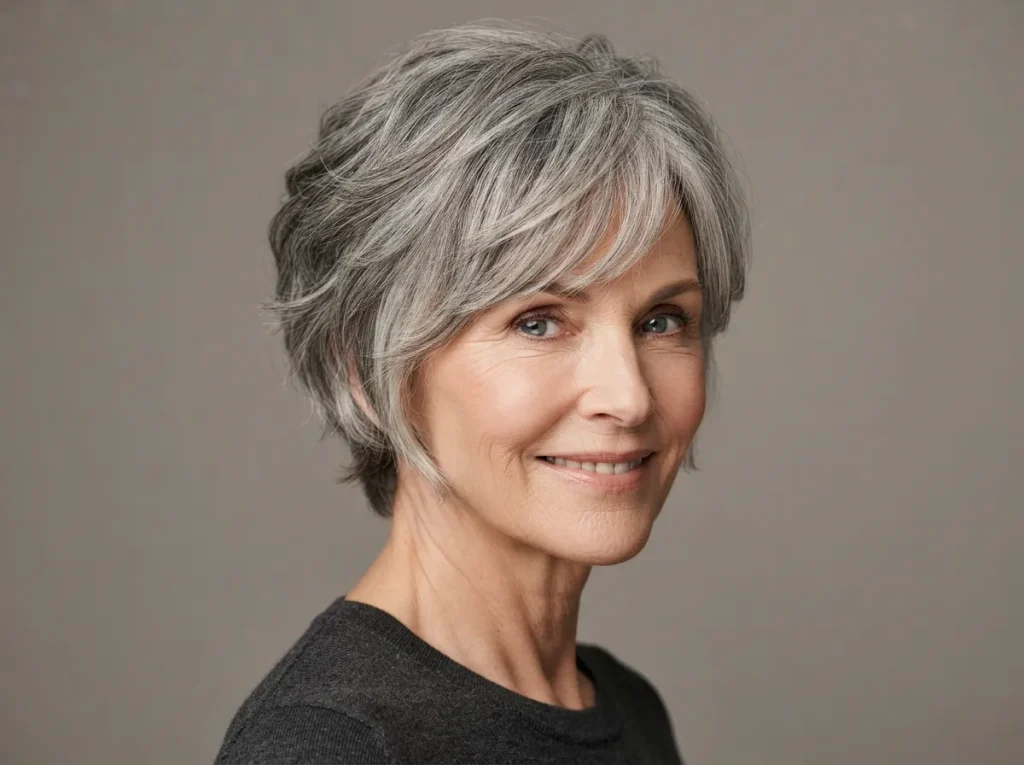
Soft layers can make a pixie feel light while preserving enough fullness around the face. Side bangs that taper toward the cheek create a gentle frame and direct attention toward the eyes. This shape works across many ages and hair colors.
Ask for movement rather than heavily separated pieces. Longer layers near the crown can add volume, while shorter internal sections support the shape. The fringe may begin near the brow and gradually lengthen toward the temple.
This approach works well with fine hair because the perimeter can remain full. If your hair is thick, discreet internal thinning will help the layers settle without creating excessive width. Natural gray, brunette, blonde, and auburn shades all display the soft structure differently.
Apply a lightweight volumizing mousse to damp roots, then dry the crown upward with your fingers. Guide the bangs diagonally and allow them to cool in position. Keep the finish touchable, using minimal spray only when required.
A smooth pillowcase may reduce flattened sections overnight. In the morning, dampen the crown and reshape it rather than adding layers of dry product. Regular trims will stop the neckline from becoming heavy and keep the face-framing pieces at a comfortable length.
16. Shaggy Pixie Mullet With Broken Bangs
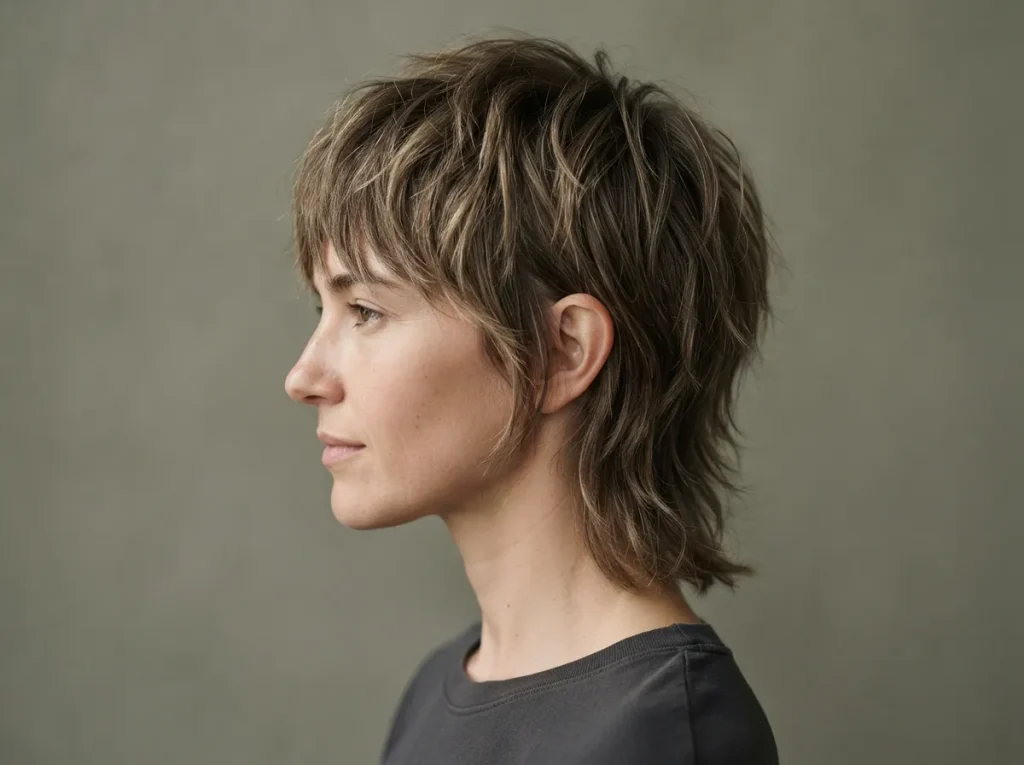
A pixie mullet combines short layers around the crown with slightly longer pieces at the nape. Broken bangs repeat that irregular texture across the forehead. The haircut feels relaxed and expressive, especially when natural bends or waves are allowed to remain visible.
Ask for a soft difference between the front and back rather than an extreme tail. Short crown layers create lift, while feathered nape pieces maintain movement. The bangs can be cut in varied lengths so they separate without forming a straight line.
This shape works well for medium or thick hair. Fine hair can also carry it when the layers remain long enough to preserve density. A little natural texture helps, but straight hair can be styled with bends using a small brush.
Apply mousse to damp hair and scrunch the crown. Direct the nape pieces outward and separate the fringe after drying. Use a small amount of texture cream, concentrating on the outer ends.
The cut is forgiving between appointments because extra growth supports its shaggy character. Still, the crown may lose lift when it becomes too long. Schedule reshaping when the upper layers begin lying flat or the fringe starts blocking your vision.
17. Compact Pixie With Rounded Baby Bangs
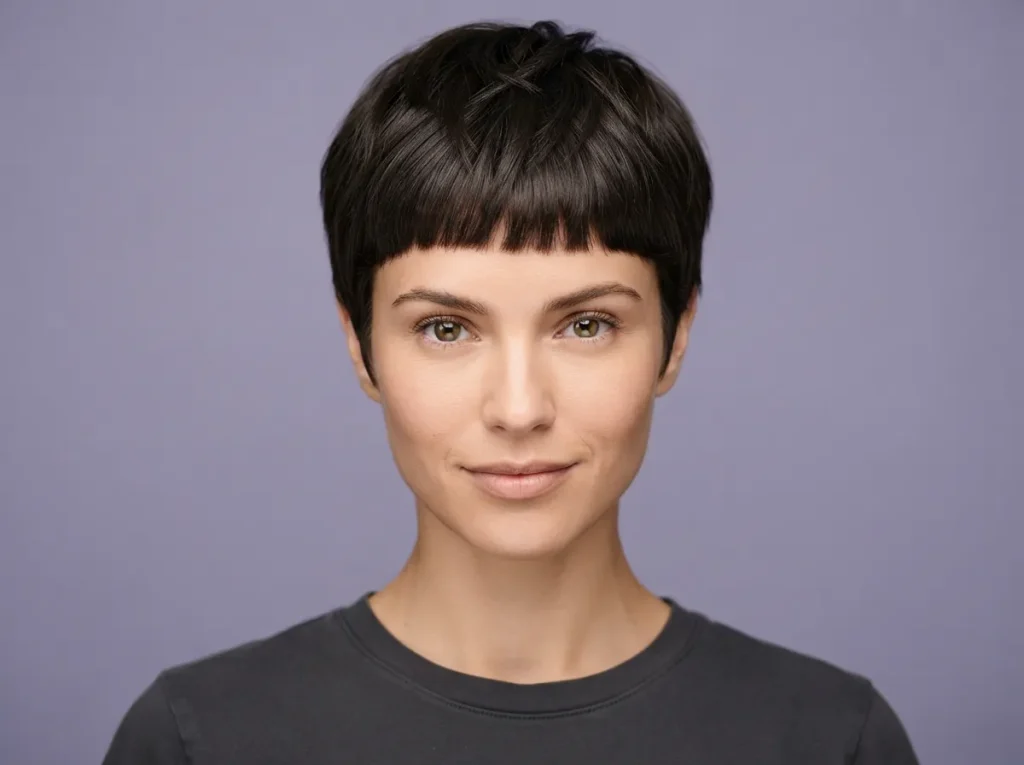
Rounded baby bangs are short like micro bangs but carry a softer curved outline. They expose the eyebrows while following the forehead rather than creating a severe straight edge. Paired with a compact pixie, they produce a neat and youthful shape.
Ask for the fringe to curve slightly longer toward each temple. This connects it with the sides and prevents the front from appearing detached. The crown can remain softly rounded with close, tidy layers near the ears and nape.
The style suits straight or slightly wavy hair. A controlled cowlick may add movement, but a strong one can make very short bangs lift unpredictably. Discuss your hairline before deciding how high the fringe should sit.
Dry the bangs immediately after washing. Move a small brush from side to side while directing airflow downward. This reduces separation and helps the short pieces follow the rounded cutting line.
Trim the fringe every two to four weeks if you want to preserve its baby-bang length. The rest of the pixie may last a little longer between appointments. Keep forehead skin products away from the hairline when possible, since rich creams can make the short fringe oily and cause strands to group together.
18. Windswept Pixie With Airy Bangs

A windswept pixie uses natural movement to create a relaxed, slightly undone finish. Airy bangs sit lightly across the forehead or sweep away from it in separated sections. The style is particularly attractive on hair with gentle texture and flexible layers.
Ask for longer pieces through the front and crown, with enough graduation to prevent a heavy top. The ends should remain light but not overly thinned. Very thin sections can appear sparse when moved away from their usual position.
Apply a small amount of mousse at the roots and dry the hair in several directions. Move the fringe forward, sideways, and slightly upward while using your fingers. Finish with cool airflow to help retain the movement without a stiff coating.
A small amount of dry texture cream can define selected pieces. Avoid using too much powder, as it may leave short hair dull and rough. For a smoother version, guide all the bangs toward one side and press the shorter temple pieces neatly into place.
This haircut does not have to look identical each day. Changing the drying direction creates a different shape with little effort. Trim the crown when it starts collapsing and remove dry ends from the fringe while keeping its airy length.
19. Polished Pixie With Arched Bangs
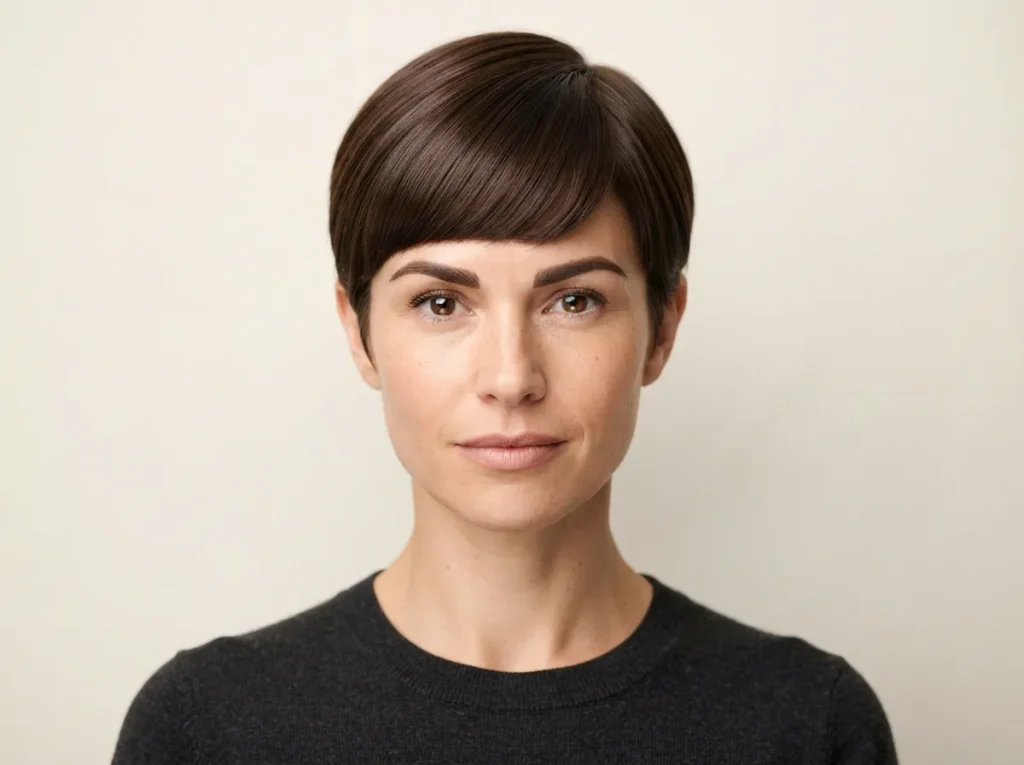
Arched bangs follow a gentle curve above or along the eyebrows. The center remains slightly shorter, while the outer edges lengthen toward the temples. This shape softens a polished pixie and gives the fringe a tailored appearance.
Ask for smooth graduation between the bangs and side sections. A blunt outer corner can interrupt the curve, while too much thinning may make the outline disappear. The crown can retain slight volume so the haircut does not look flat from the side.
Straight and lightly wavy hair are well suited to this design. Thick hair may require hidden weight removal beneath the surface. Fine hair should keep a fuller fringe so the arch stays clear under normal lighting.
Blow-dry the bangs downward, moving a small brush from one side to the other. Avoid curling the ends too far under, which can make the fringe appear rounded and stiff. Use a flat brush for gentle control and finish with a light smoothing cream.
The arch will change as the hair grows, so small trims help maintain its relationship with the eyebrows. Bring a clear reference to each appointment. A few millimeters can affect whether the bangs appear short, brow-skimming, or too heavy around the eyes.
20. Spiky Pixie With Jagged Bangs
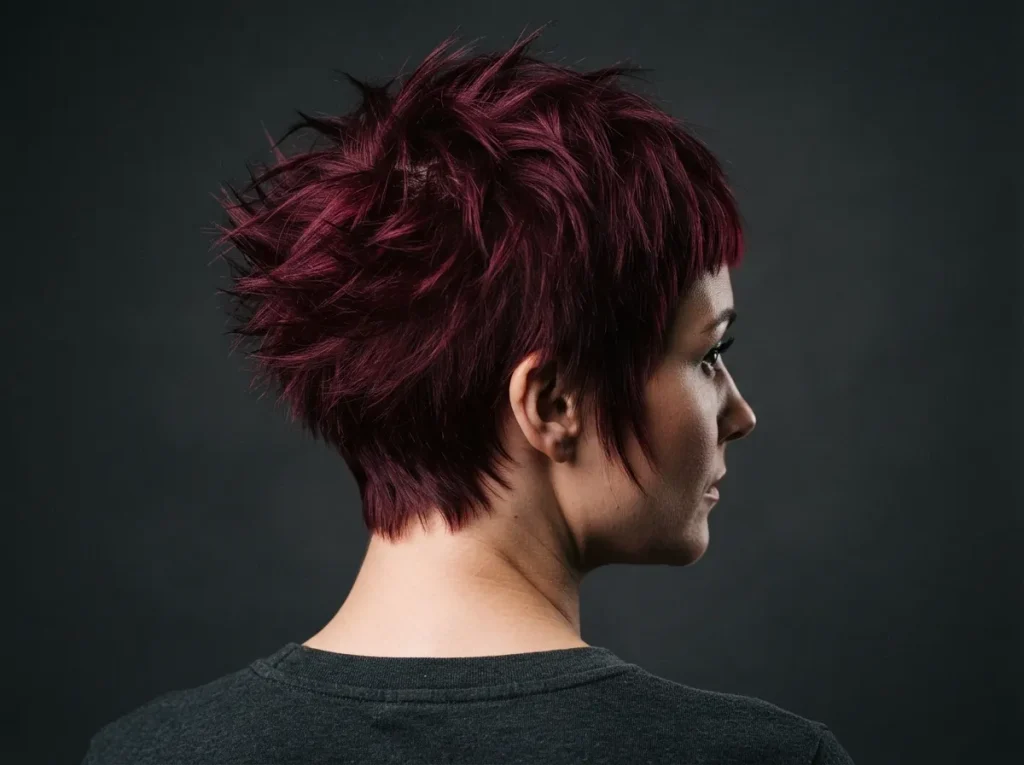
Spiky texture adds height and direction to a closely cropped pixie. Jagged bangs carry that movement toward the forehead with uneven pointed ends. The result can feel playful and bold without requiring a highly complicated routine.
Ask for short layers across the crown and slightly longer sections near the front. The bangs should have varied tips rather than deep gaps. Keeping a little density behind them prevents the fringe from appearing thin.
This cut is easiest to shape on straight or lightly wavy hair. Thick hair may hold the spikes naturally after weight removal. Fine hair can gain structure from a lightweight styling paste, though heavy wax may pull the strands downward.
Dry the top against its natural growth direction to create lift. Rub a tiny amount of matte paste between your fingers, then pinch several tips. Leave some sections smooth so the finish has contrast and does not appear uniformly stiff.
Wash styling residue out regularly, especially when using strong products close to the scalp. A gentle shampoo followed by light conditioner on the longer pieces should be enough. Schedule trims when the spikes become too long to stand easily or the jagged fringe loses its clear shape.
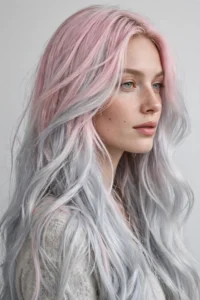
21. Pastel Pixie With Feathered Bangs
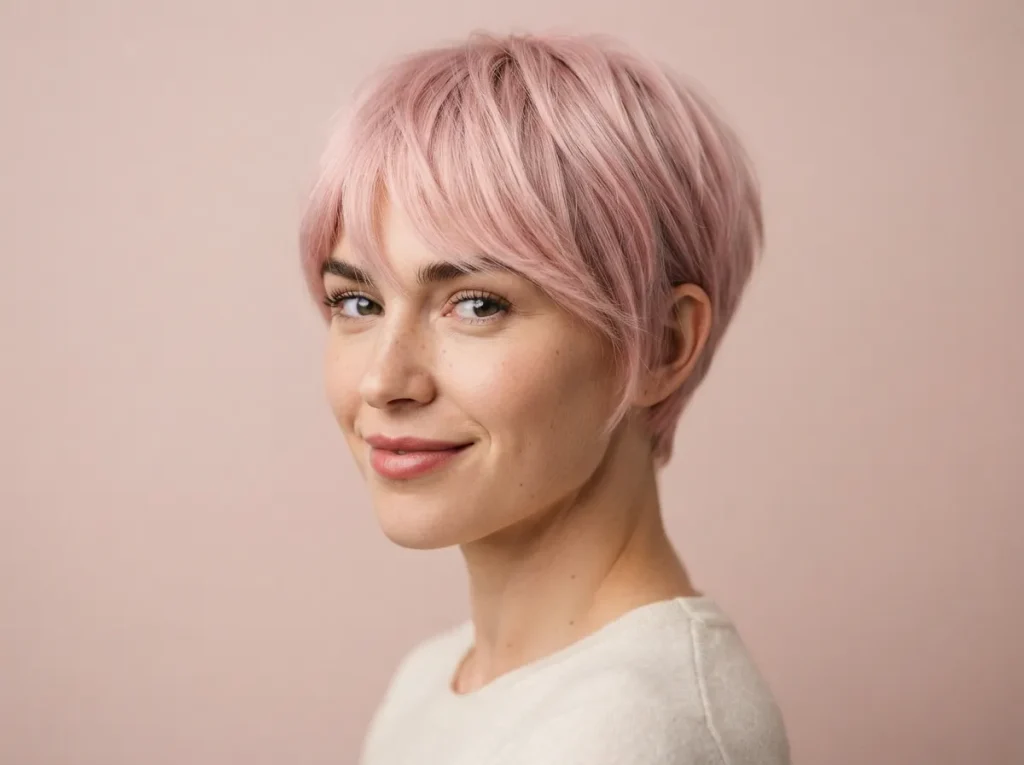
Pastel color can make a feathered pixie feel playful while the short shape keeps it controlled. Pale pink, lavender, peach, or powder blue highlights the movement of the fringe and crown layers. Darker roots can add depth if you prefer visible contrast.
Most pastel shades require a light base. Ask for a strand test before committing to major lightening, particularly if your hair contains permanent dark dye. Previously processed sections may lift or absorb toner unevenly.
A feathered fringe suits pastel color because each fine piece catches light differently. Keep the sides tapered and allow a little extra length across the top. This provides room for tonal variation without making the haircut appear heavy.
Pastels often fade with washing. Use cool water, gentle cleanser, and a color-depositing conditioner recommended for your chosen shade. Test tinted products on a hidden section before applying them throughout the hair.
Heat can also alter pale tones and dry lightened strands. Use moderate settings and apply heat protection when blow-drying. Coordinate trims with toner appointments when possible. Removing worn ends and restoring the shade together can keep the pixie’s color and shape balanced.
22. Grown-Out Pixie With Long Layered Bangs
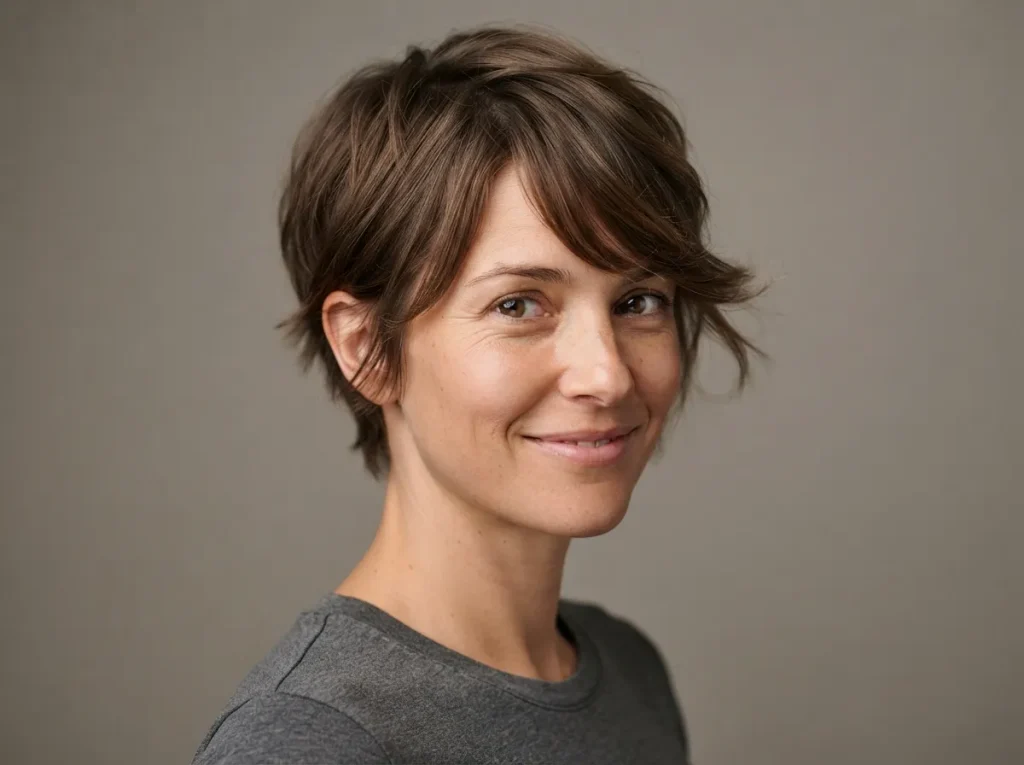
A grown-out pixie can look intentional when the front remains shaped and the sides are lightly controlled. Long layered bangs provide direction while the crown and temple sections gain length. This is a practical option if you want fewer cuts or plan to grow toward a bob.
Ask your stylist to remove bulk around the ears and nape without shortening the whole haircut. The bangs can stay longest near the cheekbones, with shorter layers connecting them to the crown. This preserves movement and avoids a heavy helmet-like shape.
Change the part as the fringe grows. A deep side part controls longer pieces, while a center part creates a short curtain effect. Tucking one side behind the ear can also make uneven growth appear deliberate.
Use a lightweight cream to control the ends and a little mousse for crown volume. Reshape rather than shorten during maintenance appointments if length is your goal. Small adjustments can prevent bulky areas while allowing steady growth.
Take reference photos every few weeks to track the shape you like. When the bangs reach the cheekbones, decide whether to continue growing them or maintain that face-framing length. A clear plan will help your stylist protect progress during each trim.
Conclusion
Pixie hairstyles with bangs can be adapted through fringe length, texture, color, and styling direction. Side-swept pieces create softness, micro bangs add a sharper line, and curly or wispy fringes work with natural movement. Longer bangs also provide extra flexibility if you like changing your part or gradually growing the haircut.
Choose one or two ideas that match your natural texture and usual morning routine. Pay attention to the sides, crown length, bang placement, and maintenance schedule rather than selecting a style only by color.
Save clear front and side references, then discuss your hairline, density, and growth patterns with your stylist. Ask how the fringe will behave without salon styling and how often it may require trimming. Start with the bang length that feels comfortable, since it can always be shortened after you see how the new pixie frames your face.