
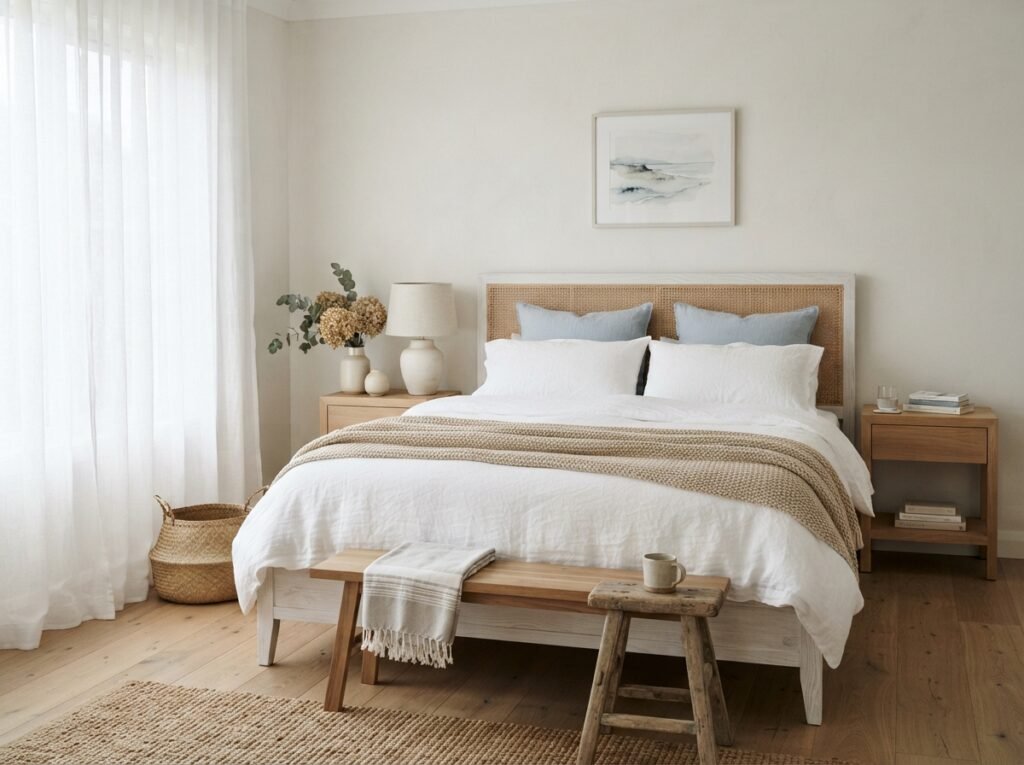
A beach-inspired bedroom can bring the calm feeling of the coast indoors without filling the room with obvious nautical decorations. The most appealing Beachy Bedroom Transform Into Coastal Haven Ideas use soft colors, natural textures, relaxed bedding, light wood, and gentle lighting to create an airy atmosphere.
You do not have to remodel the entire room to achieve the look. Simple updates such as white bedding, sandy beige accents, pale blue walls, woven textures, or sheer curtains can change the mood while working with furniture you already own.
The ideas below range from bright coastal rooms and ocean-blue accents to weathered wood, striped bedding, and modern seaside styling. Some suit large bedrooms, while others work well in compact spaces. Choose the details that fit your budget and room size, then build your coastal style gradually for a space that feels relaxed rather than themed.
1. Start With Airy White Bedding
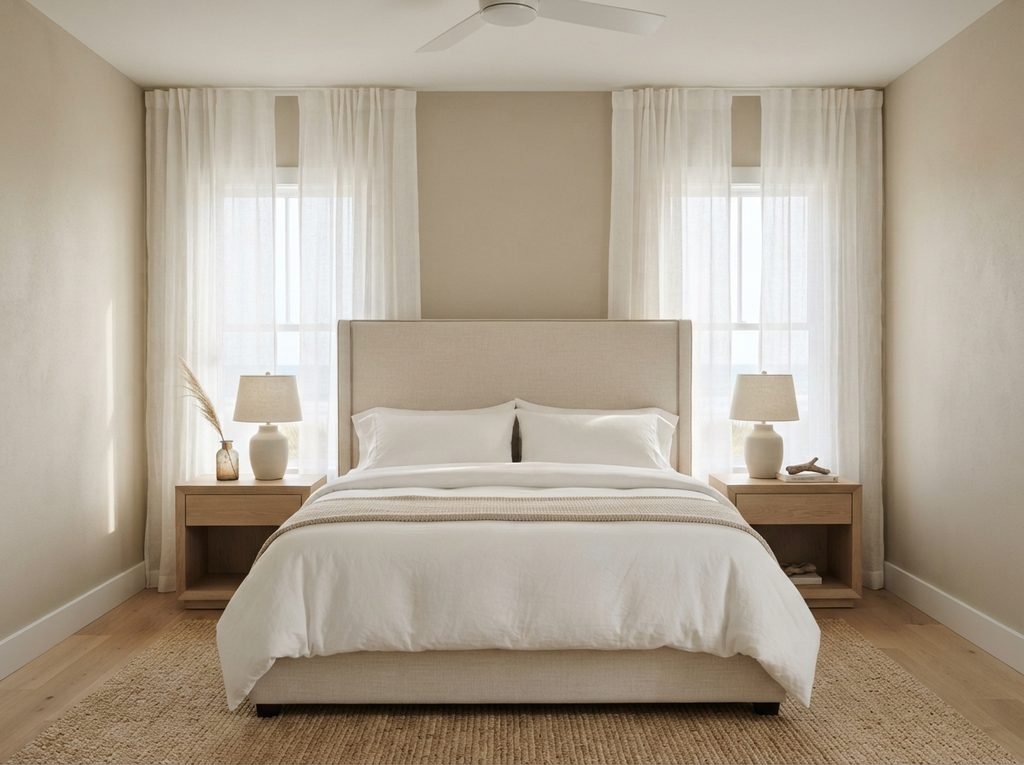
White bedding creates a bright base that works naturally with coastal colors and materials. Instead of using a perfectly formal arrangement, let the duvet and pillows have a slightly relaxed appearance for a softer seaside character.
Pair white cotton or linen-style bedding with one sandy beige throw. You can reuse existing white sheets and simply replace the duvet cover or pillow covers for an affordable update.
2. Use Sandy Beige Walls
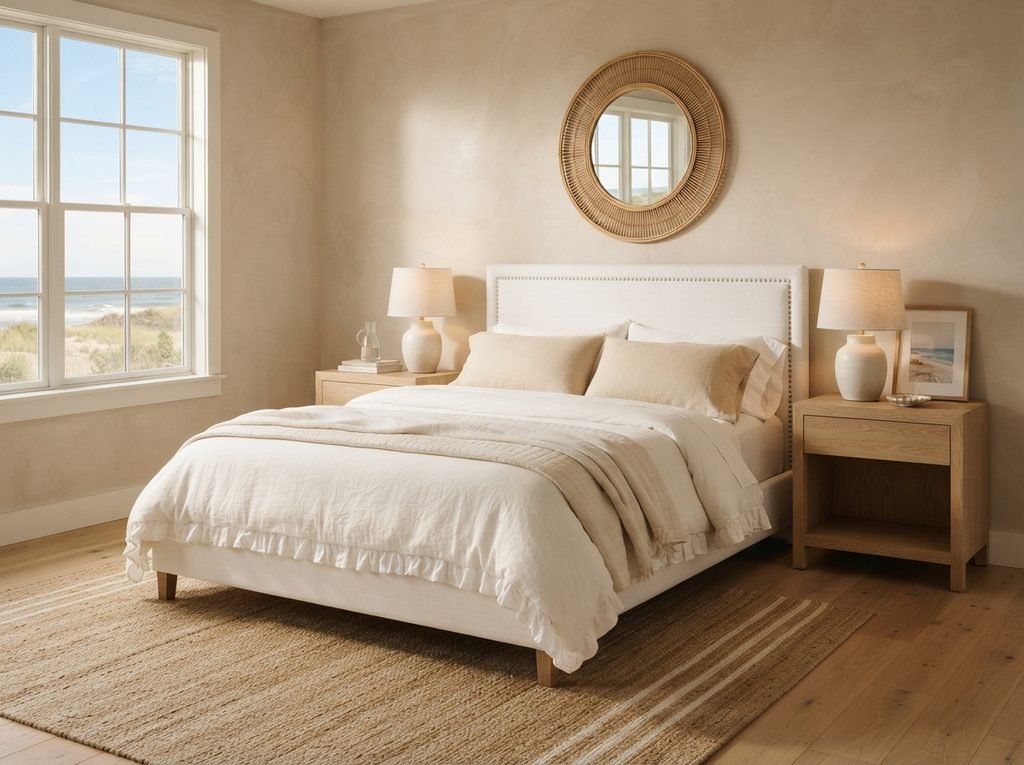
Warm beige shades can reference sand without making the bedroom feel strongly themed. They also create a gentle backdrop for white bedding, pale wood, soft blues, and woven materials.
Choose warm sand, light taupe, or creamy beige paint rather than yellow-heavy tones. If repainting the whole bedroom feels unnecessary, update only the bed wall and keep the remaining walls soft white.
3. Add Soft Ocean-Blue Accents
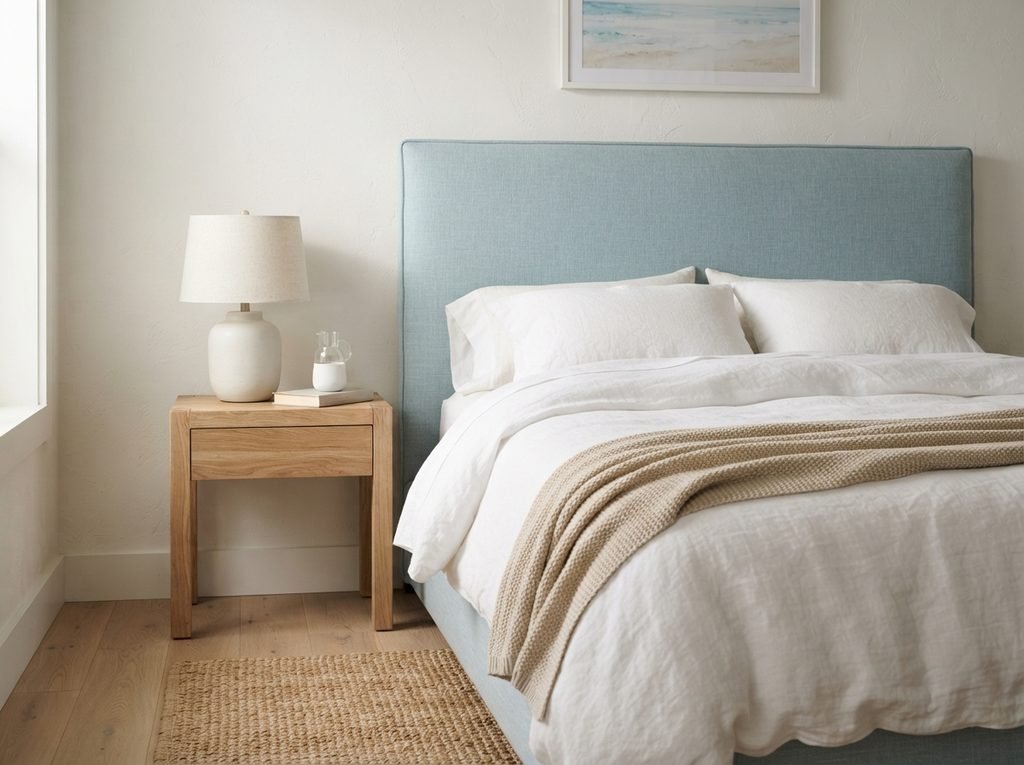
Pale blue can introduce coastal color without overpowering a neutral bedroom. Small areas of blue work particularly well against white, cream, beige, and light wood.
Try blue pillow covers, a headboard, or one lightweight throw rather than using the color everywhere. Dusty blue and muted aqua usually feel calmer than highly saturated shades and are easier to pair with existing neutral furniture.
4. Choose Light Natural Wood Furniture
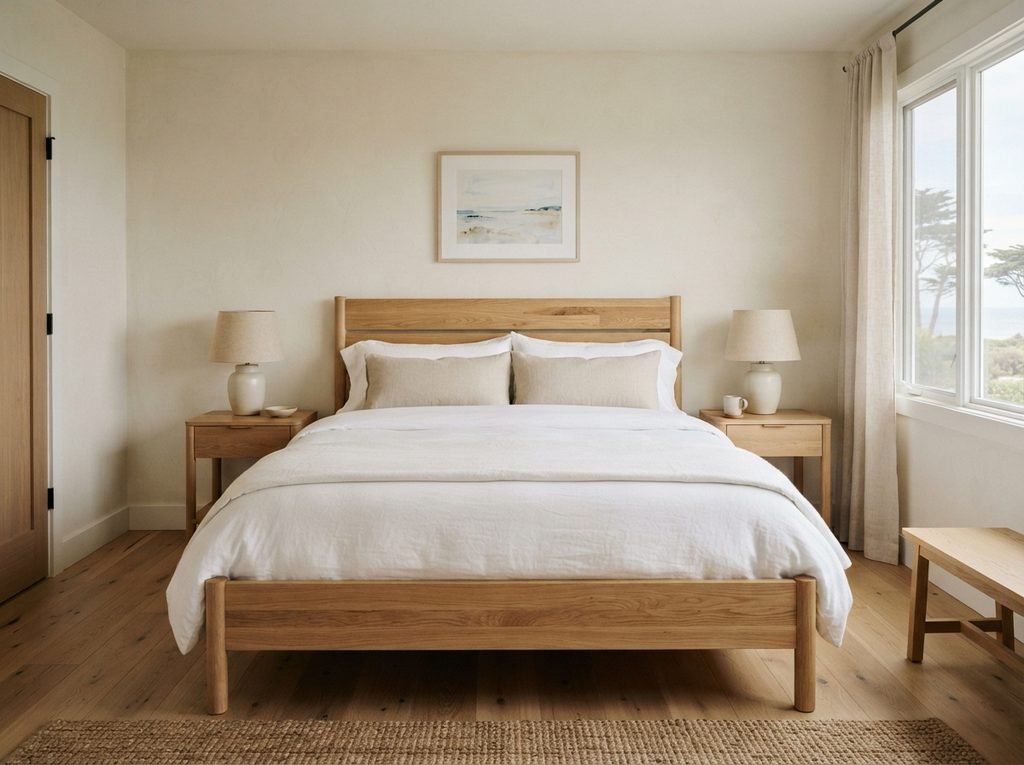
Light oak and other pale woods can make a coastal bedroom feel relaxed and bright. Their warm grain also prevents an all-white room from appearing cold or unfinished.
Use one consistent light wood tone for the bed frame and nightstands where possible. If replacing furniture is not practical, a pale wood bedside table or bench can introduce the material without changing every piece.
5. Layer Relaxed Coastal Textures
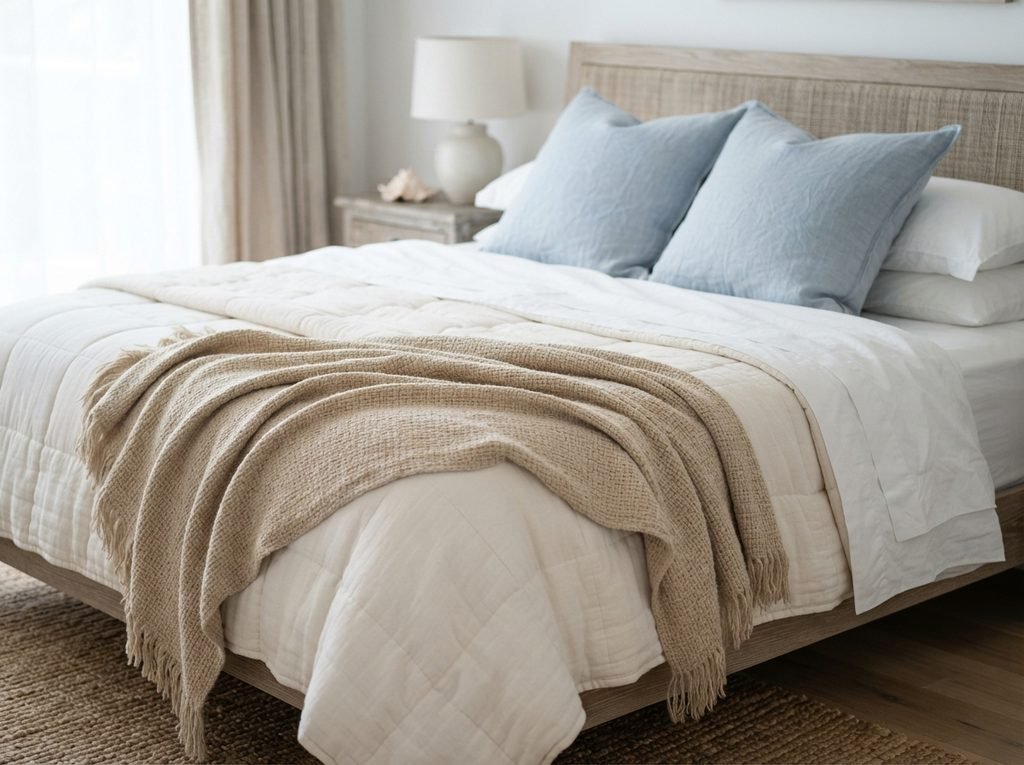
Coastal rooms often feel inviting because smooth and tactile fabrics appear together. Cotton, linen-style fabric, quilting, and woven textiles can add depth while keeping the color palette quiet.
Combine two or three fabric textures across your sheets, duvet, pillows, and throw. Avoid piling on too many layers. A simple bed that looks comfortable and slightly relaxed usually suits this decorating direction better than a rigid arrangement.
6. Hang Lightweight Sheer Curtains
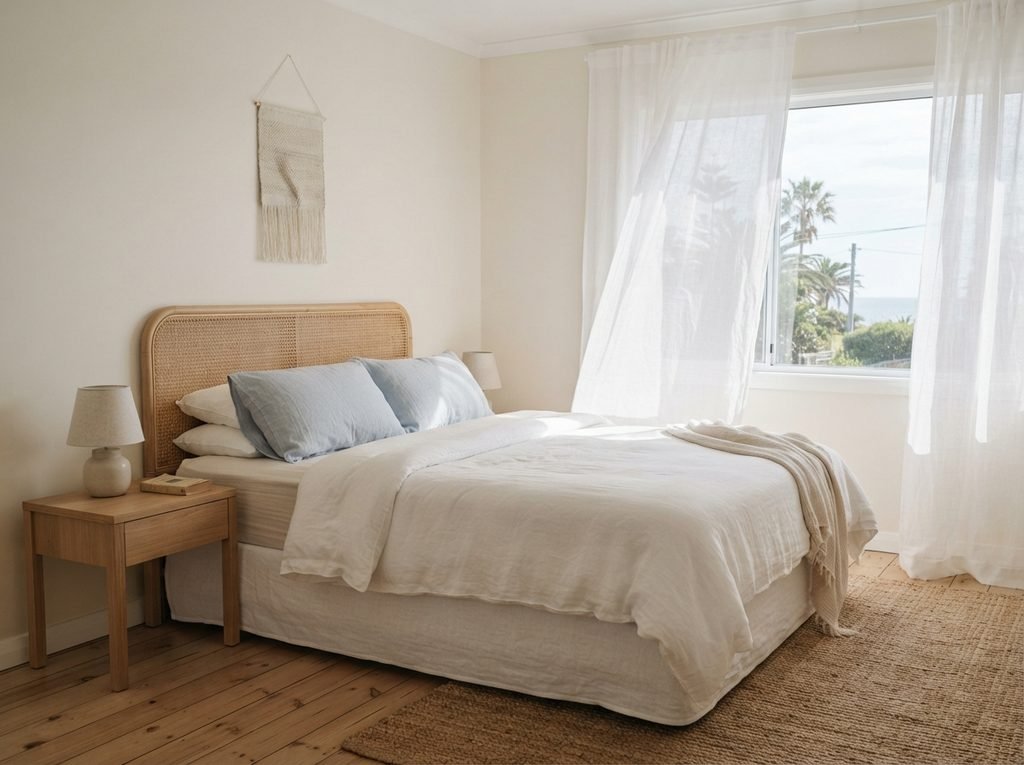
Heavy window coverings can reduce the bright, open character associated with coastal interiors. Sheer white or warm ivory curtains soften incoming daylight while keeping the bedroom visually light.
Hang floor-length sheer curtains slightly above the window frame to create a taller appearance. If privacy is a concern, pair them with a simple concealed shade so you can maintain the airy appearance during the daytime.
7. Ground the Room With a Woven Rug
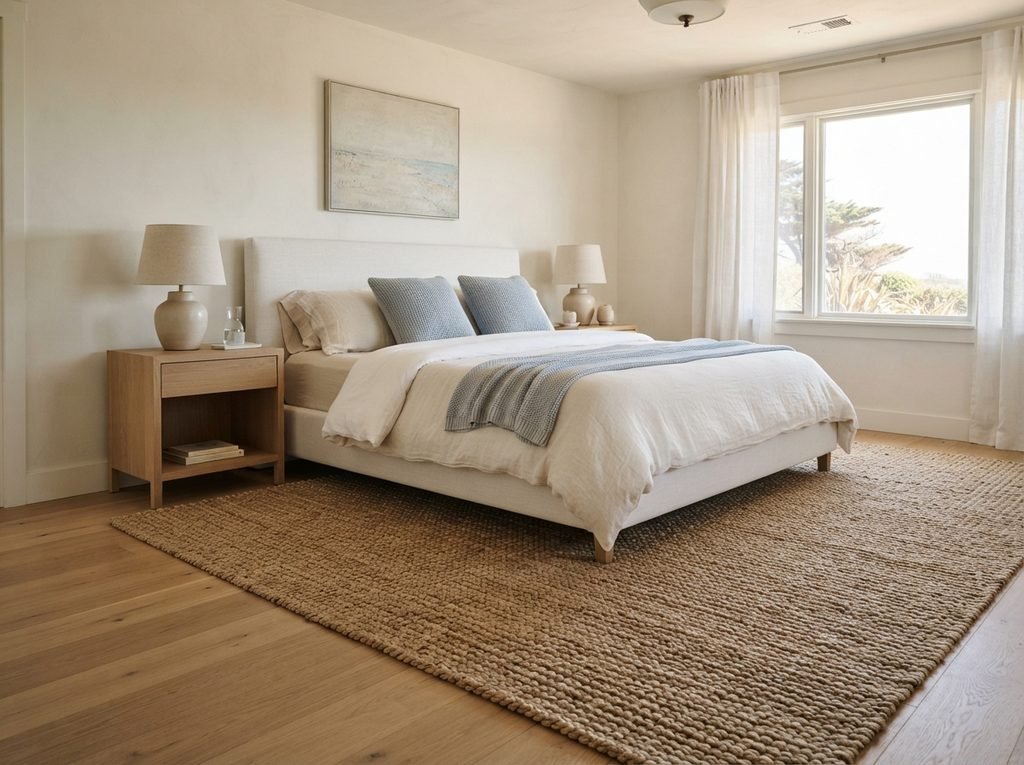
A natural-looking woven rug adds texture while supporting a sandy coastal color palette. It can also make wood or tile floors feel softer and visually connect the bed with nearby furniture.
Choose a beige flat-weave or jute-style rug large enough to extend beyond both sides of the bed. For smaller budgets, two narrow neutral runners beside the bed can create a similar effect.
8. Add a Whitewashed Wood Headboard
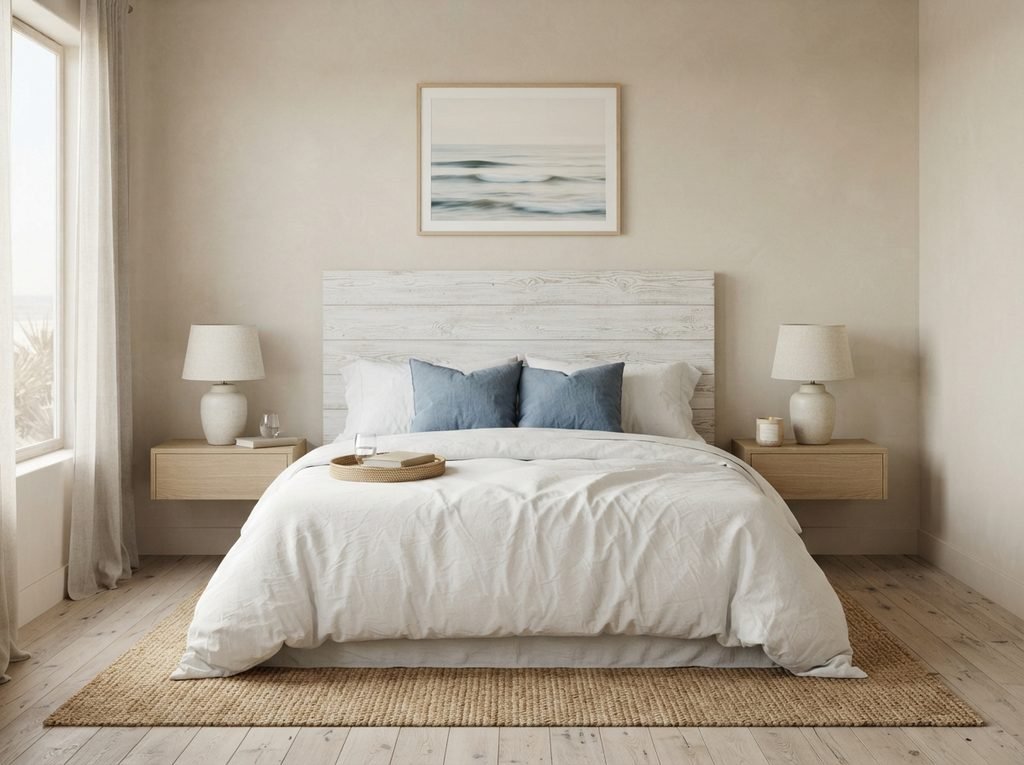
Whitewashed wood gives a bedroom subtle seaside character while remaining neutral enough for changing bedding colors. It works especially well with white textiles and muted blue accents.
Choose a headboard with visible natural grain and a soft white finish rather than a heavily distressed surface. A DIY version can be made by lightly finishing plain wood panels if you prefer a more affordable custom option.
9. Introduce Subtle Coastal Stripes
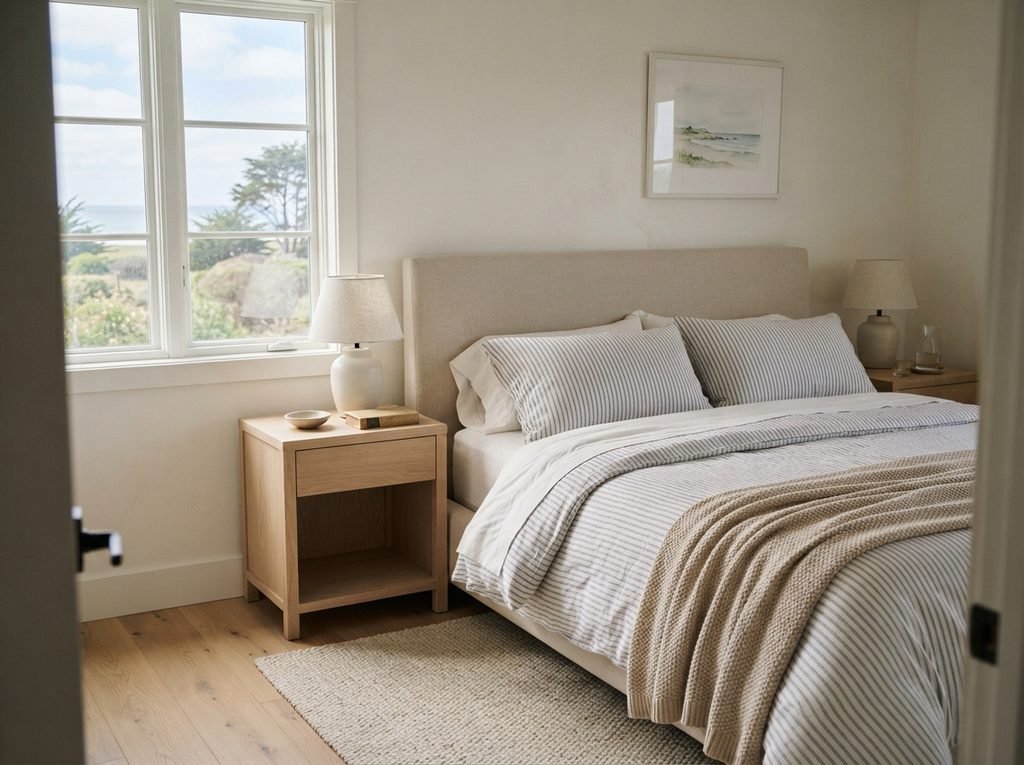
Thin stripes can hint at classic seaside style without turning the room into a nautical display. The easiest place to use them is through bedding because it can be changed whenever you want a different appearance.
Try thin navy, dusty blue, or beige stripes on pillow covers or a lightweight blanket. Keep the surrounding bedding mostly solid so the pattern remains controlled.
10. Try Modern Coastal Minimalism
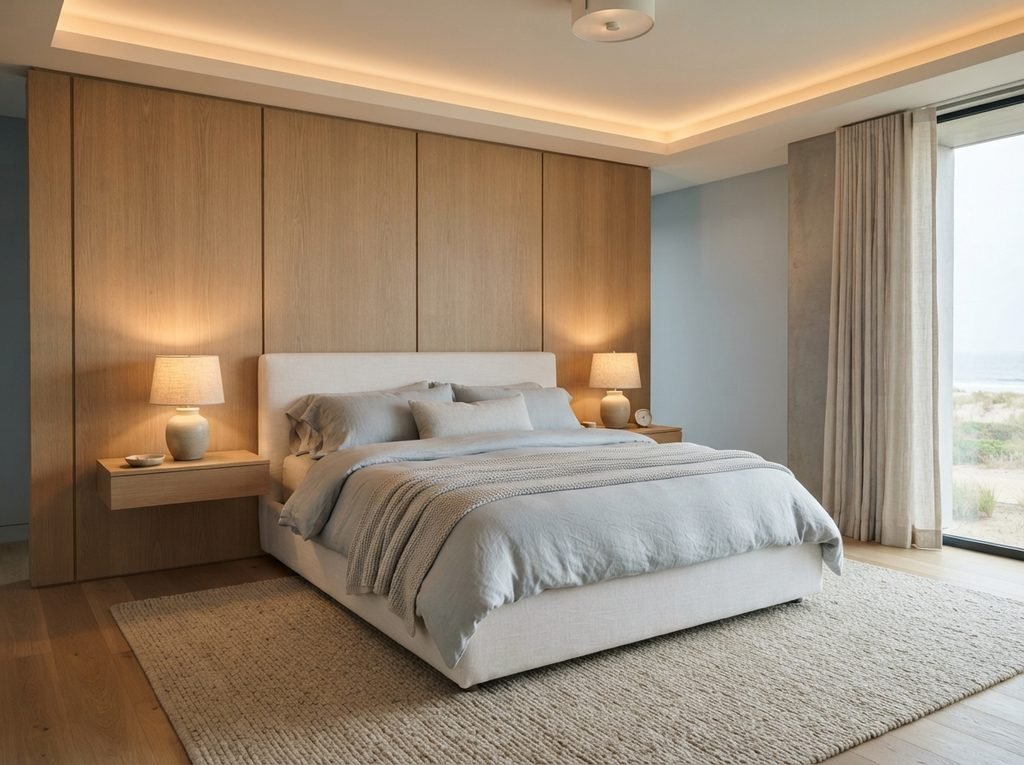
Modern coastal style works well if you prefer clean lines over rustic beach decoration. Keep the furniture simple while using color and texture to provide the coastal character.
Start with white, pale gray-blue, beige, and light oak as your main palette. Limit accessories and let the bedding, headboard, and natural materials carry the design. This approach can work especially well in smaller bedrooms.
11. Use Warm Bedside Lighting
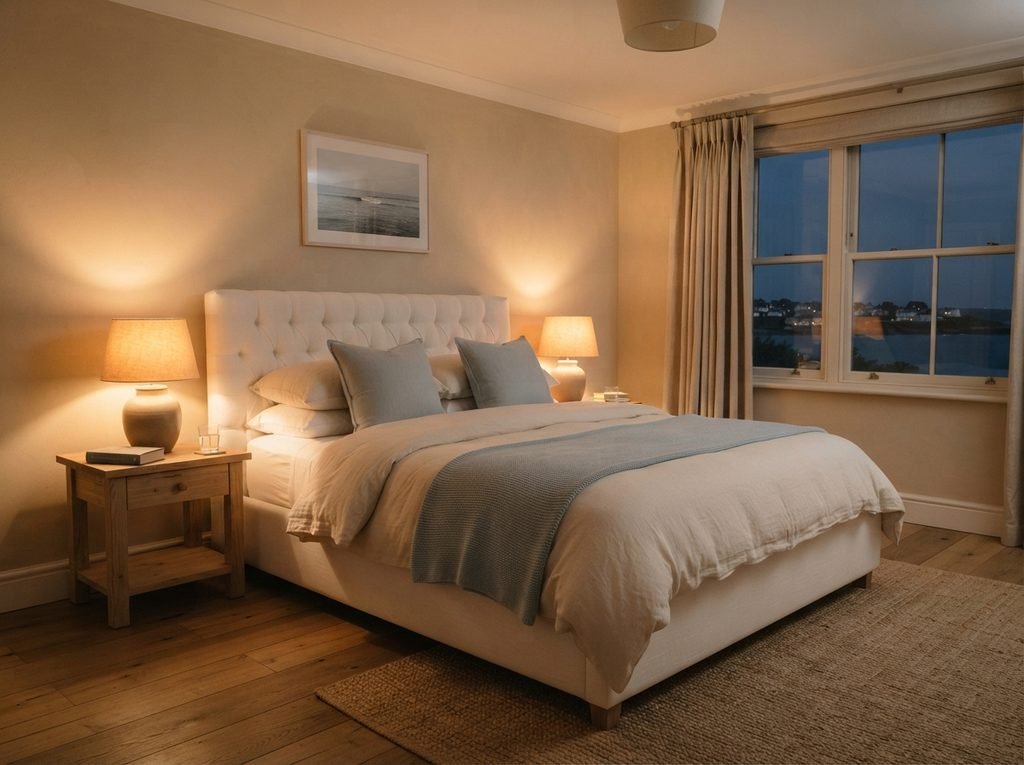
A coastal bedroom can feel bright during the day and softer after sunset by using warm bedside lamps. The warmer light also complements beige, white, pale blue, and natural wood.
Place matching lamps on both sides of the bed if space allows. Choose simple shades and warm bulbs rather than cool white lighting. Existing lamps can often be reused by changing only the bulbs or shades.
12. Paint a Muted Blue Accent Wall
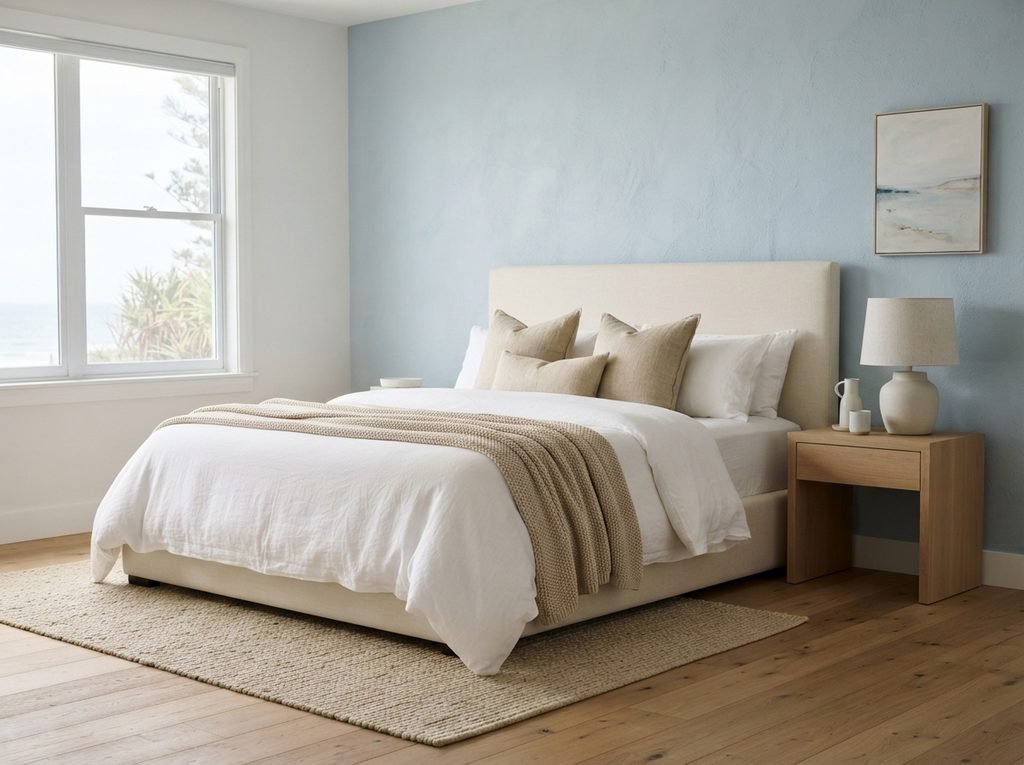
A single blue wall can add seaside color without making the entire bedroom feel cool. Muted blue works particularly well behind a white or cream bed because the contrast creates a clear focal area.
Look for dusty ocean blue or soft blue-gray paint rather than bright turquoise. Test a small section first since daylight and evening lamps can change how blue appears.
13. Keep a Small Coastal Bedroom Simple
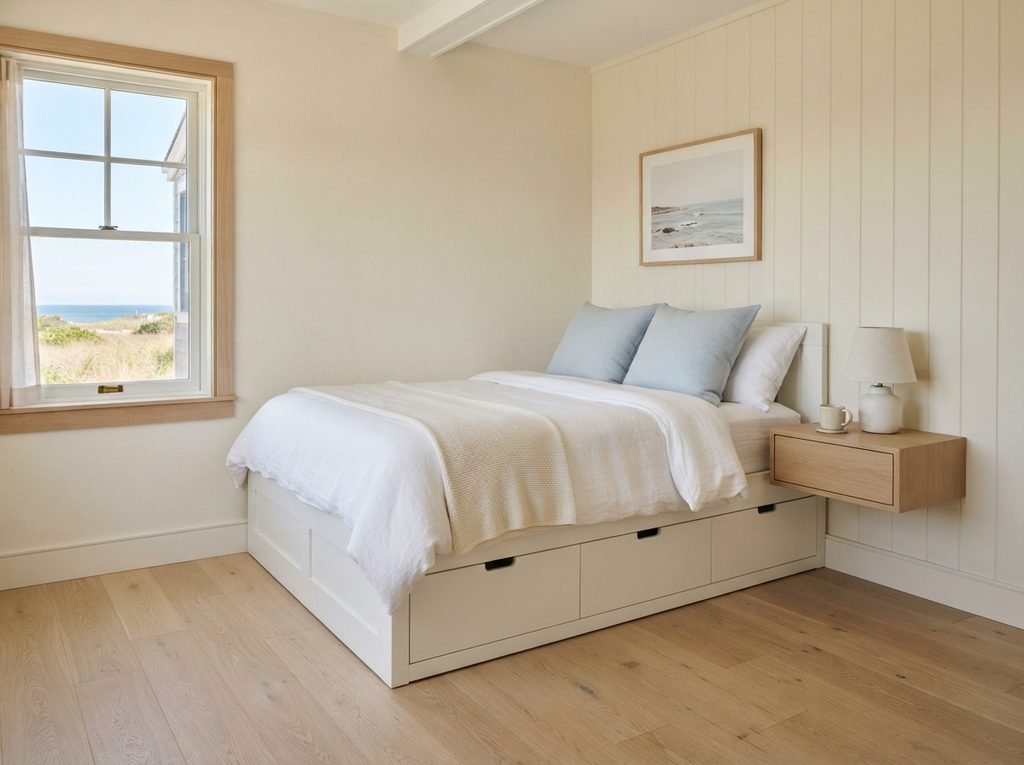
A smaller bedroom can still carry a beach-inspired look when furniture and accessories are kept under control. Light colors also help the room maintain an open visual character.
Use closed under-bed storage and a floating nightstand to preserve floor space. Keep the bedding white or cream with one muted blue accent. Fewer visible objects will allow the coastal palette to stand out more clearly.
14. Make a Woven Headboard the Focal Point
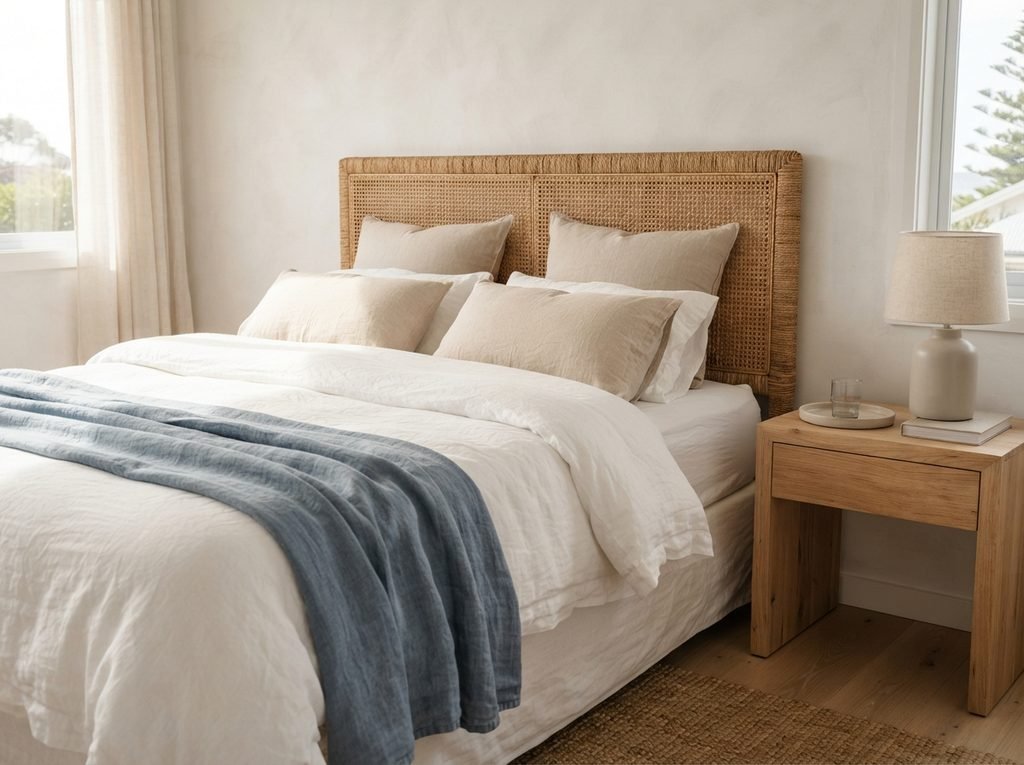
A woven headboard brings natural texture directly to the bed, making it useful when you want coastal character without several accessories. It pairs easily with white, beige, tan, and pale blue.
Keep the rest of the bed relatively simple with plain white bedding and two neutral pillows. The woven surface already provides plenty of visual detail, so additional patterns are rarely necessary.
15. Add Soft Seafoam Green
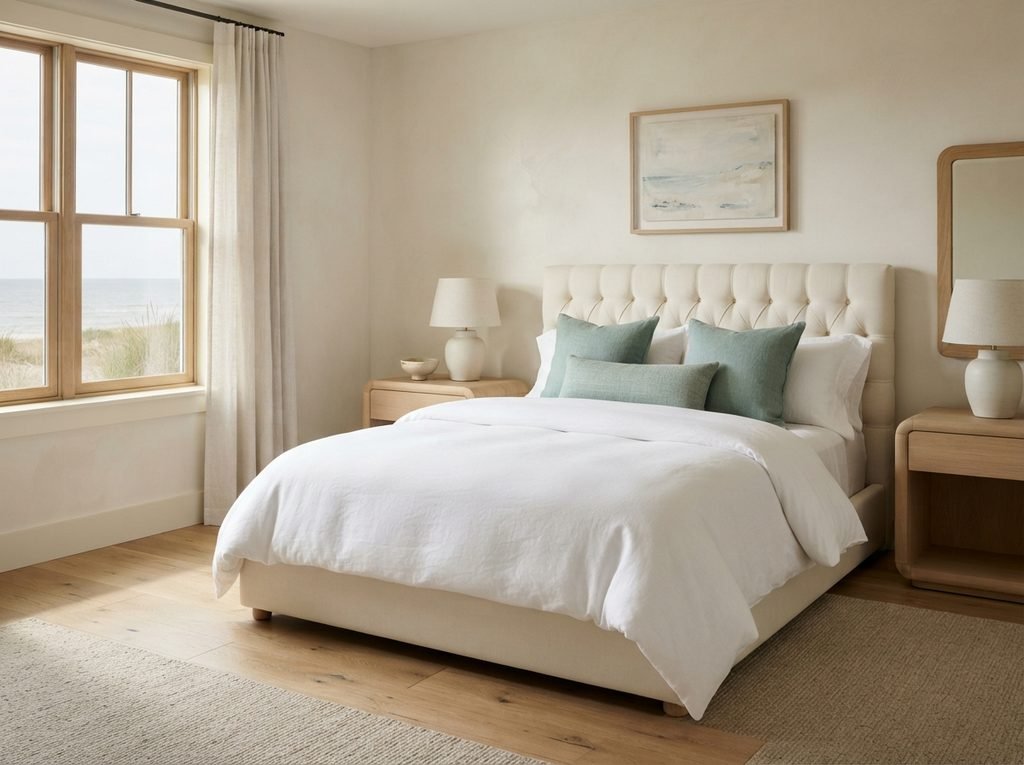
Seafoam green offers another coastal color choice for anyone who wants something different from classic blue. Its muted character pairs naturally with cream, white, sandy beige, and pale wood.
Use seafoam on pillows, a light blanket, or the headboard rather than across every surface. Keeping the shade limited allows it to add personality while the overall bedroom remains calm and easy to update.
16. Create a Sun-Washed Neutral Palette
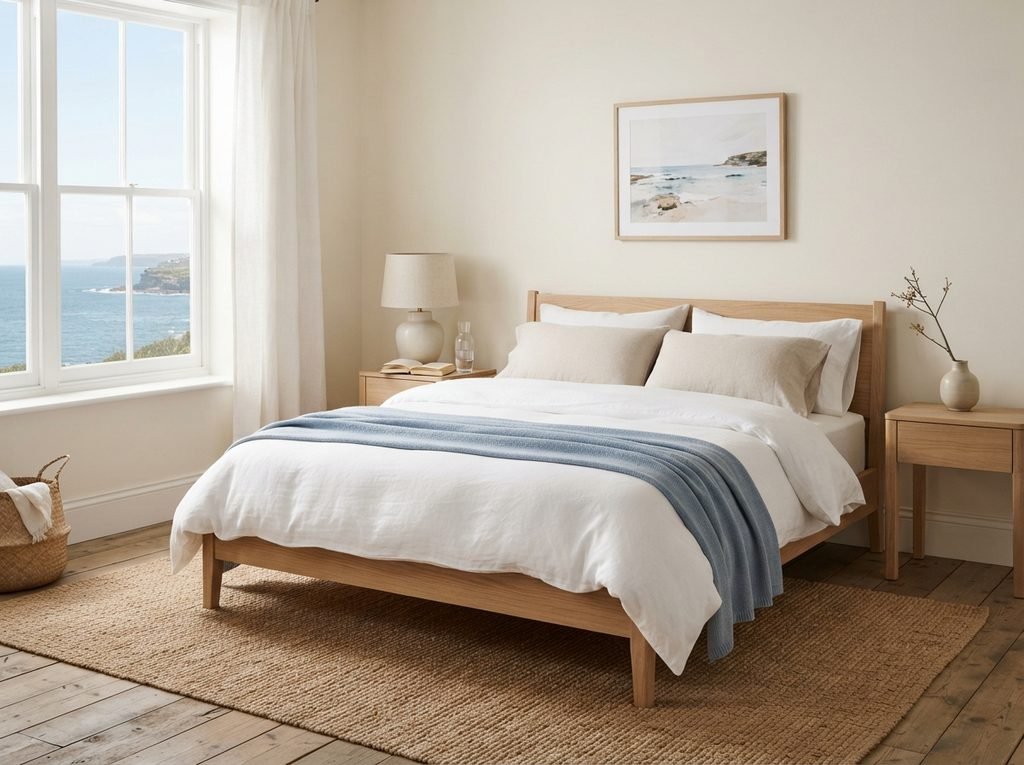
White, ivory, pale beige, and light wood can create coastal character even without obvious blue accents. This palette works well for anyone who prefers a quieter and more neutral bedroom.
Keep the largest surfaces light and warm, then create depth through different fabric and wood textures. The result feels connected to coastal interiors while remaining easy to adapt if your decorating preferences change later.
17. Use Driftwood-Inspired Finishes
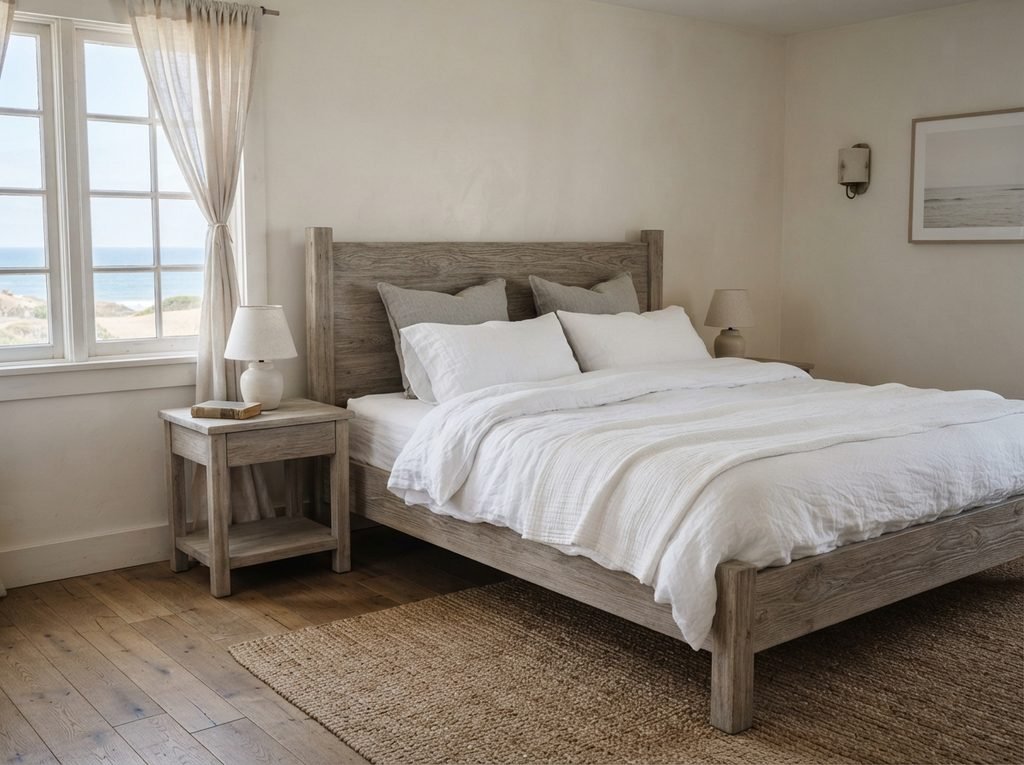
Weathered gray-beige wood can bring subtle shoreline character to furniture without using literal beach decorations. It works best when the finish remains understated and the rest of the room stays light.
Try a driftwood-style bed frame or pair of nightstands with white bedding. Avoid combining several heavily weathered pieces because too much distressed wood can make the bedroom feel more rustic than coastal.
18. Build a Breezy Layered Bed
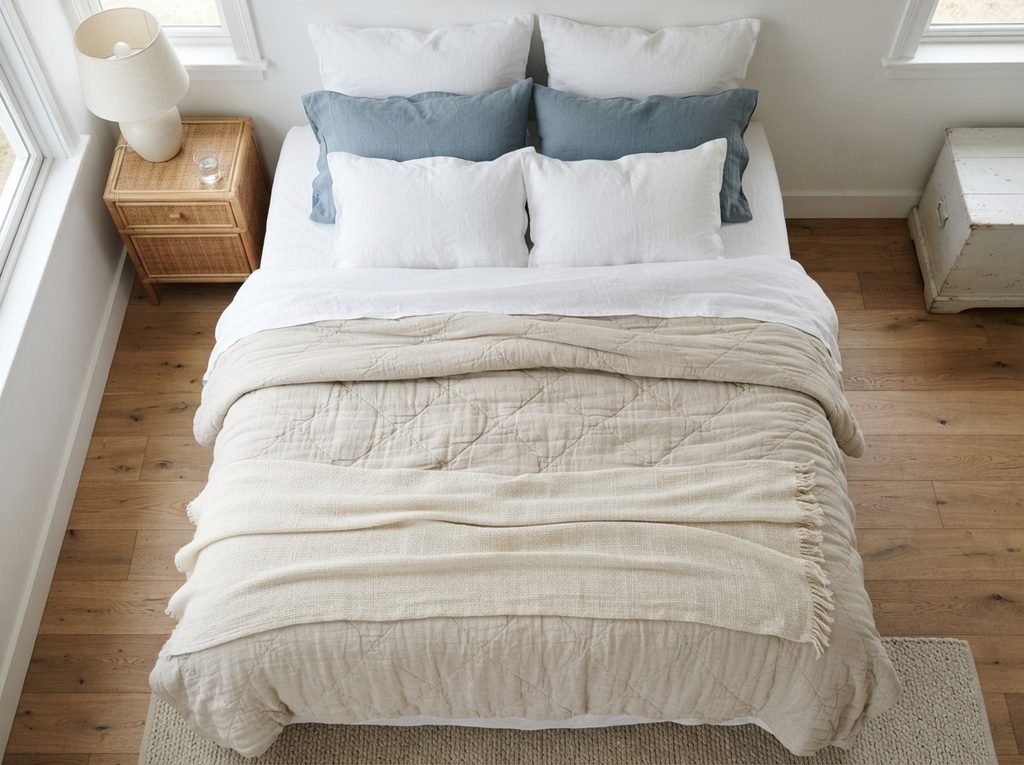
The bed is usually the largest visual feature in the room, so its fabrics can establish the coastal mood quickly. Soft layers create comfort while maintaining the relaxed appearance associated with seaside interiors.
Start with white sheets, a pale neutral quilt, and two muted blue pillows. Add one lightweight throw near the foot of the bed. Keep the layers loose enough to appear comfortable rather than overly formal.
19. Add a Simple Window Seat
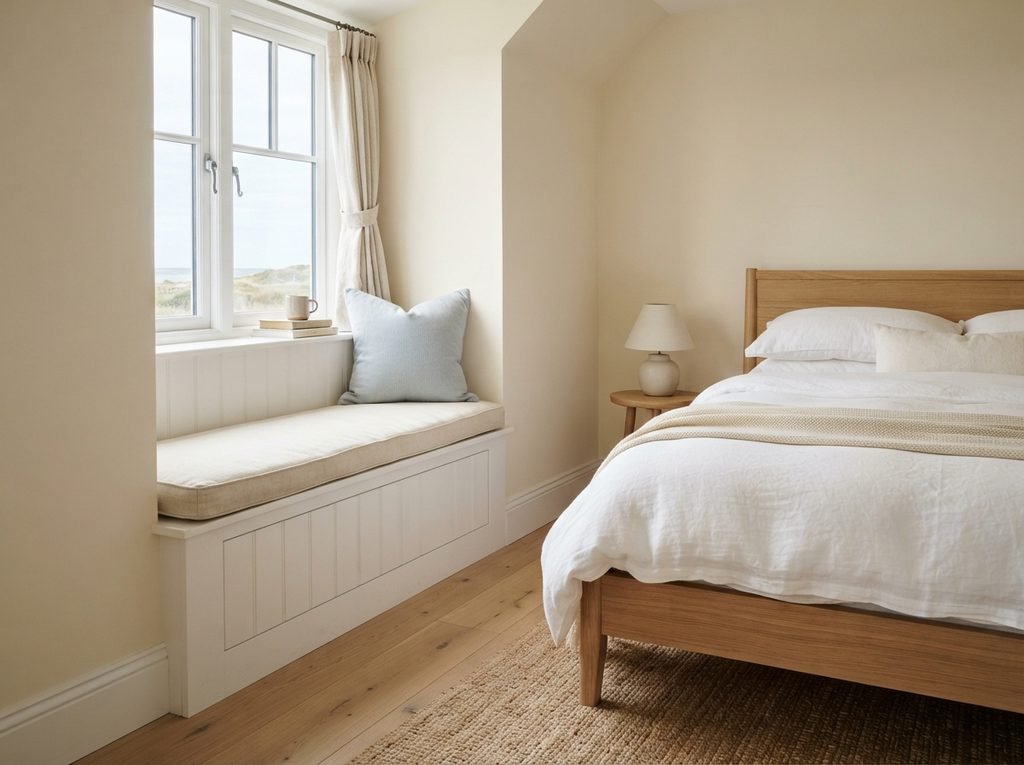
A window seat can make a larger coastal bedroom feel more relaxed while providing a practical spot for sitting. Keep the design simple so it supports the bed rather than competing with it.
Use a cream seat cushion with one pale blue cushion and closed storage underneath if possible. If built-in seating is not practical, a narrow upholstered bench can provide a similar function.
20. Soften the Room With Curved Shapes
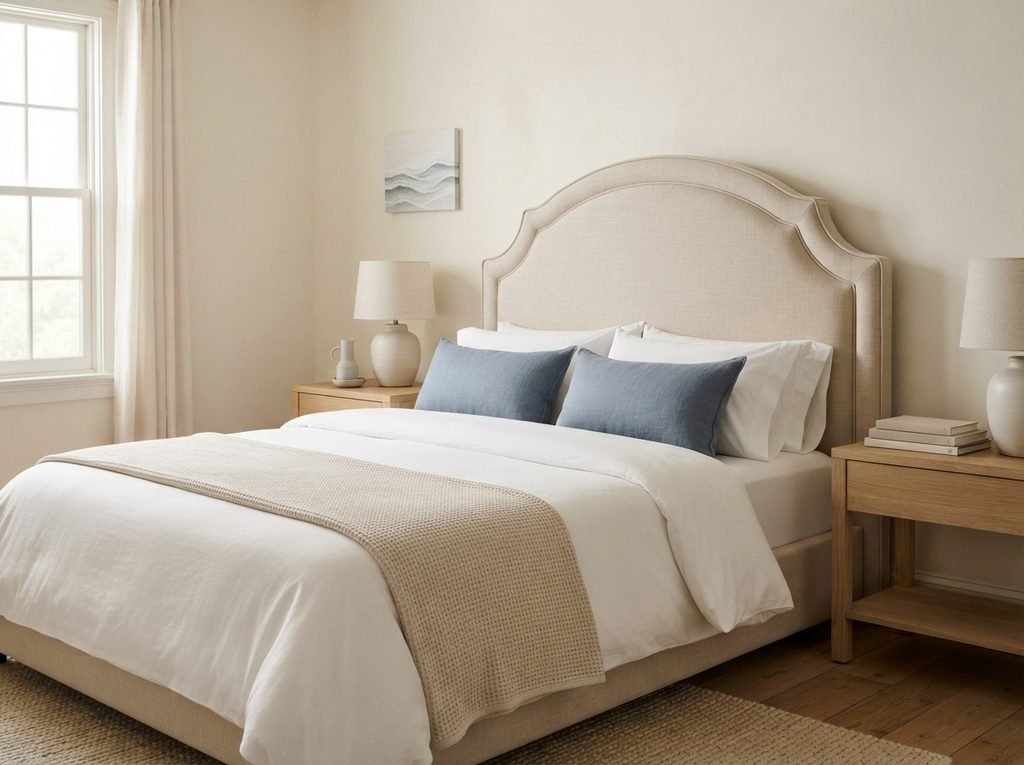
Coastal bedrooms often benefit from softer furniture lines rather than sharp, heavy forms. A curved headboard can introduce that feeling without adding extra accessories or patterns.
Choose an arched upholstered headboard in cream or beige and pair it with simple rectangular nightstands for balance. The curved silhouette provides enough visual interest while still fitting a clean and modern coastal room.
21. Pair Blue-Gray Walls With Warm Neutrals
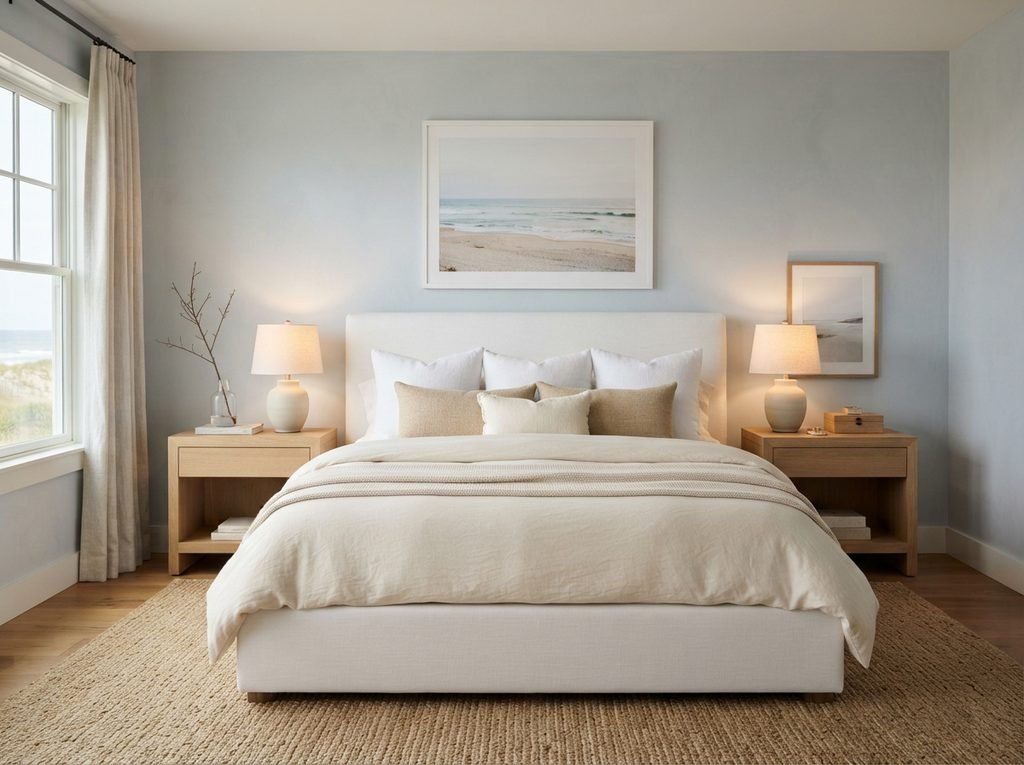
Blue-gray walls can create a quiet coastal backdrop while feeling softer than brighter ocean colors. Warm beige and cream keep the cooler wall shade from dominating the room.
Pair blue-gray paint with ivory bedding and sandy accents for a balanced result. Light oak furniture can connect the warm and cool shades. Keep patterns limited so the color relationship remains the main visual feature.
22. Finish With a Calm Coastal Color Scheme
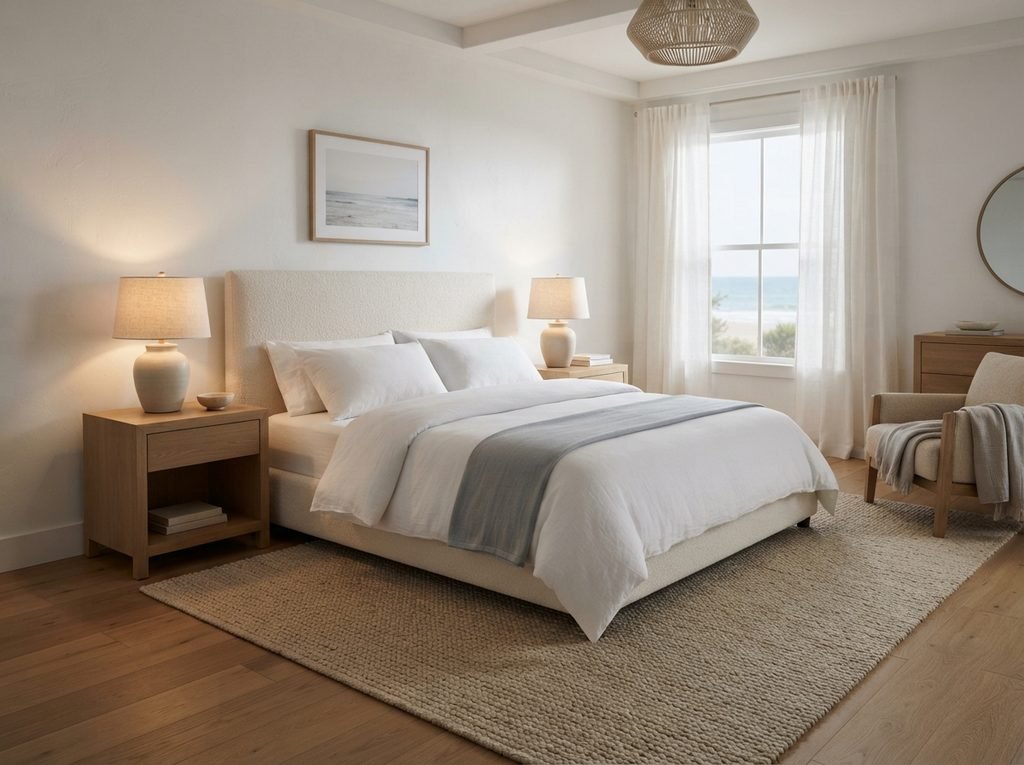
For a cohesive result, repeat a small set of colors throughout the bedroom rather than adding many different coastal shades. White, cream, sand, pale blue, and light wood create an easy foundation.
Use the lightest colors on larger surfaces and reserve blue or seafoam for smaller areas. Repeating the same tones through bedding, walls, rugs, and furniture helps the room feel connected without relying on themed decorations.
Conclusion
The best Beachy Bedroom Transform Into Coastal Haven Ideas are less about obvious beach decorations and more about creating a light, comfortable atmosphere. White bedding, sandy neutrals, muted blues, pale wood, woven materials, soft curtains, and warm lighting can bring coastal character into bedrooms of many sizes.
You can also adapt the style to match your personal taste. Choose cleaner furniture and fewer accessories for a modern coastal room, or add weathered wood and woven textures for a more relaxed seaside appearance. Keeping the color palette controlled will help both directions feel connected.
Pick one or two ideas that work with your current bedroom and budget. Start with an easy change such as bedding, paint, curtains, or lighting before replacing larger furniture. Once the main colors are established, add texture gradually and stop when the room feels calm, comfortable, and balanced.