
Healthy-looking hair rarely comes from one miracle product. More often, it’s the result of a simple routine that keeps your scalp clean, your strands moisturized, and everyday damage under control. The best part? Your routine doesn’t need to involve ten products or hours of effort.
Whether your hair is straight, wavy, curly, fine, thick, dry, or somewhere in between, building a routine around what your hair actually needs can make daily care much easier. The key is consistency, gentle techniques, and making small adjustments as your hair changes.
Step 1: Understand Your Hair and Scalp
Before buying new products, spend a little time understanding your hair.
Start with your scalp. Does it become oily quickly, stay fairly balanced, or often feel dry? Your scalp condition can help determine how frequently you need to wash your hair.
Next, consider your strands:
- Fine hair can become weighed down by heavy products.
- Thick hair may need more moisture and careful detangling.
- Straight hair can show oil more quickly at the roots.
- Wavy hair often benefits from lightweight hydration.
- Curly hair may need additional moisture and gentler handling.
- Color-treated or chemically processed hair usually requires extra attention to conditioning and damage prevention.
Instead of following someone else’s exact routine, use their advice as inspiration and adjust it for your own hair.
Step 2: Create a Washing Schedule That Works
There isn’t one perfect number of times everyone should wash their hair each week.
Wash often enough to remove excess oil, sweat, styling products, and buildup without unnecessarily drying your hair. Some people prefer frequent washing, while others find that their scalp and hair feel better with more time between washes.
When shampooing, concentrate primarily on your scalp rather than aggressively scrubbing the lengths. Massage gently with your fingertips and allow the shampoo to rinse through the rest of your hair.
Avoid using your nails to scratch your scalp.

Step 3: Make Conditioner a Regular Habit
Conditioner helps make hair feel smoother and easier to manage after washing.
After rinsing your shampoo, gently squeeze excess water from your hair. Apply conditioner mainly through the mid-lengths and ends, especially if your roots tend to become oily.
Give the conditioner a little time to sit before rinsing according to the product directions.
If your hair is particularly dry or prone to tangling, you may also benefit from an occasional deeper conditioning treatment. However, more product isn’t always better. Start with a small amount and increase only when your hair seems to need it.
Step 4: Detangle Without Being Too Rough
Wet hair needs careful handling because aggressive brushing can contribute to breakage.
Instead of dragging a brush from your roots straight through tangled ends, begin at the bottom. Gently remove knots from the ends and gradually work upward.
A wide-tooth comb or detangling brush can make the process easier.
For curly or textured hair, detangling while conditioner is in the hair may work particularly well. For other hair types, you may prefer gentle detangling after washing.

Step 5: Dry Your Hair Gently
How you dry your hair matters almost as much as how you wash it.
Instead of vigorously rubbing wet hair with a rough towel, gently squeeze or blot out excess moisture. A soft microfiber towel or smooth cotton T-shirt can be useful for reducing friction.
If you use a hair dryer, keep it moving rather than concentrating intense heat on one area for too long. A moderate temperature can often get the job done without using the hottest setting.
Whenever possible, give your hair a little time to partially air-dry before heat styling.
Step 6: Protect Your Hair Before Using Heat
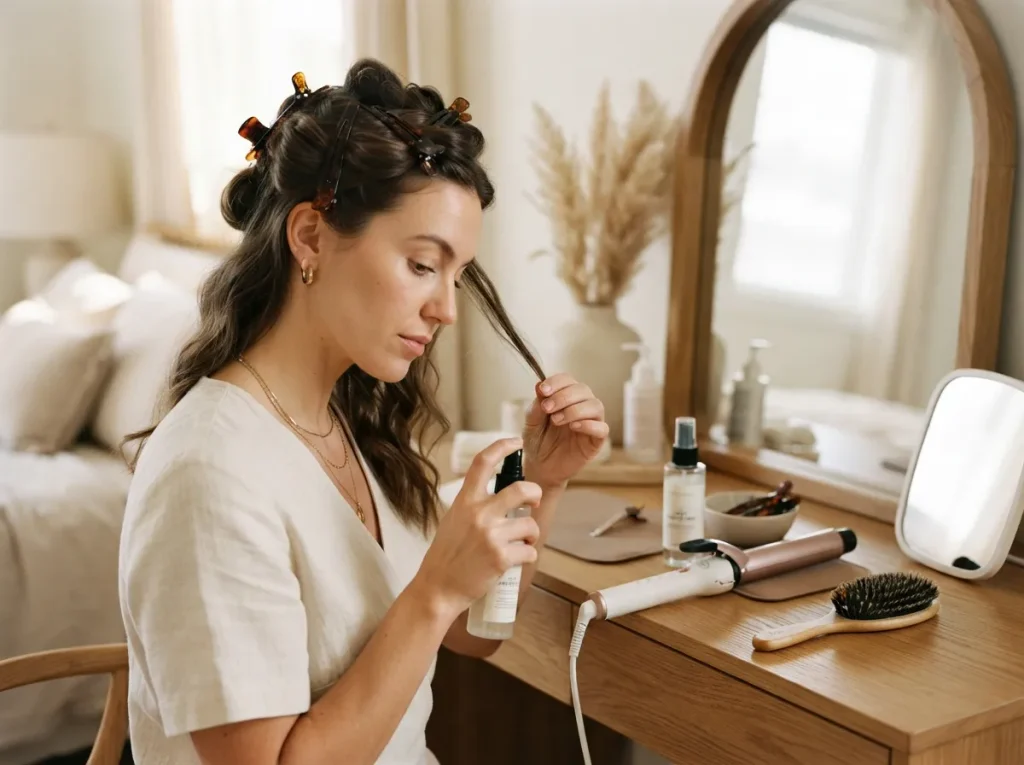
Curling irons, straighteners, and blow dryers can create beautiful styles, but frequent high heat can also contribute to dryness and damage.
Before heat styling, apply a heat protectant suitable for your hair and follow its instructions.
A few simple habits can also help:
- Use the lowest effective temperature for your hair.
- Avoid repeatedly passing a hot tool over the same section.
- Make sure your hair is suitable for the specific tool before using it.
- Give your hair occasional heat-free days.
- Keep heated tools clean and in good condition.
You don’t necessarily have to eliminate heat styling. The goal is simply to use it more thoughtfully.
Step 7: Add Only the Products Your Hair Needs
It’s easy to assume a complete hair routine requires shelves full of products. Usually, it doesn’t.
Start with the basics: shampoo and conditioner. Then add products only when they solve a specific problem.
For example:
- Leave-in conditioner for extra softness and easier detangling
- Lightweight serum for smoothing the ends
- Styling cream for definition
- Texturizing product when more grip or volume is needed
- Heat protectant when using heated tools
Introduce new products gradually. This makes it easier to tell what is actually helping your hair.
Step 8: Protect Your Hair Between Wash Days
Your routine doesn’t stop when your hair is dry.
Be mindful of hairstyles that pull tightly on the same areas every day. Switching between loose ponytails, buns, braids, claw clips, and wearing your hair down can give you more variety.
At night, gently detangle your hair when appropriate and consider a loose braid or other comfortable protective style if your hair tends to tangle while you sleep.

Keep Your Hair Routine Simple and Consistent
A good hair care routine doesn’t need to be complicated. Start by understanding your hair, cleanse it according to your scalp’s needs, condition regularly, detangle gently, reduce unnecessary friction, and be mindful when using heat.
Most importantly, pay attention to how your hair responds. Seasonal weather, styling habits, chemical treatments, and lifestyle changes can all affect what your hair needs over time.
Build your routine one step at a time rather than changing everything overnight. Save this healthy hair routine for later and use it as a simple checklist whenever your hair care routine needs a refresh!