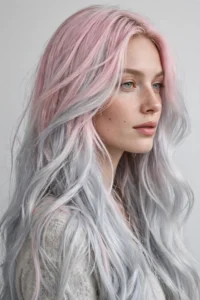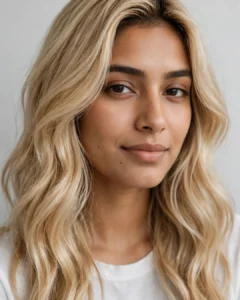
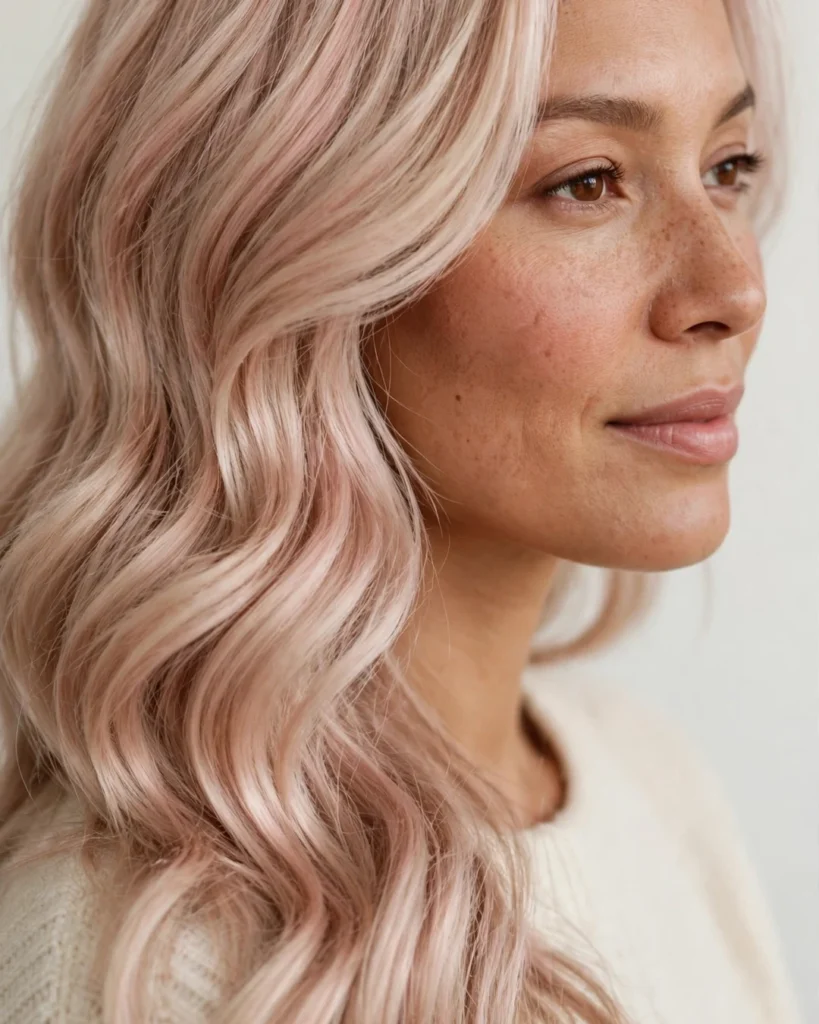
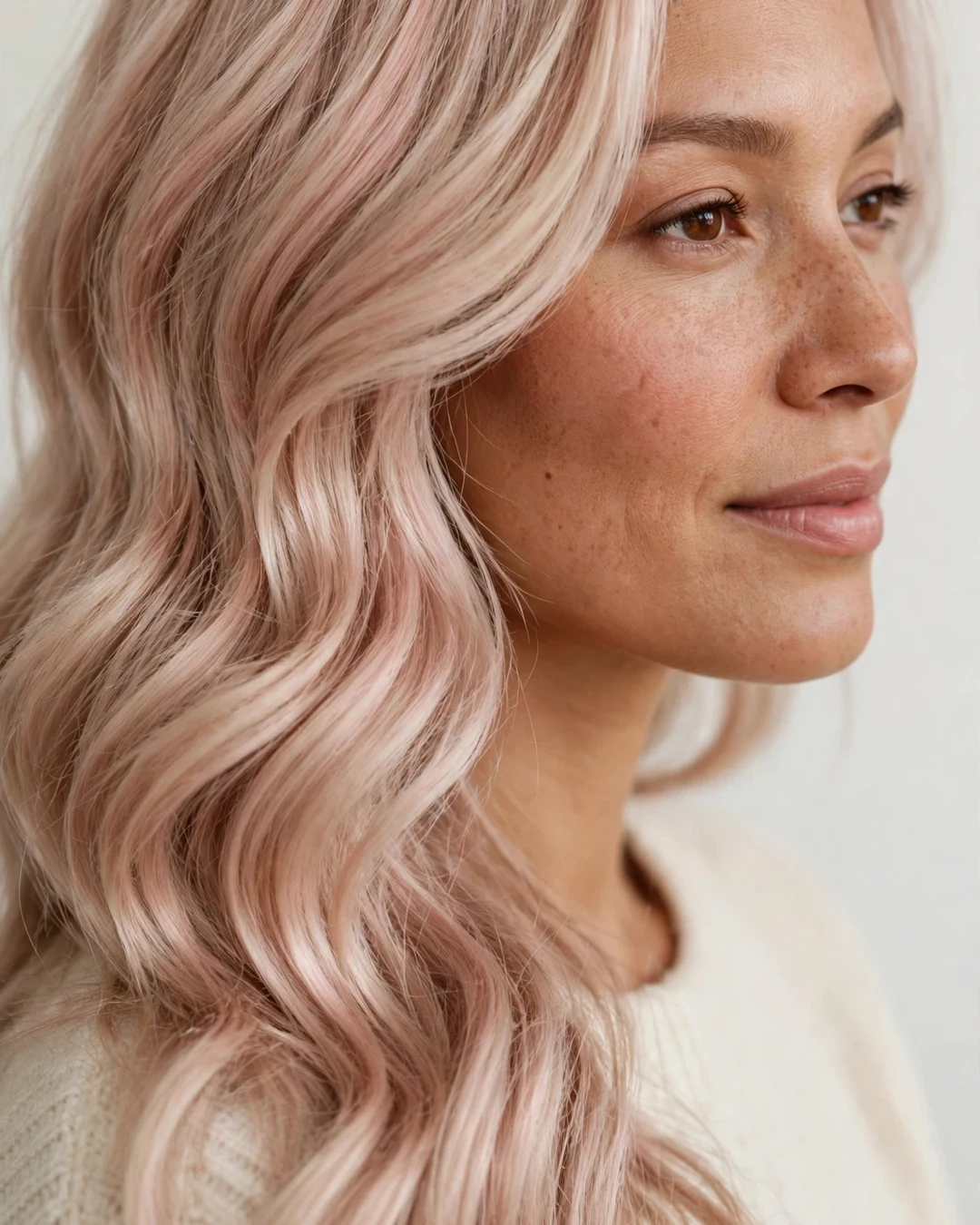
Blush blonde hair sits in the sweet spot between classic blonde and soft pink color. It pairs a light blonde base with a sheer rosy wash, giving hair a warm glow that feels romantic yet still wearable for everyday life.
If you love blonde but want something with more personality, this shade family delivers. The pink settles gently over gold and champagne tones, so it flatters a wide range of skin tones and grows out without harsh lines.
Below you will find 24 distinct ways to wear the trend, from barely-there tints to bolder rose-gold statements. Each idea covers a different cut, technique, or finish, with styling and upkeep notes to help you pick the right version. Show your colorist the look that speaks to you, and ask which formula suits your starting shade.
1. Classic Blush Blonde Balayage
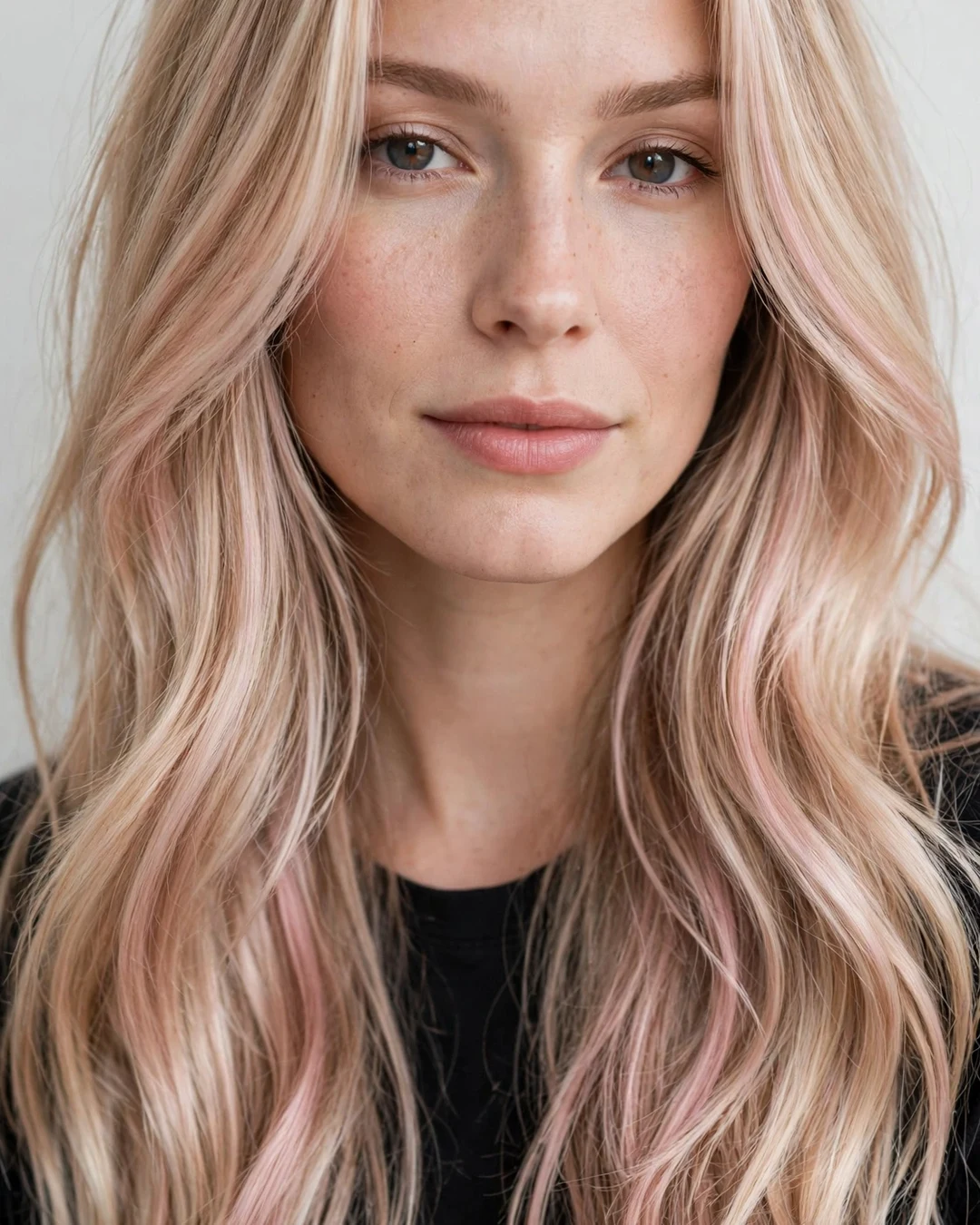
Hand-painted balayage keeps the pink soft and diffused, melting from a natural blonde root into rosy ends. This technique grows out beautifully because there are no hard lines.
Ask your colorist for soft rose balayage ribbons placed through the mid-lengths. A gloss every six to eight weeks keeps the pink from fading to flat beige.
2. Rose-Gold Blush Blonde Waves
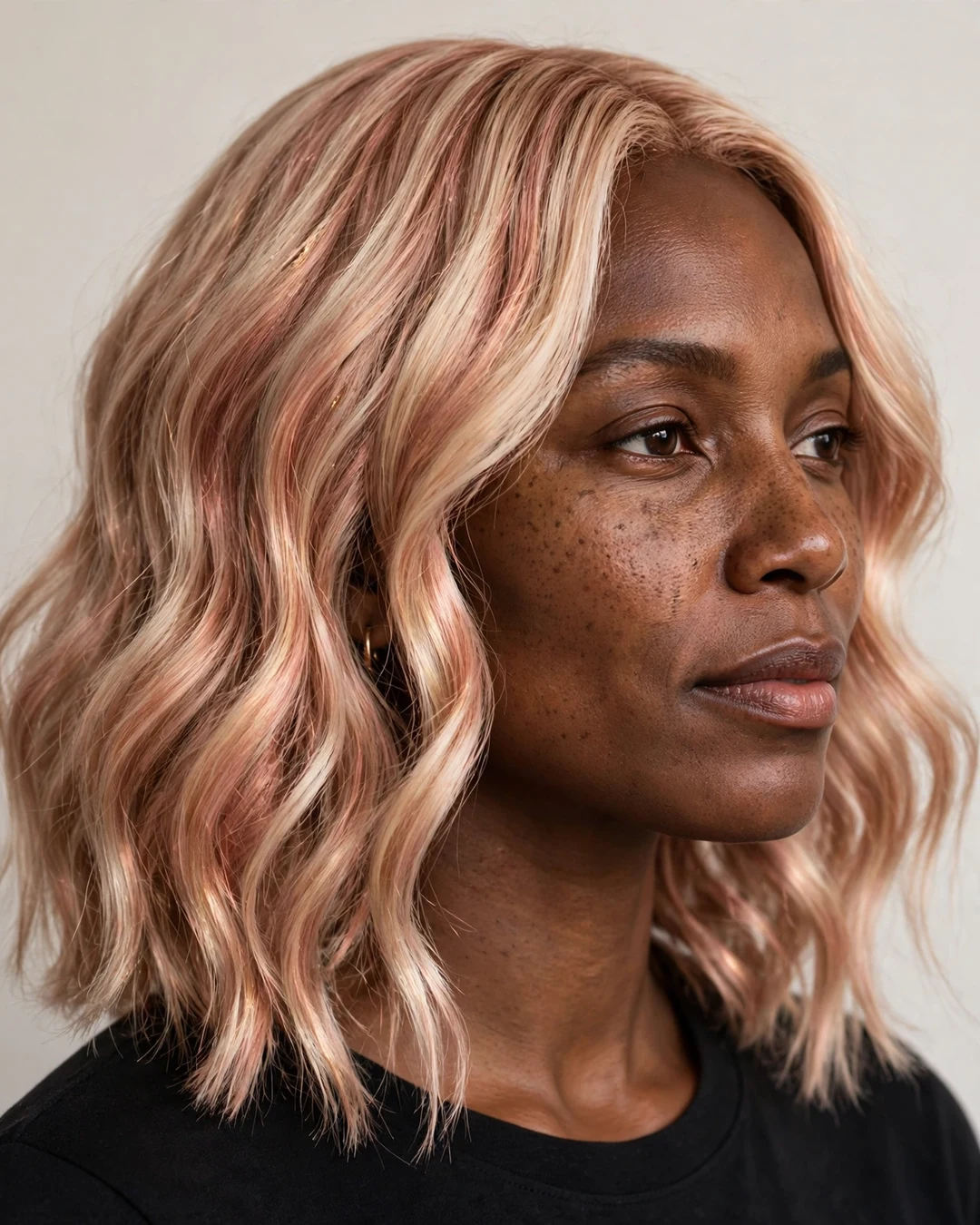
Rose-gold sits at the bolder end of the blush blonde spectrum. The metallic pink reflects light, so waves look dimensional and full even on finer hair.
Style with a large-barrel iron and finish with lightweight shine oil for that reflective glow. Pink-based shades fade faster, so wash with cool water and a color-safe sulfate-free shampoo.
3. Soft Blush Blonde Bob
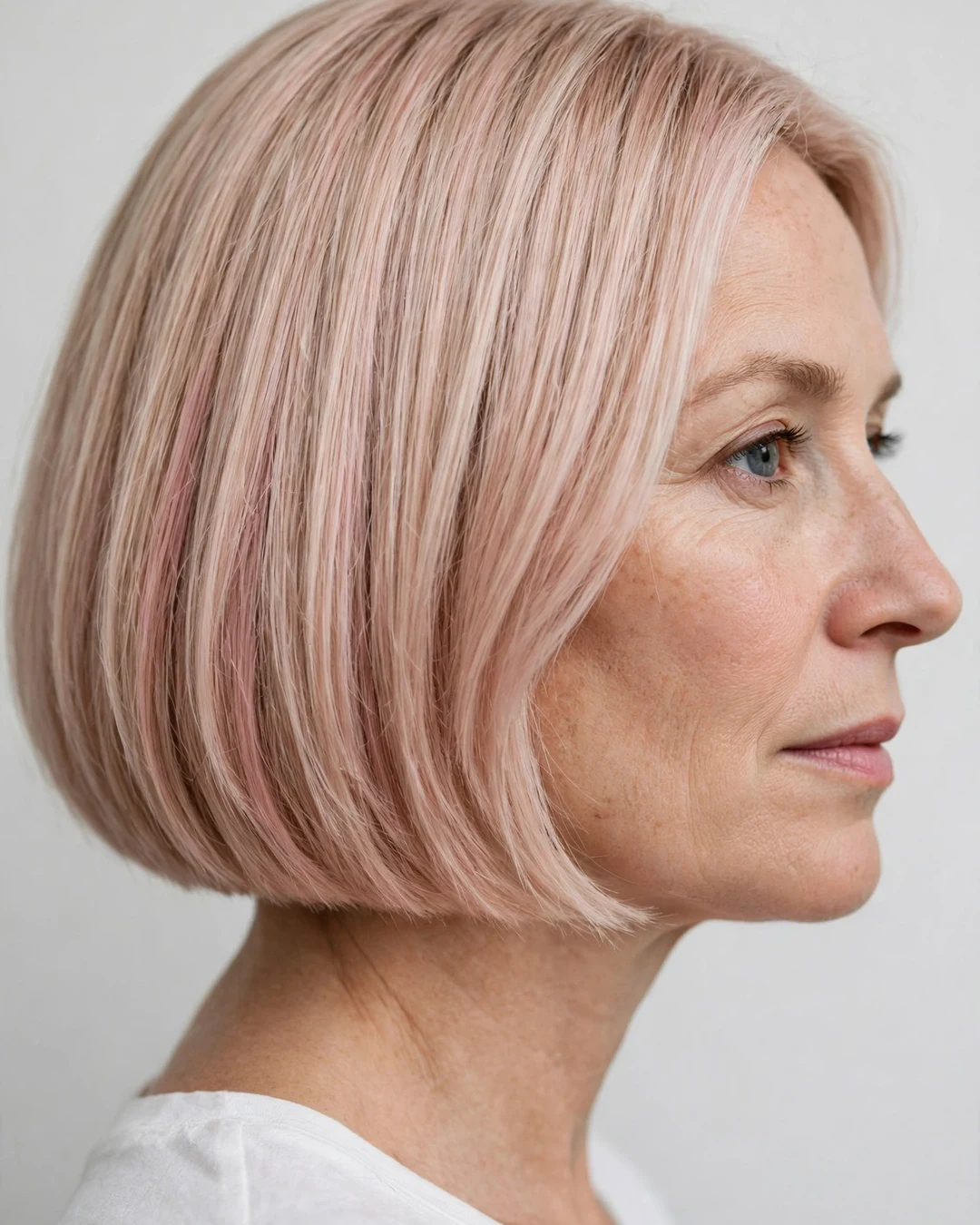
A blunt bob in blush blonde reads modern and polished. The pink tint softens the sharp cut, so the style feels feminine rather than severe.
This length shows off the color evenly, which makes it ideal if you want the rosy tone to read clearly. Blow-dry with a round brush for smoothness, and book a toner touch-up every five weeks to hold the pink.
4. Shadow-Root Blush Blonde
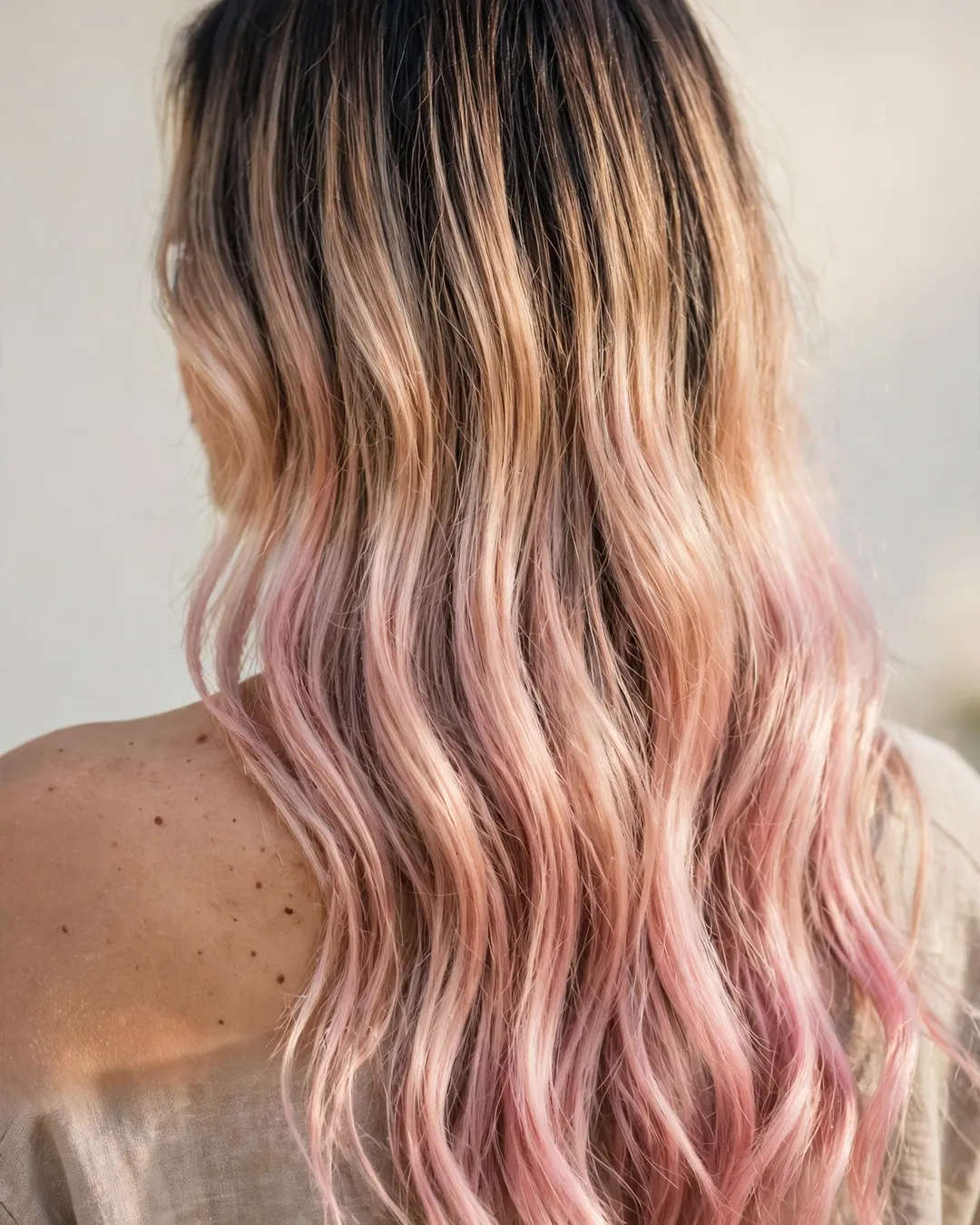
A shadow root lets your natural shade melt into the blush blonde, which stretches the time between appointments. The darker root also makes the pink mids and ends look brighter by contrast.
This is a smart pick for first-time color. Ask for a root smudge one to two levels deeper than your ends, and use a weekly mask to keep the lightened hair supple.
5. Strawberry Blush Blonde
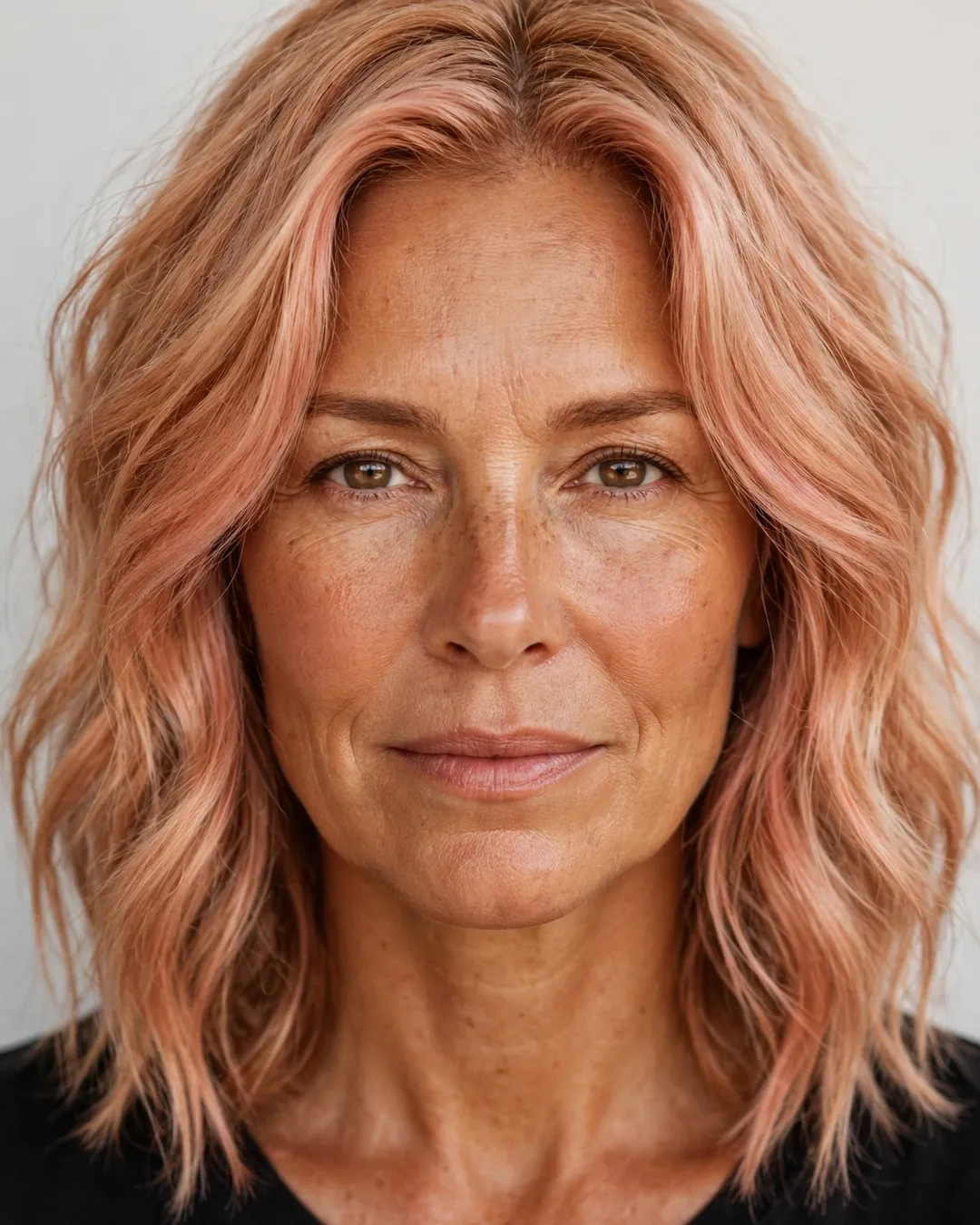
Strawberry blush blonde leans warmer, mixing copper-pink with golden blonde. It suits warm and neutral skin tones beautifully and glows in sunlight.
If you have been eyeing redder shades, this is a gentle entry point. Browse these warm copper hair color ideas to compare tones, and ask for gold-rose warmth rather than a cool pink.
6. Blush Blonde Curtain Bangs
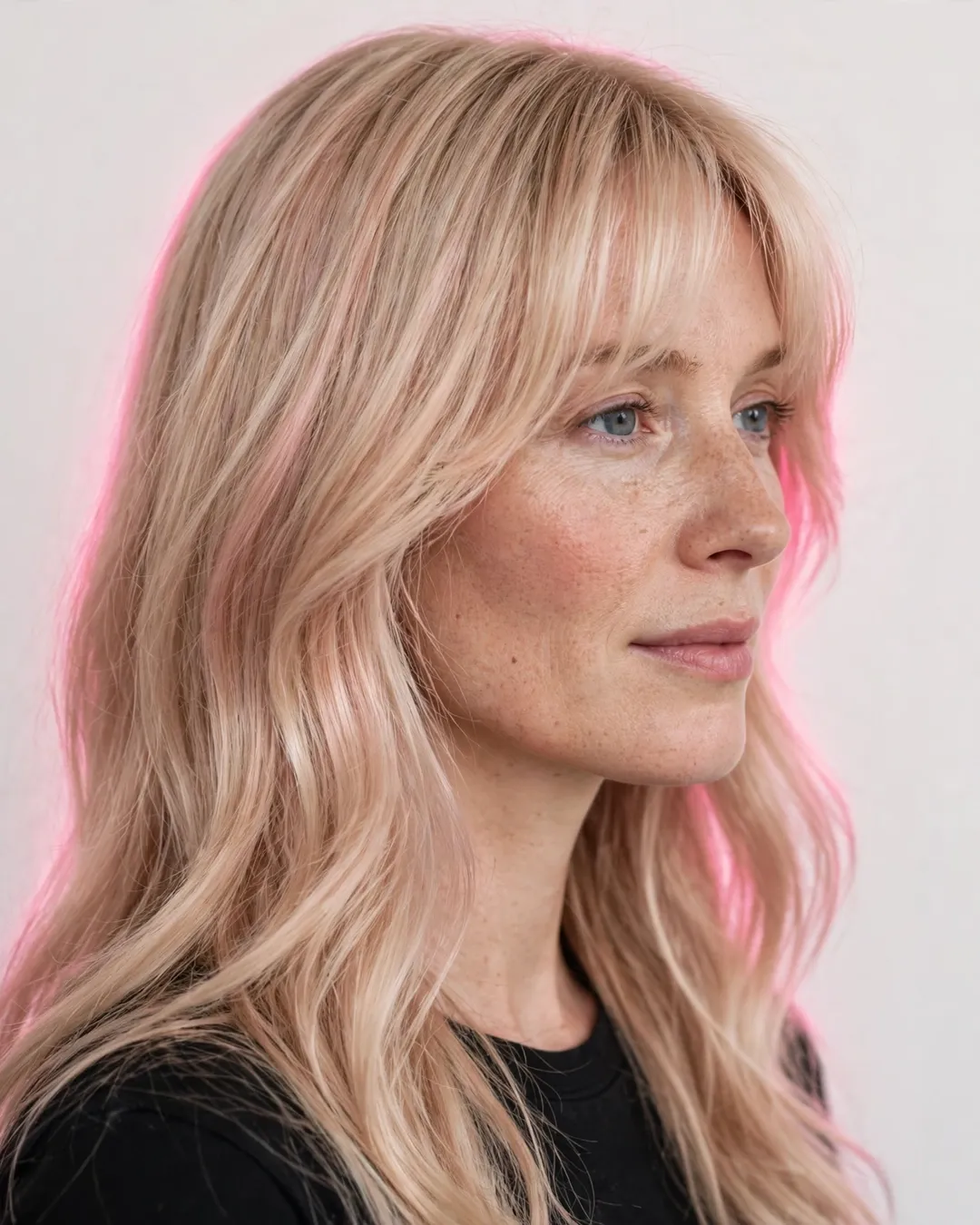
Curtain bangs frame the face in blush blonde, pulling the rosy tone right where it brightens your complexion. The parted fringe keeps the look airy and easy to grow out.
Style the bangs with a round brush, flicking them away from the face. A pink-tinted gloss on the fringe alone can revive the color between full appointments.
7. Peach-Kissed Blush Blonde
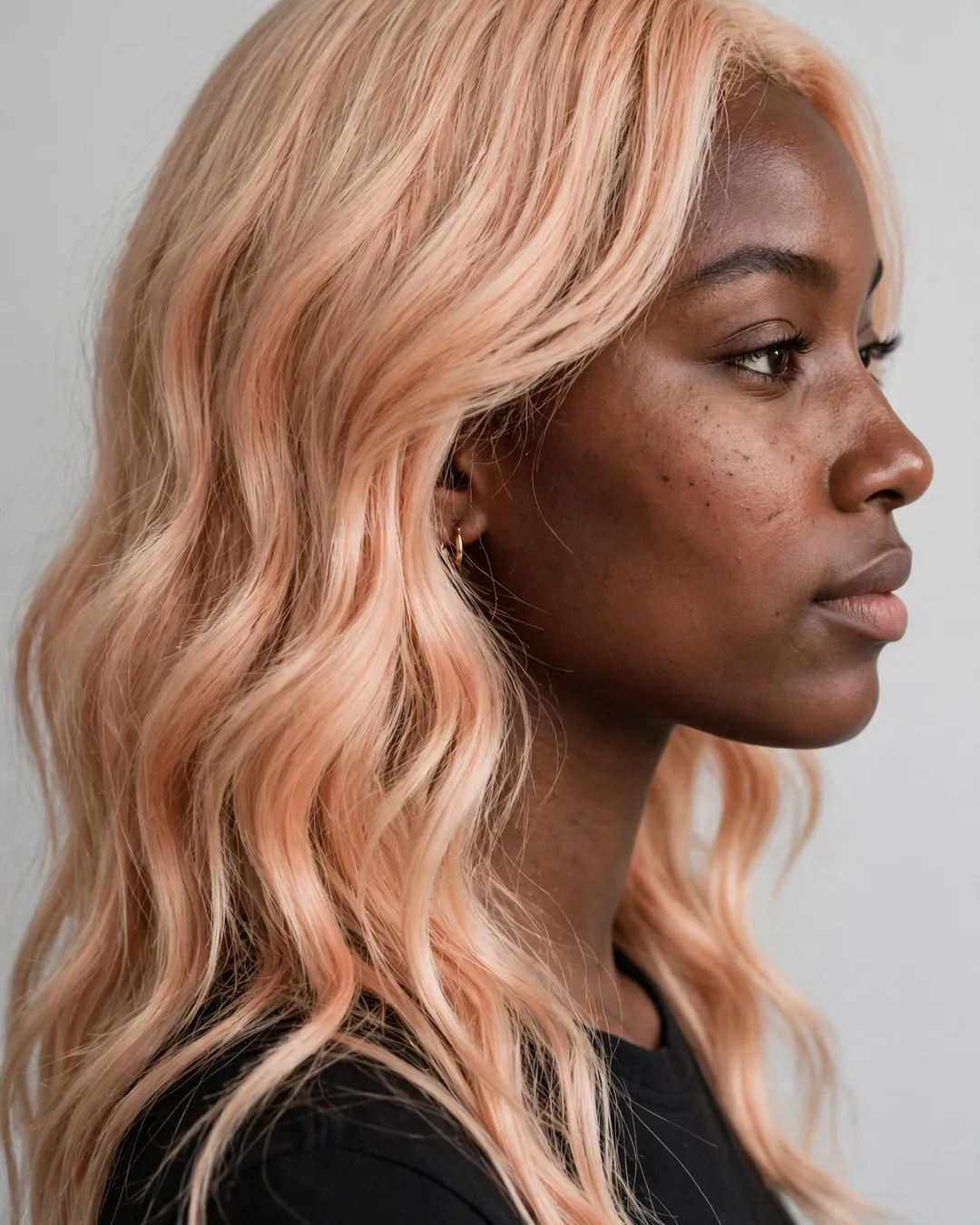
Peach-kissed blush blonde swaps cool pink for a warm apricot glow. It looks sun-warmed and flattering, especially on medium and deep skin tones.
This shade pairs well with golden makeup and bronzer. Ask your colorist to mix peach and rose gold in the formula, and protect the warmth with a UV-protectant spray when you spend time outdoors.
8. Golden Blush Blonde Highlights
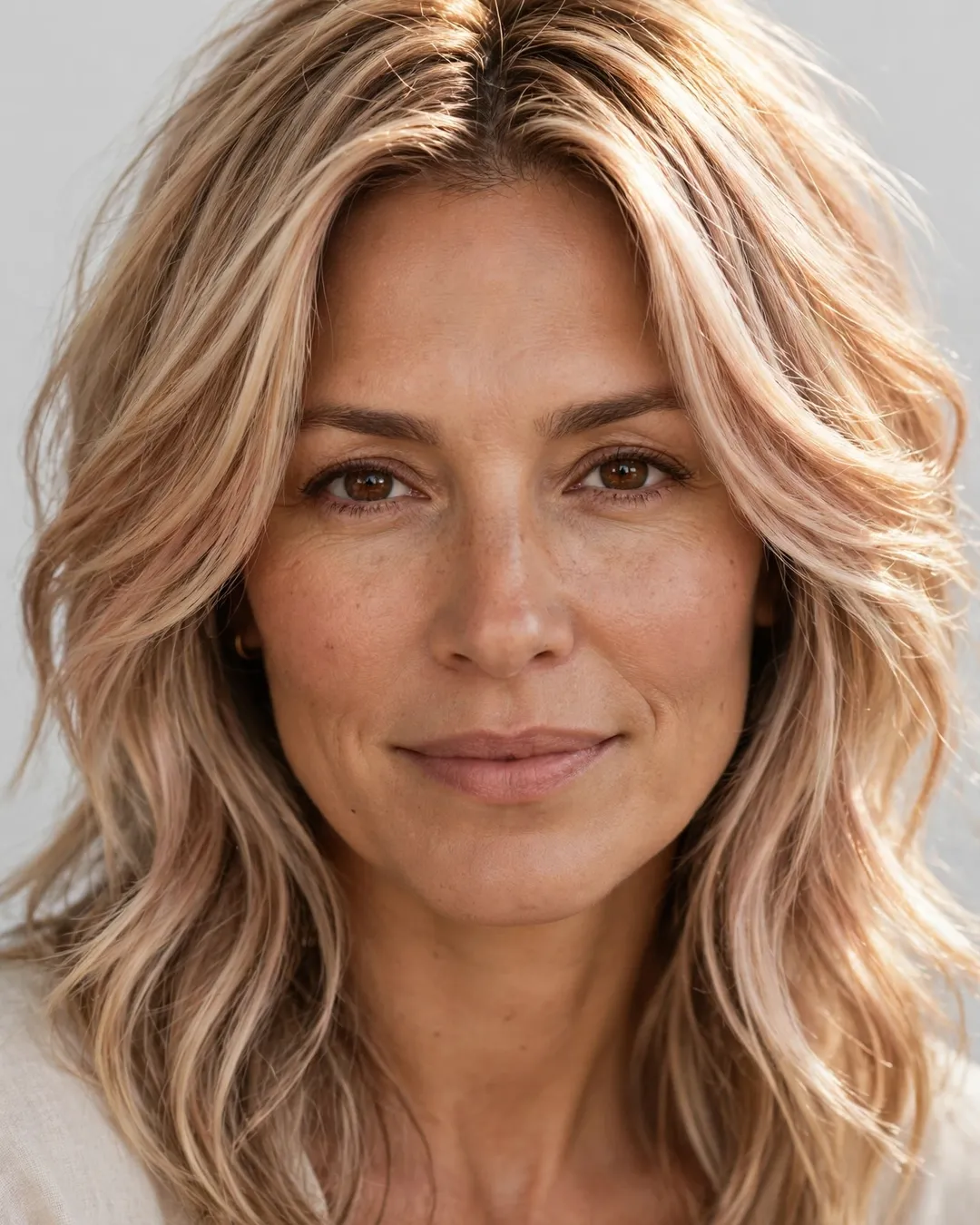
If full pink feels like too much, golden highlights over a blush blonde base give you the best of both worlds. The blonde keeps things classic while the pink whispers underneath.
This low-commitment version works on darker blonde bases. Check out these honey blonde hair ideas for similar warmth, and ask for fine babylights rather than chunky streaks.
9. Platinum Blush Blonde
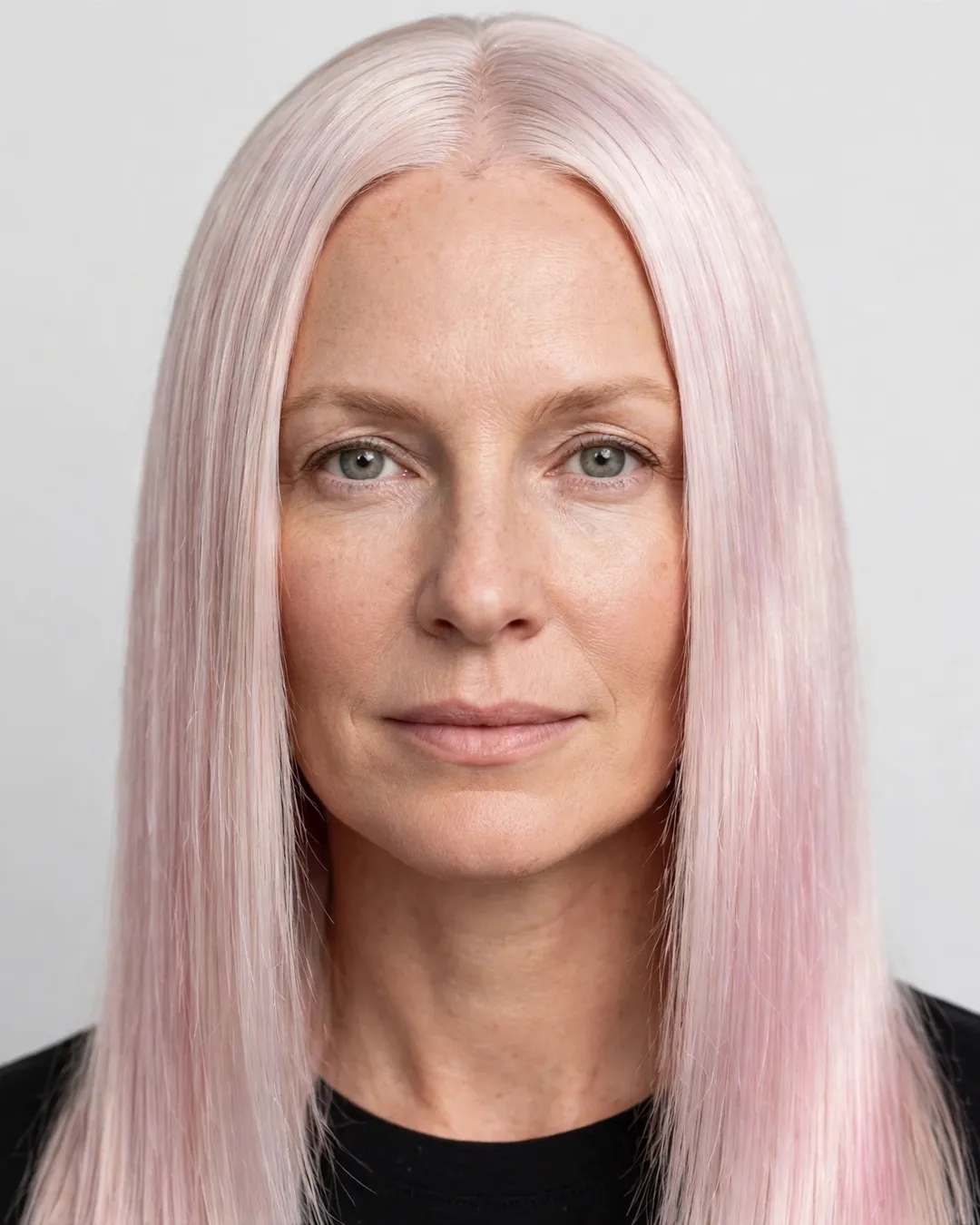
Platinum blush blonde starts from a near-white base with just a veil of pink. The result is cool, luminous, and striking, with the pink reading as a soft blush rather than a strong tint.
This shade demands commitment. Use purple shampoo once a week to stop brassiness, and schedule toners regularly, since the pale base shows fading faster than deeper blondes.
10. Blush Blonde Lob
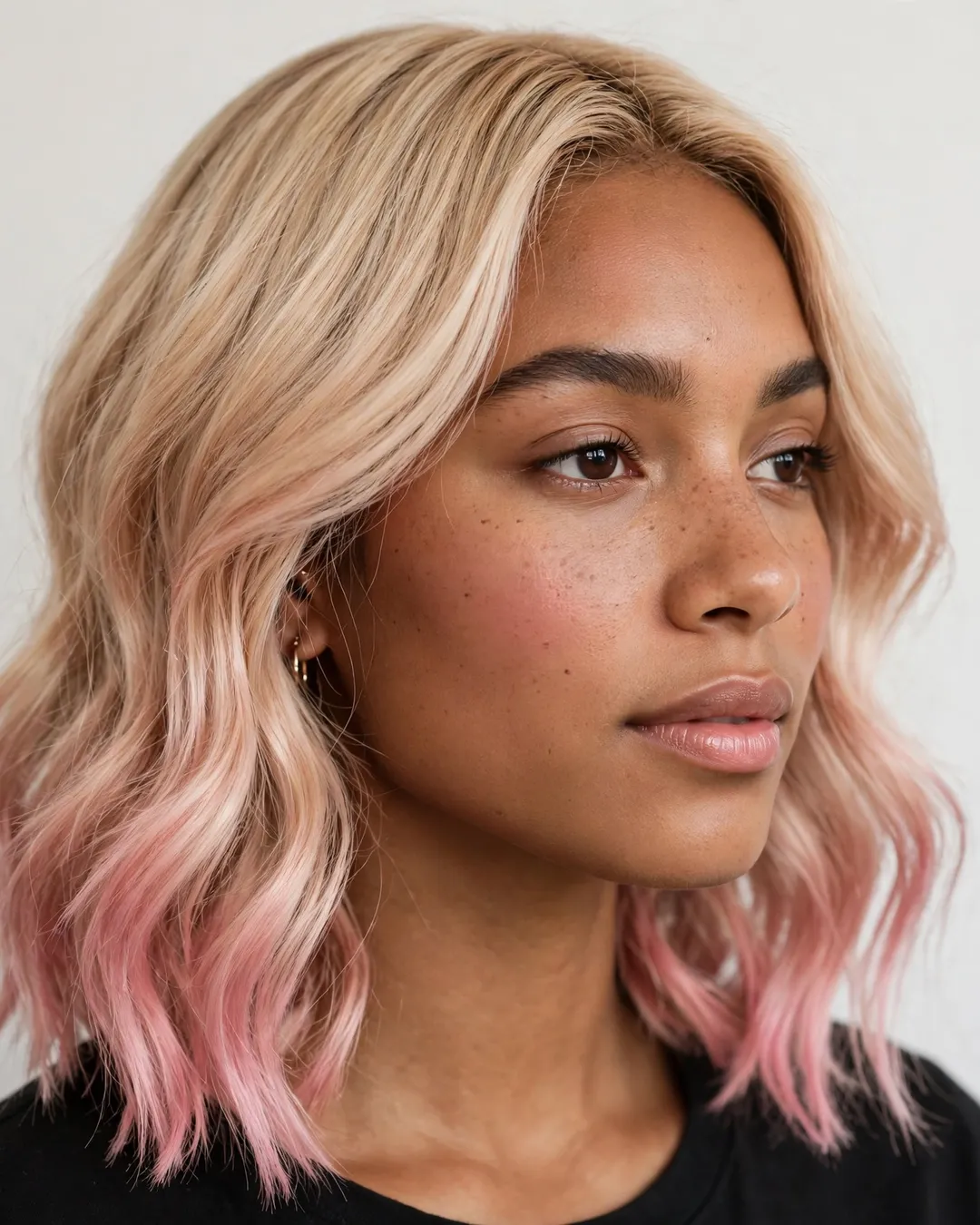
The long bob is the most adaptable cut for trying blush blonde. It is long enough to show dimension yet short enough that color stays healthy and easy to maintain.
A lob also grows out gracefully if you decide pink is not for you. Add soft face-framing layers to open up the cut, and revive the tone with a semi-permanent pink gloss at home.
11. Face-Framing Blush Blonde Pieces
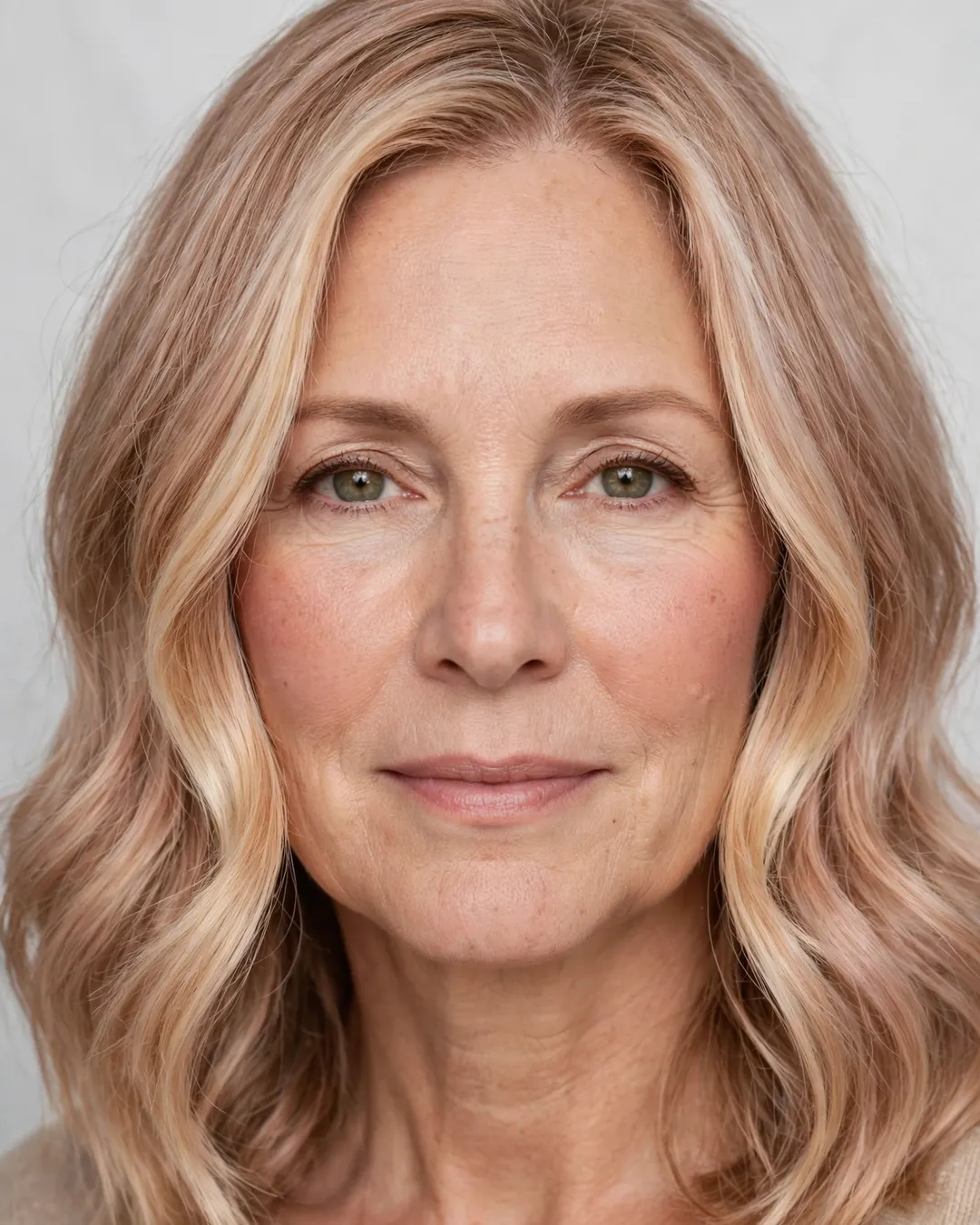
Brightened pieces around the face concentrate the pink where it lifts your features. The rest of the hair can stay a softer, more natural blonde.
This is the lowest-maintenance way to test the trend. The placement mimics how light hits hair naturally, so regrowth looks intentional. Ask for two levels of lift around the hairline with a rosy toner.
12. Dusty Rose Blush Blonde
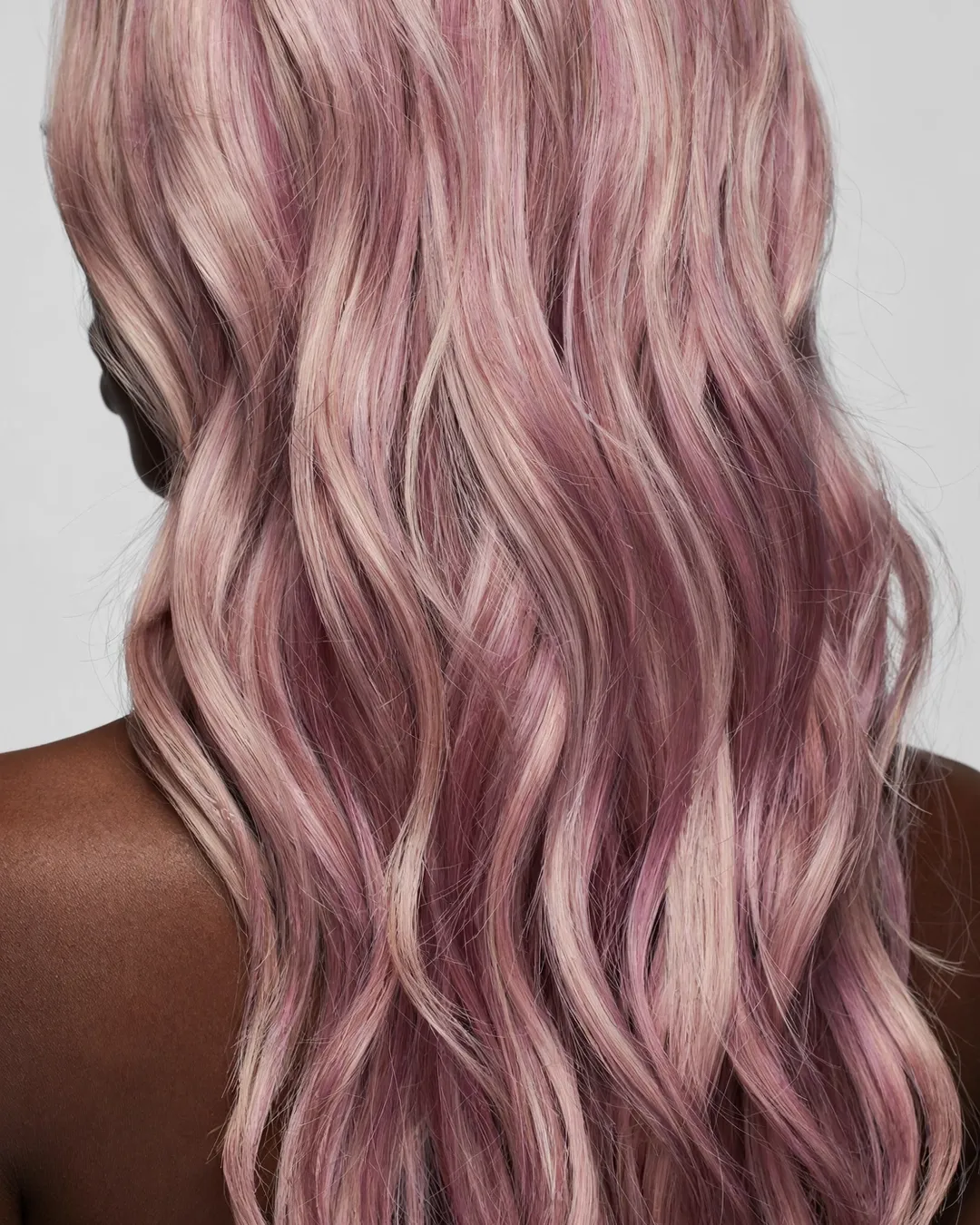
Dusty rose mutes the pink with a hint of mauve, creating a sophisticated, smoky version of blush blonde. It suits cooler skin tones and looks elegant rather than sweet.
Because the tone is muted, fading is less noticeable. Ask for a mauve-rose gloss over a beige blonde base, and avoid clarifying shampoos that strip the delicate tone.
13. Blush Blonde Curls
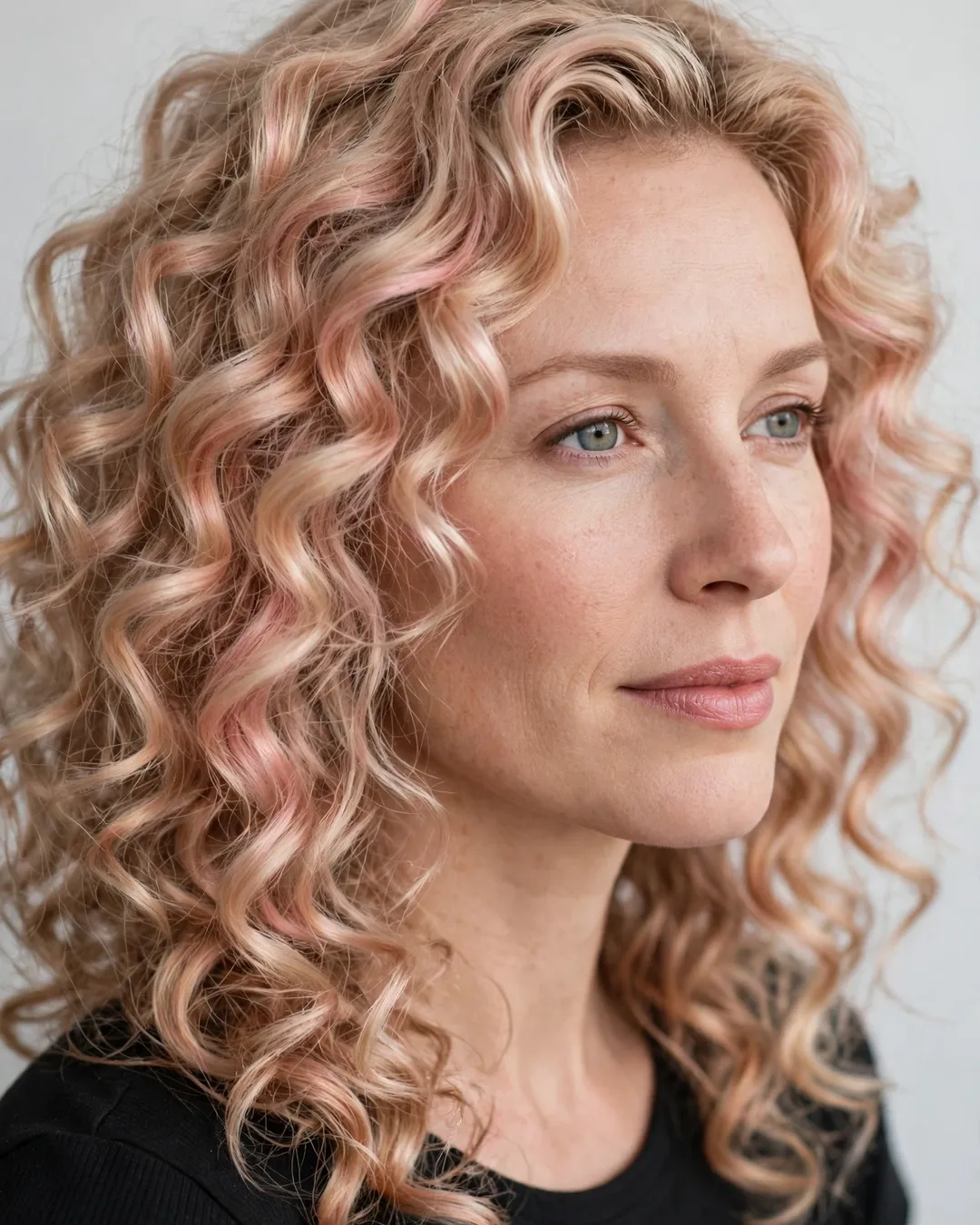
Curls catch light from every angle, which makes blush blonde look incredibly dimensional. The pink shifts between rose and gold as the curls move.
Define curls with a lightweight curl cream and diffuse on low heat to protect the color. Pineapple your hair at night, and revive second-day curls with a water mist rather than dry shampoo near the roots.
14. Champagne Blush Blonde
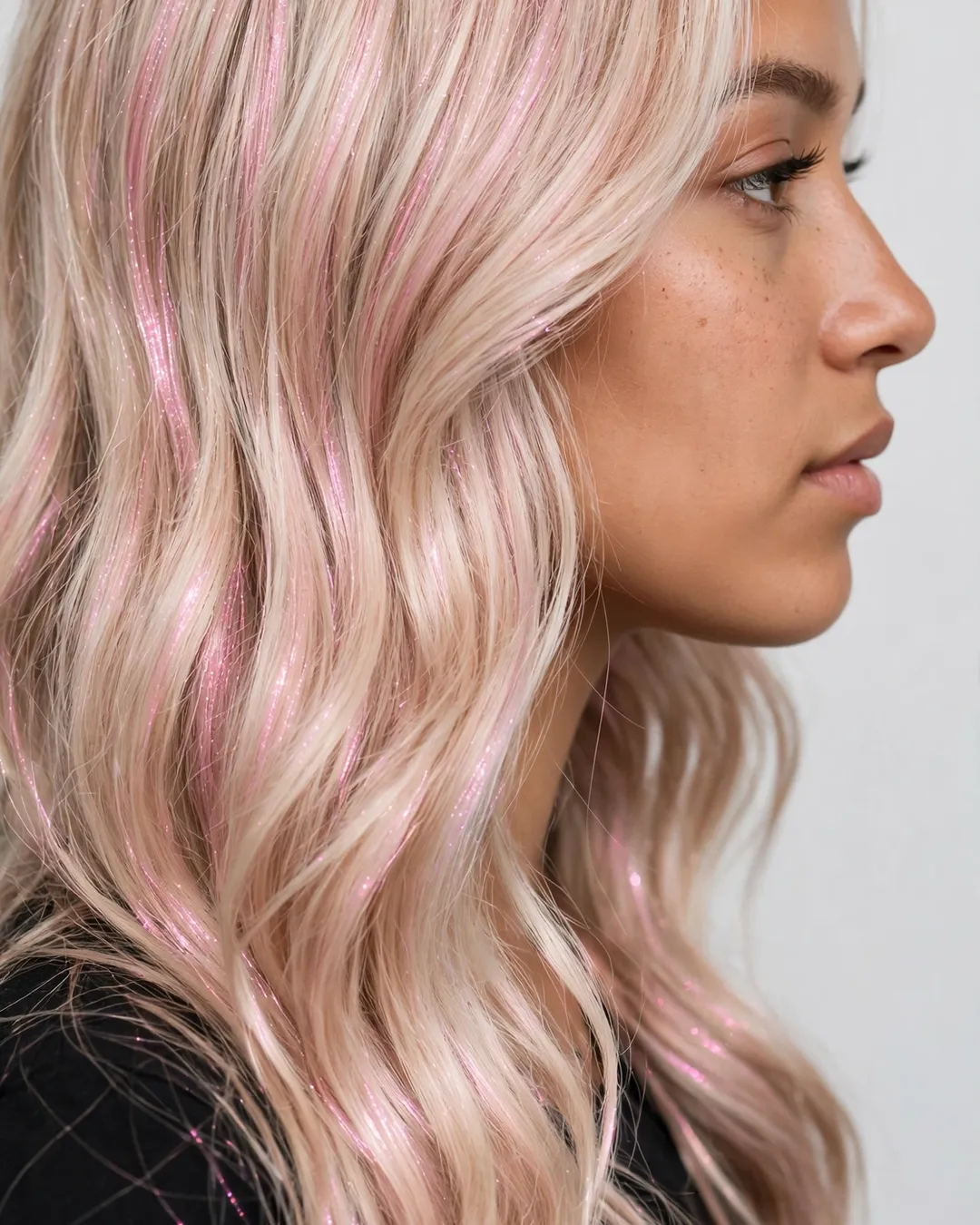
Champagne blush blonde is pale, bubbly, and luminous, like the drink it is named for. The pink is whisper-light, giving blonde a celebratory glow without obvious color.
This shade photographs beautifully for events. Keep it bright with a clear gloss treatment between color visits, and use a heat protectant every time you style, since pale hair is more fragile.
15. Blush Blonde Money Piece
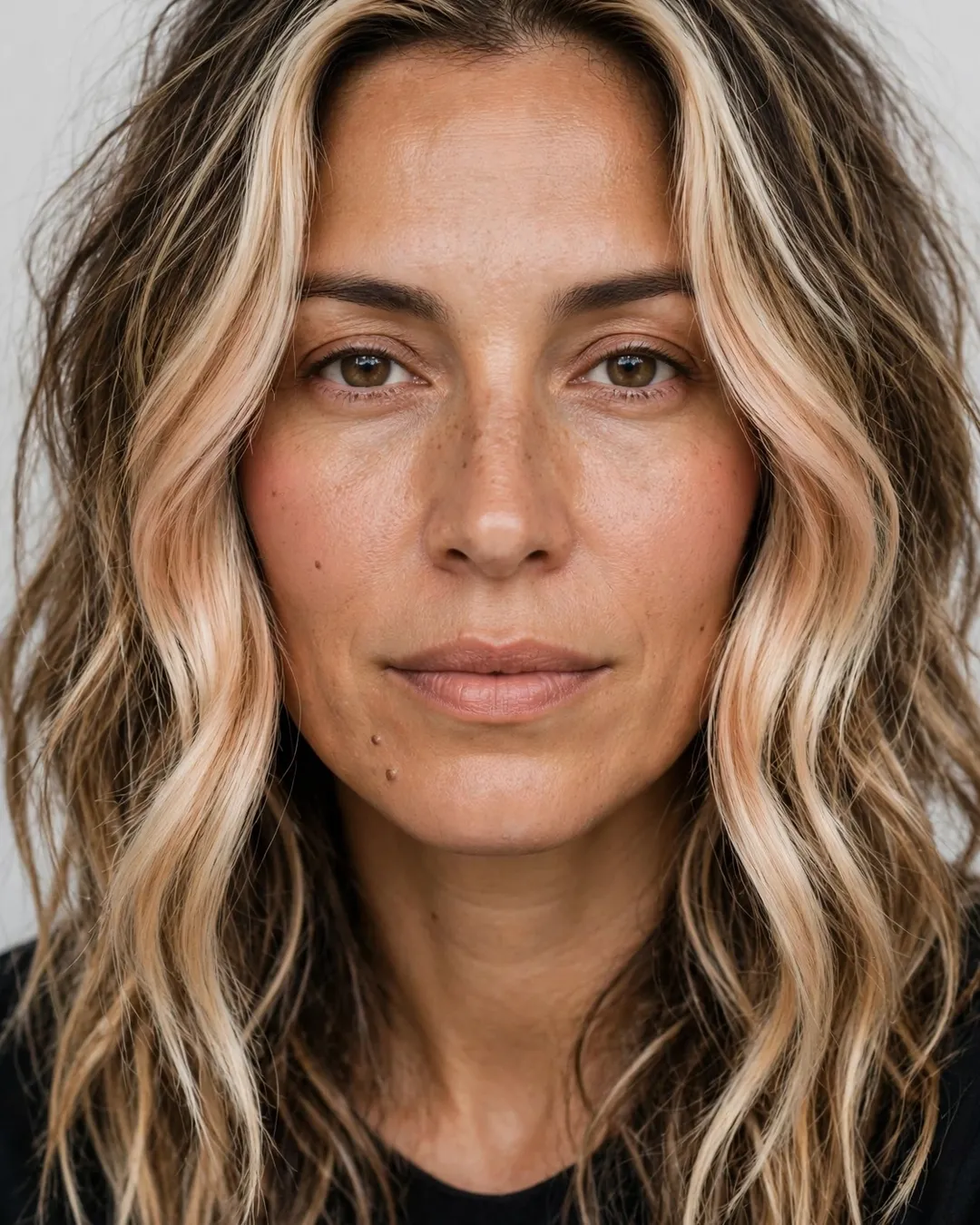
A money piece concentrates bright blush blonde right at the front hairline. It delivers maximum impact with minimal coloring, and it draws attention to the eyes and cheekbones.
Pair it with a deeper base for contrast, or keep everything light for a seamless glow. Maintain the brightness with a pink depositing conditioner used once every two weeks.
16. Long Layered Blush Blonde
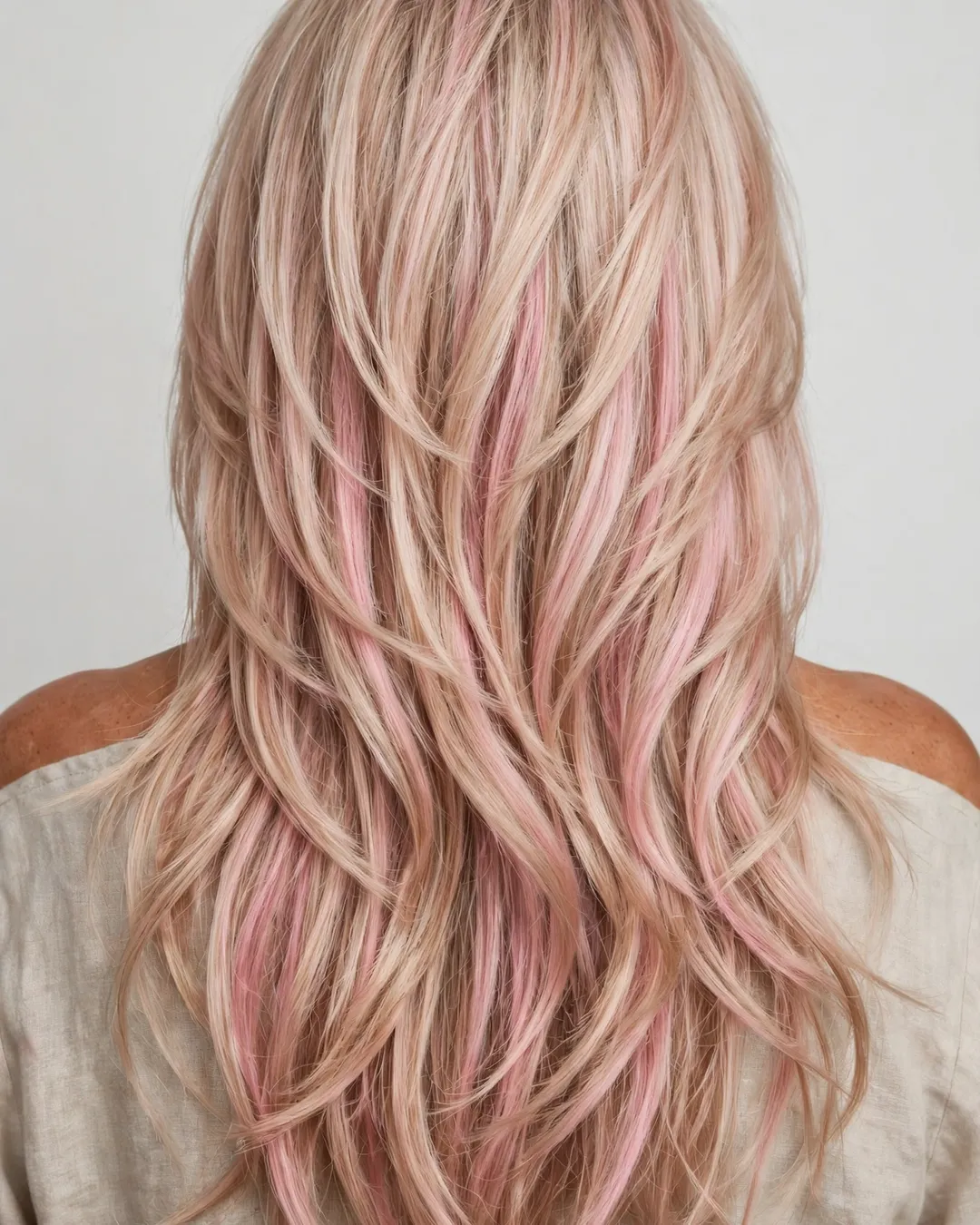
Long layers let blush blonde cascade through multiple tones, from deeper rose at the roots to pale pink tips. The movement of long hair shows off the color mix beautifully.
Long colored hair calls for extra care. Trim every eight to ten weeks to remove dry ends, and sleep on a silk pillowcase to reduce friction that dulls the pink over time.
17. Blush Blonde Root Melt
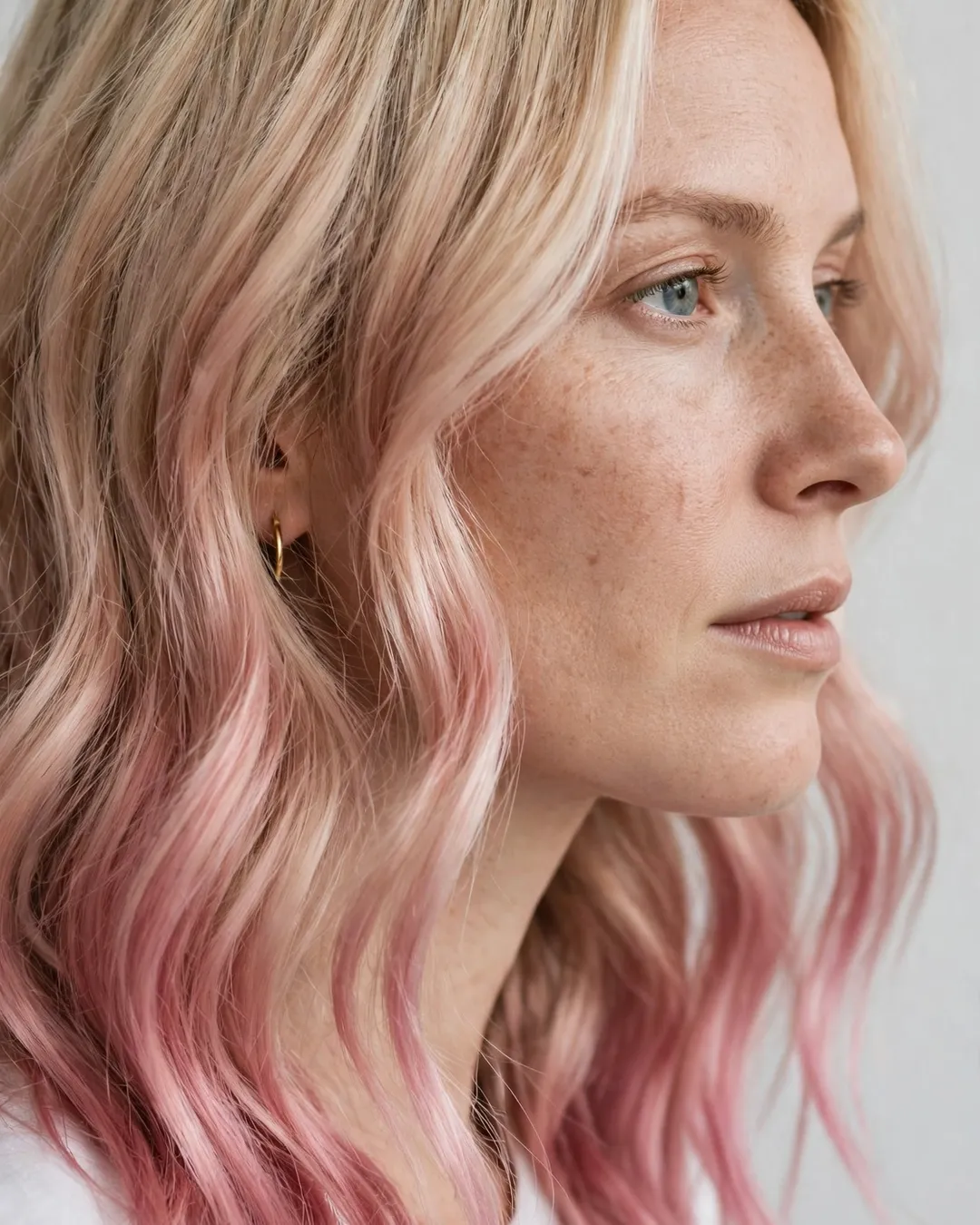
A root melt blurs the line between your natural root and the blush blonde lengths. The shift looks melted and soft, which means grow-out stays graceful for months.
This technique suits anyone stretching salon visits. Ask for the melt to sit one to two shades deeper than the mids, and use a color-depositing mask monthly to keep the pink even from roots to ends.
18. Coral-Toned Blush Blonde
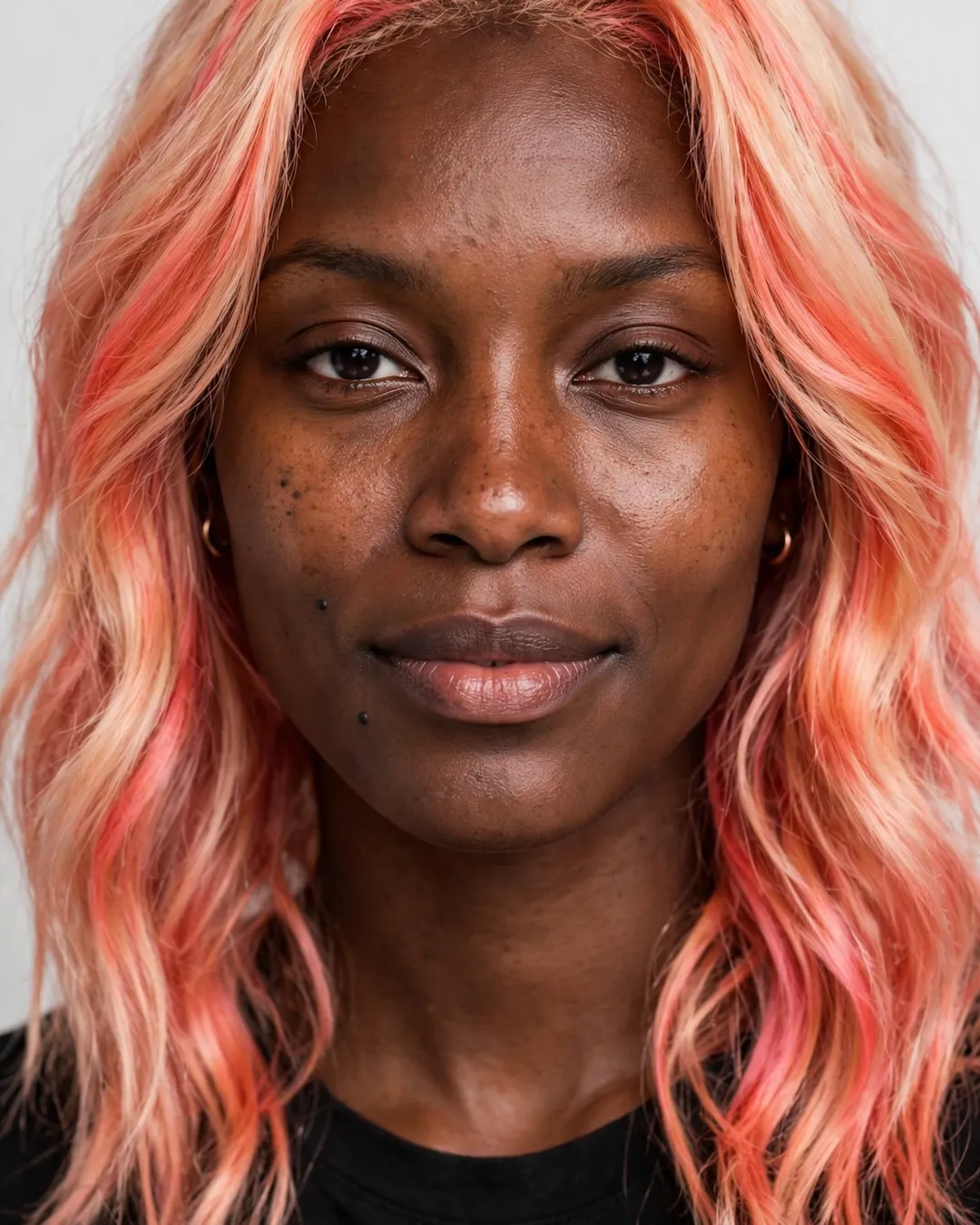
Coral pushes blush blonde toward a lively pink-orange, like sunset light in hair form. It is playful and warm, and it pops beautifully against deep skin tones.
Vivid tones fade quickest, so plan on more frequent glosses. Wash in cool water, limit heat styling, and keep a coral color-depositing conditioner on hand to top up the vibrancy at home.
19. Blush Blonde on a Dark Base
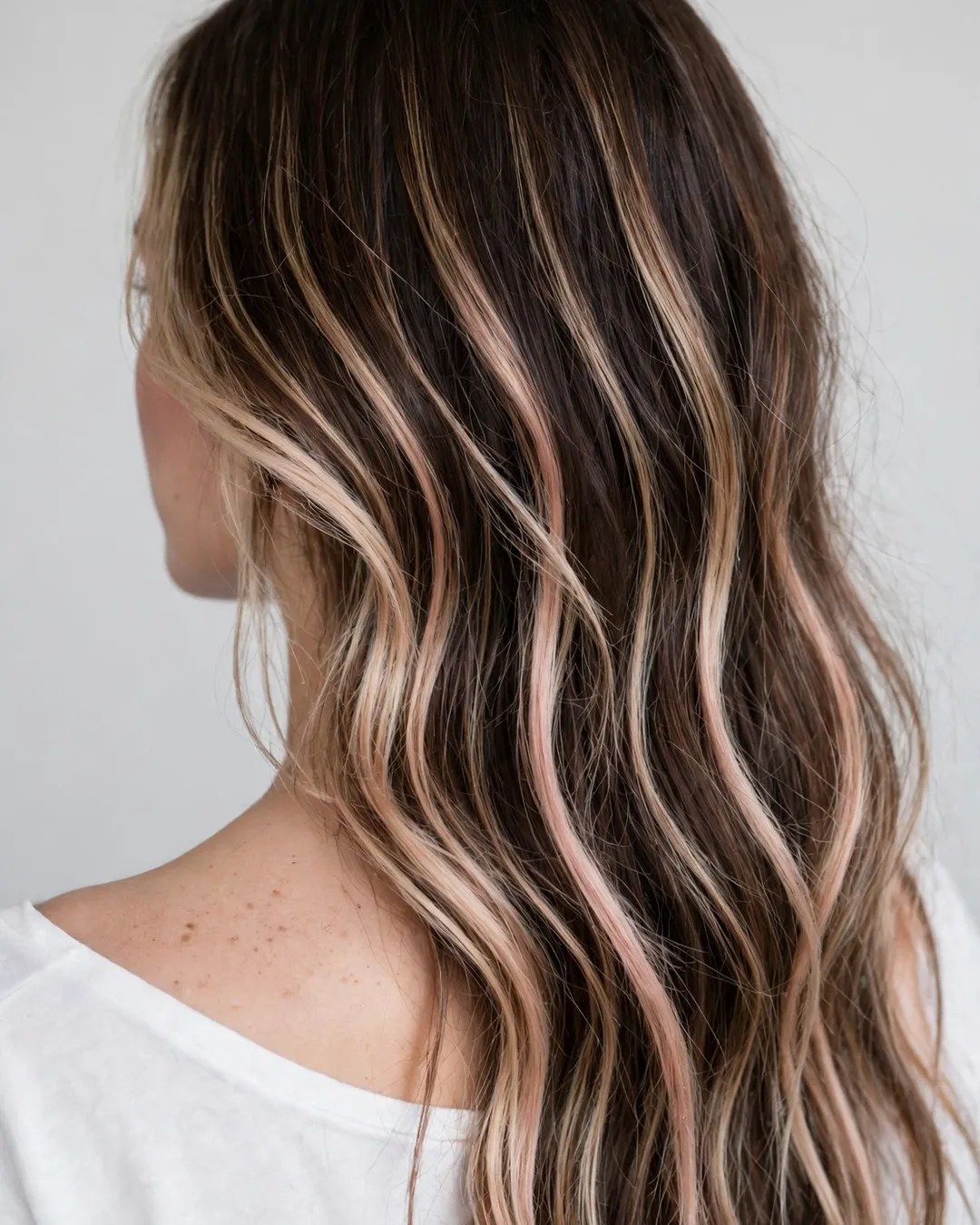
Blush blonde does not require starting blonde. Painted over a dark brown base, the pink-blonde ribbons create striking contrast with a lived-in feel.
This high-contrast version requires careful lightening, so see an experienced colorist and expect a longer appointment. For more dimension ideas, browse these caramel balayage hair ideas and ask for rosy beige ribbons.
20. Blush Blonde Pixie
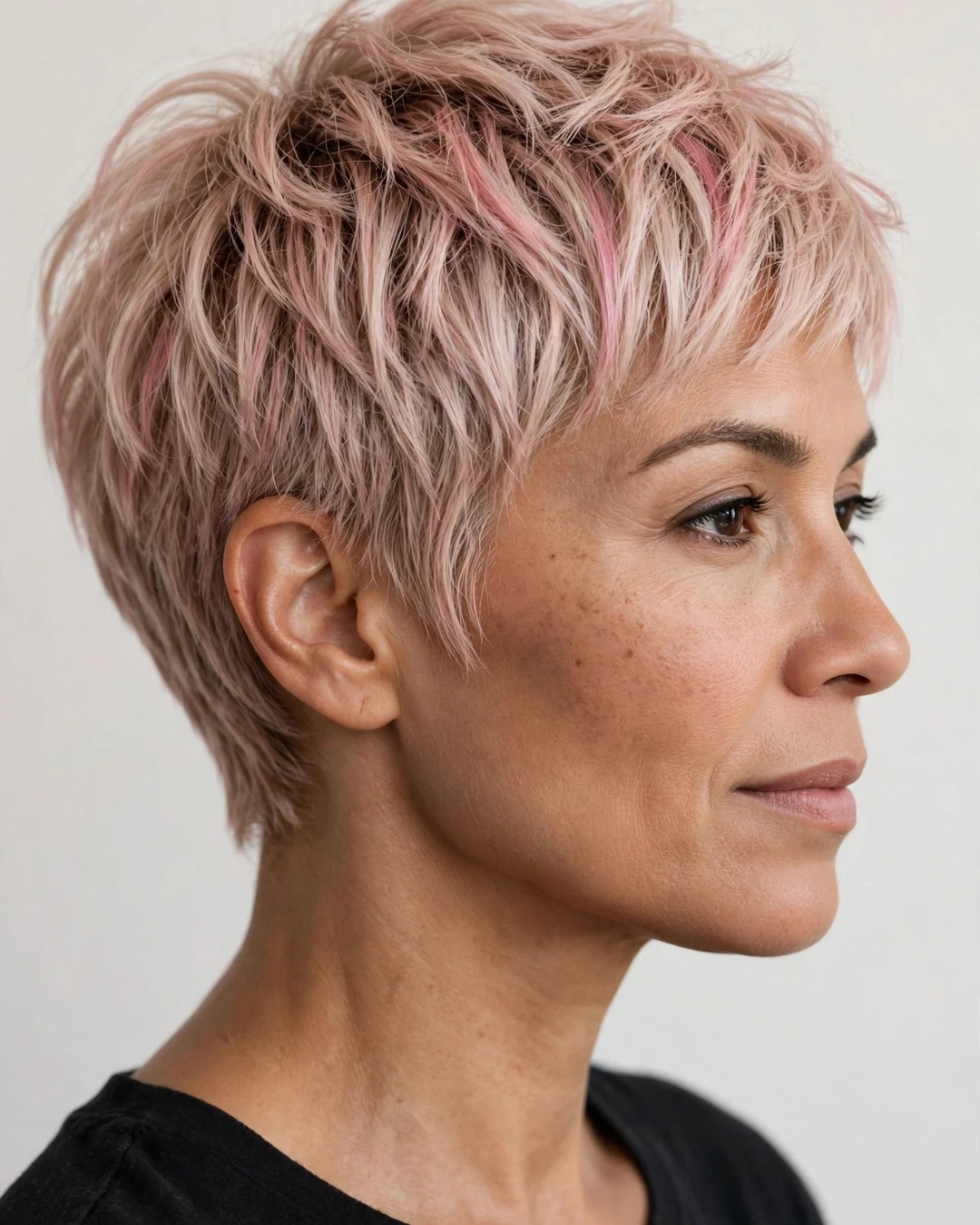
A pixie in blush blonde is bold and chic. The short length makes the pink impossible to miss, and the color adds softness to the edgy cut.
Short hair grows fast, so plan trims every four to six weeks to hold the shape. A pea-sized amount of texturizing paste defines the layers without weighing down the delicate color.
21. Blush Blonde With Lowlights
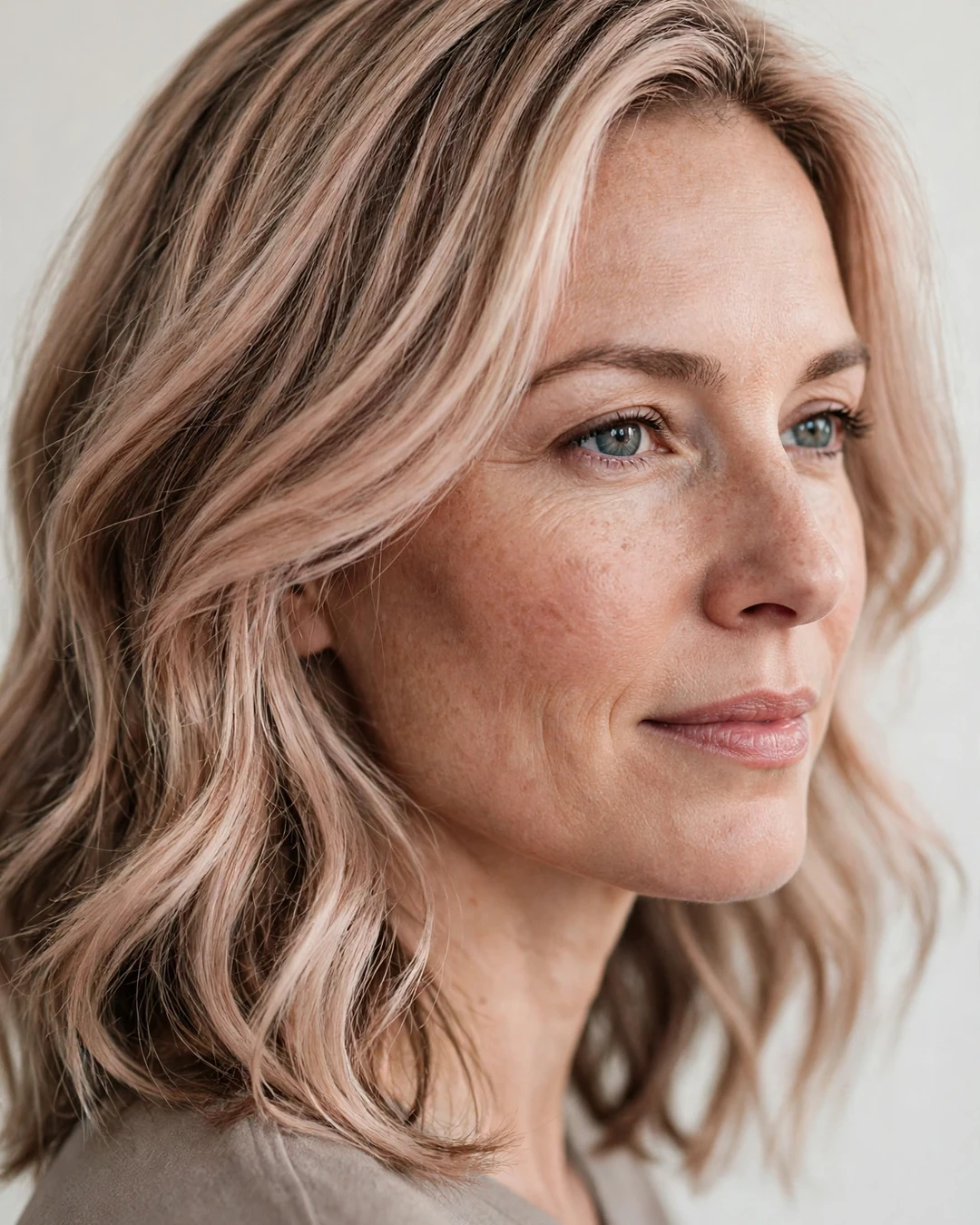
Lowlights add ribbons of deeper rose-brown through blush blonde, creating depth that makes the lighter pink pieces pop. The result looks natural and multi-tonal rather than flat.
This is ideal if your blonde has started to look one-dimensional. Ask for low-lights two shades deeper than your base in a dusty rose tone, and the contrast will do the rest of the work.
22. Mauve Blush Blonde
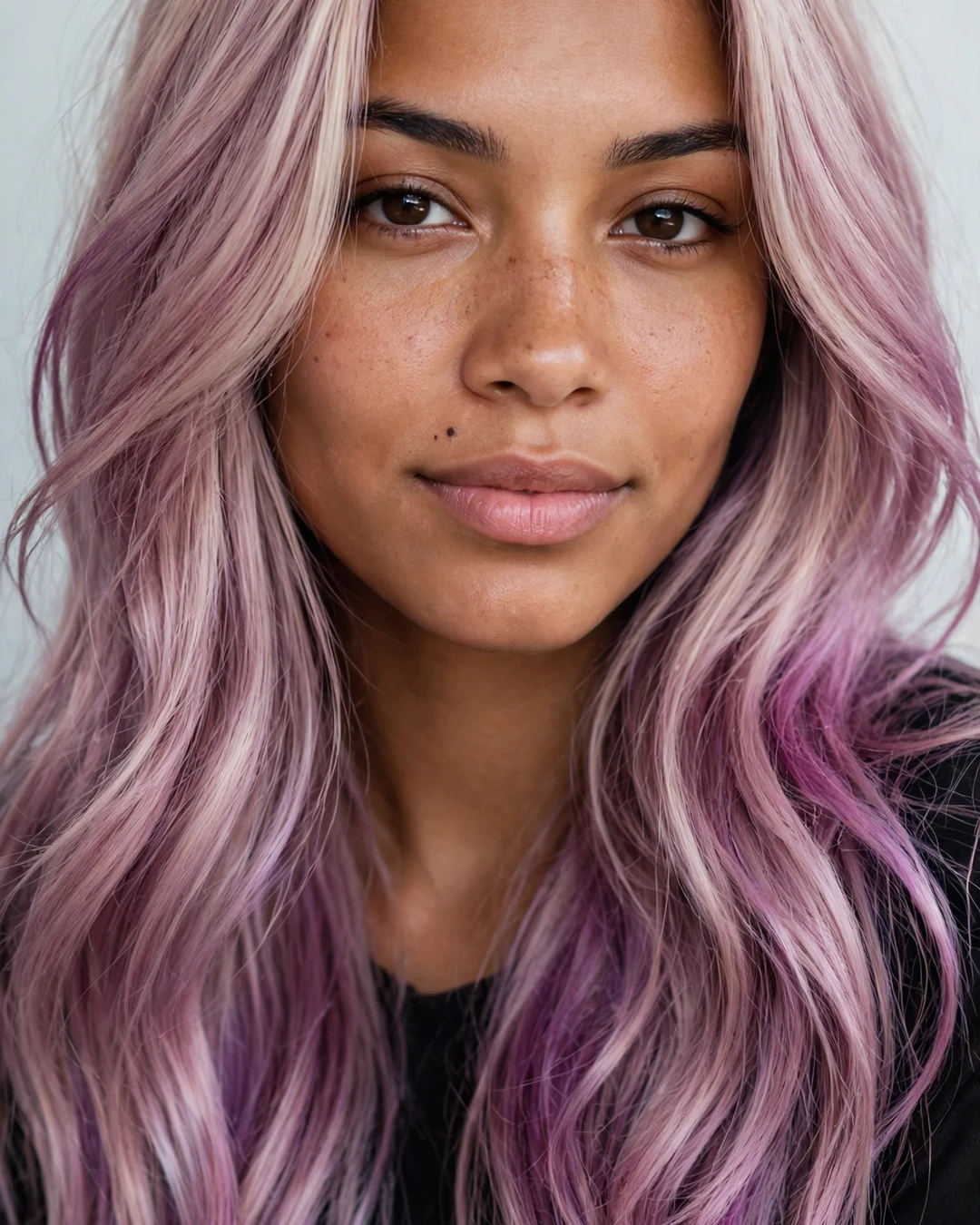
Mauve blush blonde mixes pink with a whisper of violet for a cool, modern finish. It suits cool and neutral skin tones and looks especially striking in soft daylight.
Cool pinks can turn brassy as they fade, so keep a purple-pink toning mask in your routine. Compare with these bronde hair color ideas if you want a more neutral take on dimensional blonde.
23. Blush Blonde Ombre
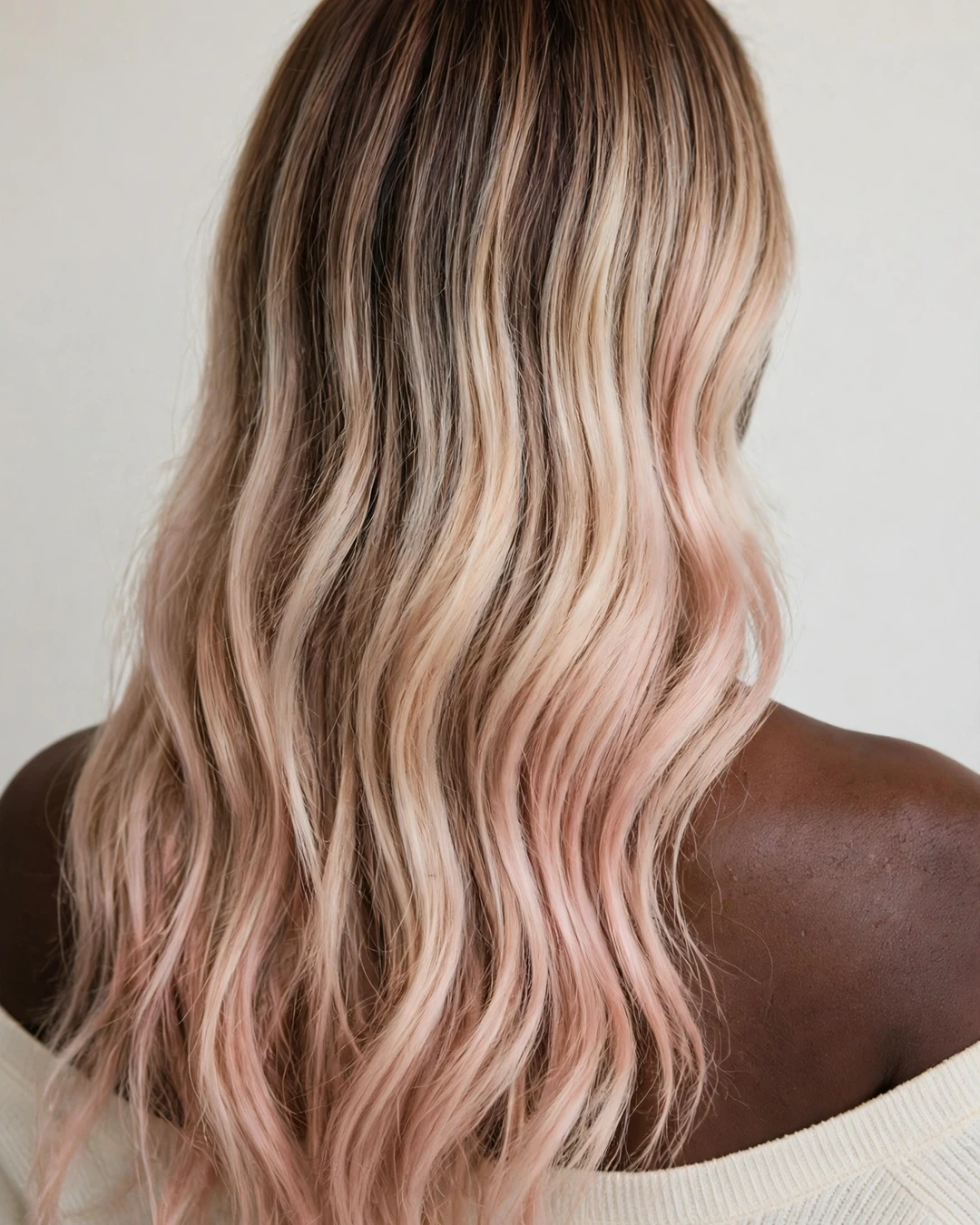
Ombre gives blush blonde a clear gradient, from deeper roots melting into pale pink ends. The defined gradient makes a statement while the dark root keeps upkeep simple.
Ombre works best on longer hair where the gradient has room to unfold. Ask for a soft, diffused gradient zone rather than a harsh line, and deep-condition the lighter ends weekly.
24. Glass-Hair Blush Blonde
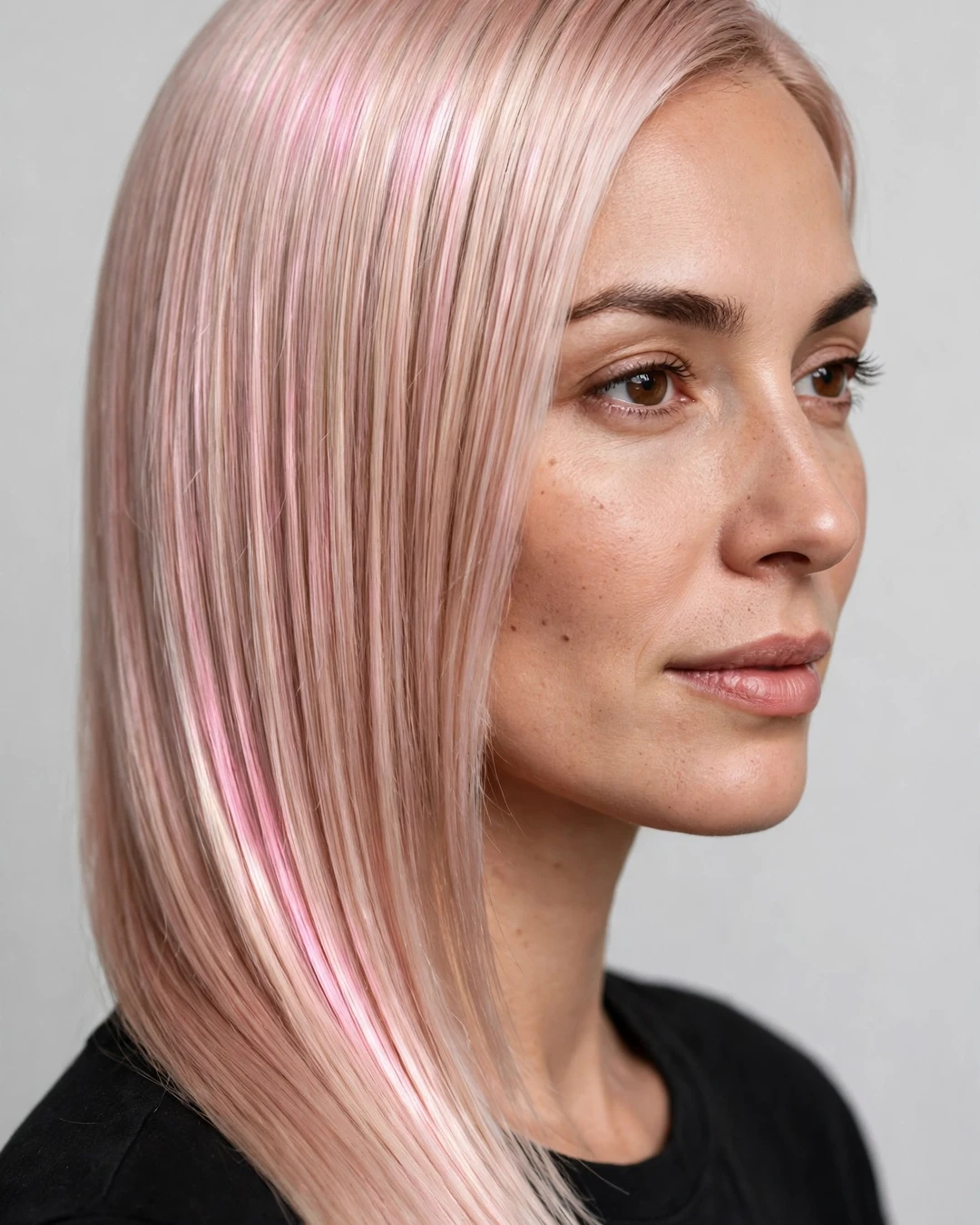
Glass hair takes blush blonde to its glossiest extreme. The hair is pin-straight with a mirror-like shine that makes the pink glow from within.
Achieving this finish starts with healthy hair, so get a gloss treatment at the salon first. At home, flat-iron in small sections and finish with a shine serum on the ends only to avoid weighing down the roots.
Conclusion
Blush blonde hair earns its popularity by being both dreamy and practical. The rosy wash flatters nearly every skin tone, the grow-out stays graceful with the right technique, and the shade range runs from barely-there champagne to vivid coral. Whatever your starting color or comfort level, there is a version here that fits.
Pick one or two ideas that match your hair length and maintenance style, then bring reference photos to your colorist. Ask about the formula, the upkeep schedule, and which at-home products will protect the pink between visits.
Blush blonde also adapts well to the seasons. The rosy tone reads cozy against autumn knits and glows in bright summer light, so it rarely feels out of place. If fading worries you, start with a demi-permanent formula, which washes out gradually and lets you test the tone with zero commitment. A little planning now means months of that soft rosy glow you fell in love with.